Agnikul Cosmos, ICEYE sign MoU to build SAR earth observation systems in India
Synopsis
Agnikul Cosmos and ICEYE are joining forces to build sovereign SAR earth observation systems in India — combining the world's largest SAR constellation operator with India's first private full-stack launch company. The deal signals a shift from dependence on foreign timelines to an end-to-end, India-controlled space infrastructure for disaster response, security, and global commercial deployment.
Key Takeaways
Agnikul Cosmos and ICEYE signed an MoU on 1 July to explore building, launching, and operating SAR earth observation systems in India.
The partnership aims to establish satellite manufacturing capabilities in India and create a repeatable, integrated launch-and-operate ecosystem.
ICEYE operates the world's largest SAR satellite constellation with over 70 satellite launches and has delivered sovereign constellations to 7 governments across Europe.
Key applications include disaster response , sensitive area monitoring , and national security — areas identified as sovereign priorities by Agnikul's leadership.
India is positioned as a key Asia-Pacific manufacturing hub for ICEYE's global production ambitions.
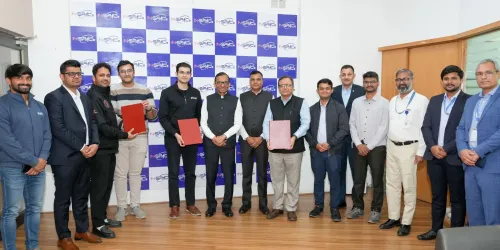
Agnikul Cosmos, India's private full-stack space transportation company, has signed a memorandum of understanding (MoU) with ICEYE, a Europe-based Synthetic Aperture Radar (SAR) satellite operator, to jointly explore building, launching, and operating SAR earth observation systems from Indian soil. The agreement, announced on 1 July, combines ICEYE's established SAR satellite expertise with Agnikul's end-to-end responsive launch capabilities.
What the Partnership Covers
The collaboration is designed to go well beyond a single mission. It aims to establish satellite manufacturing capabilities in India and create a repeatable, integrated infrastructure that brings together manufacturing, launch, and operational functions under one ecosystem. The partnership targets customers in India, the Middle East, and Australia, according to the company release.
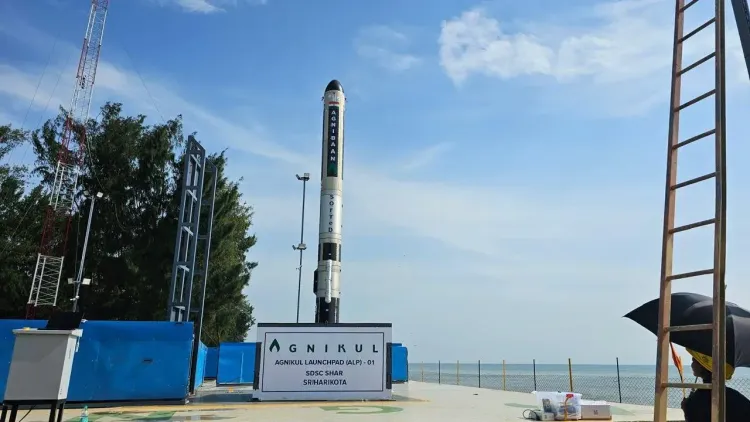
The agreement adds ICEYE to Agnikul's growing portfolio of international commercial partnerships as the Chennai-founded company advances its ambition to become one of the world's leading space transportation companies.
Why Sovereign SAR Capability Matters
'Previously, building and launching a satellite system privately in India mostly meant piecing together foreign technology and waiting on timelines that we as a nation did not control,' said Srinath Ravichandran, Co-founder and CEO of Agnikul Cosmos. He noted that applications such as disaster response, sensitive area monitoring, and national security are priorities that demand sovereign capabilities India can control end-to-end.
Moin SPM, Co-founder and COO of Agnikul Cosmos, underscored the scalability goal: 'We can create a repeatable model that can support long-term deployment programmes for customers in India and around the world. This is the kind of integrated infrastructure the global space industry increasingly demands.'
ICEYE's Global Track Record and India Ambitions
ICEYE currently operates the world's largest SAR satellite constellation, with over 70 satellite launches to its name. The company has delivered sovereign satellite constellations to seven governments across Europe — including Poland (within 12 months of contract signing), Sweden, and Germany. India now represents a key Asia-Pacific manufacturing hub opportunity for ICEYE, potentially enabling production for global markets.
'India is an important market for us as demand for sovereign intelligence capabilities continues to grow globally,' said Rafał Modrzewski, Co-founder and CEO of ICEYE, adding that partnerships built around speed, reliability, and long-term execution are increasingly critical.
Broader Context: India's Commercial Space Push
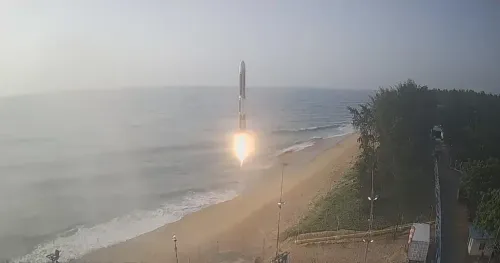
This MoU arrives as India's private space sector accelerates following regulatory reforms that opened launch and satellite manufacturing to private players. Agnikul Cosmos, which successfully conducted India's first semi-cryogenic engine-powered rocket flight, is positioning itself at the intersection of domestic manufacturing and global commercial launch demand. Notably, SAR satellites — which can image through clouds and at night — are considered critical for both civilian and defence applications, making this partnership strategically significant beyond pure commercial value.
The next phase will depend on how quickly both parties can translate the MoU into binding agreements and production timelines, with India's emerging space industrial base watching closely.
Point of View
However, is execution: MoUs in the space sector routinely precede long delays, and translating this into a funded, time-bound manufacturing and launch programme will require both regulatory clarity and sustained capital commitment. India's SAR gap — relative to China's rapidly expanding constellation — makes the urgency real, but urgency alone does not close timelines.
NationPress
30 Sept 2026
Frequently Asked Questions
What is the Agnikul Cosmos and ICEYE MoU about?
The MoU is an agreement to jointly explore building, launching, and operating Synthetic Aperture Radar (SAR) earth observation satellites from India. It combines ICEYE's SAR satellite expertise and manufacturing capabilities with Agnikul Cosmos's full-stack responsive launch infrastructure.
What is a SAR satellite and why does it matter for India?
A Synthetic Aperture Radar (SAR) satellite can capture high-resolution images of the Earth's surface through clouds and in darkness, making it invaluable for disaster response, border monitoring, and national security. India currently lacks a large sovereign SAR constellation, making this partnership strategically important.
What is ICEYE's track record with SAR satellites?
ICEYE operates the world's largest SAR satellite constellation, with over 70 satellite launches. It has delivered sovereign satellite constellations to seven governments in Europe, including Poland within 12 months of contract signing, Sweden, and Germany.
How does this partnership benefit India's space sector?
It aims to establish satellite manufacturing capabilities within India, reducing dependence on foreign technology and timelines. The integrated model — covering manufacturing, launch, and operations — could serve both Indian government customers and international markets across the Middle East and Australia.
What is Agnikul Cosmos's role in this collaboration?
Agnikul Cosmos contributes its full-stack responsive launch capabilities, meaning it can design, build, and launch rockets end-to-end from India. This allows the partnership to offer an entirely India-based pipeline from satellite manufacturing through to orbital deployment.