AI and digital tech to reshape India's steel industry: Kumaraswamy
Synopsis
India's steel minister has drawn a clear line: digitalise or fall behind. At Chintan Shivir 2026, H.D. Kumaraswamy tied AI, IIoT and digital twins directly to India's ambition of hitting 300 million tonnes of steel capacity by 2030 — making digital transformation a prerequisite, not an add-on, for the world's second-largest steel producer.
Key Takeaways
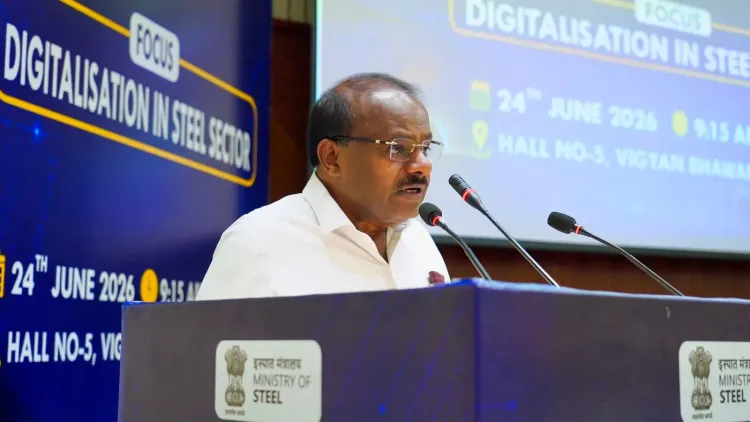
Kumaraswamy declared digitalisation a necessity — not an option — for India's steel sector at Chintan Shivir 2026 on 24 June 2026 in New Delhi .
India has been the world's second-largest steel producer since 2018 , with crude steel output growing at nearly 8 per cent annually since FY22.
Finished steel consumption has grown at approximately 13 per cent per year since FY22.
The government targets steelmaking capacity of 300 million tonnes by 2030 and 400 million tonnes by 2035 .
Key technologies highlighted: AI, ML, IIoT, Digital Twins, Robotics , and Advanced Data Analytics .
The event was attended by heads of SAIL , NMDC , and MOIL , alongside industry leaders and startups.
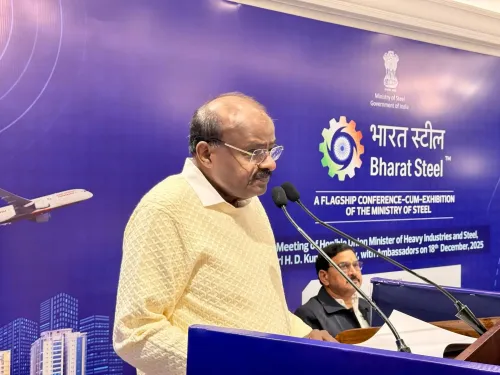
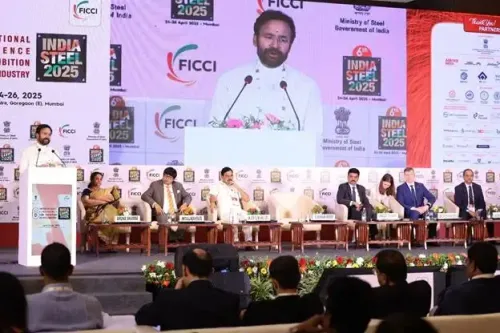
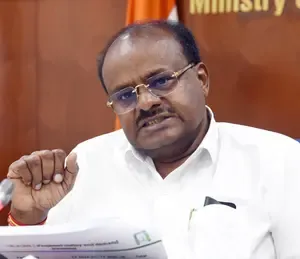
Union Minister for Steel and Heavy Industries H.D. Kumaraswamy on Wednesday, 24 June 2026 declared that digitalisation is no longer optional but essential for the long-term survival and global competitiveness of India's steel sector. Speaking at the Chintan Shivir 2026 on Digitalisation in the Steel Sector in New Delhi, he said the industry's future would be determined not just by production volume but by its capacity to build intelligent, connected, data-driven manufacturing ecosystems.
Steel as a Strategic Pillar
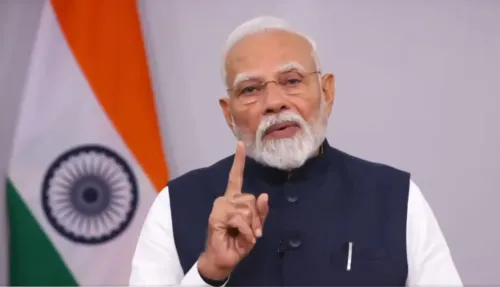
Kumaraswamy invoked Prime Minister Narendra Modi's Viksit Bharat 2047 vision, positioning the steel industry as a strategic pillar of India's economic transformation. He described steel as the backbone of nation-building, underpinning infrastructure development, manufacturing, renewable energy, urbanisation, transportation, and defence production.
The minister noted that India has held its position as the world's second-largest steel producer since 2018, a standing maintained even as demand softened across several advanced economies — a signal, he argued, of the sector's underlying resilience.
Key Production and Consumption Numbers
Kumaraswamy pointed to robust sectoral momentum: crude steel production has expanded at an average annual rate of nearly 8 per cent since FY22, while finished steel consumption has grown by approximately 13 per cent annually over the same period. He reiterated the government's capacity targets — 300 million tonnes of steelmaking capacity by 2030, scaling further to 400 million tonnes by 2035.
Technologies Set to Transform Steel Manufacturing
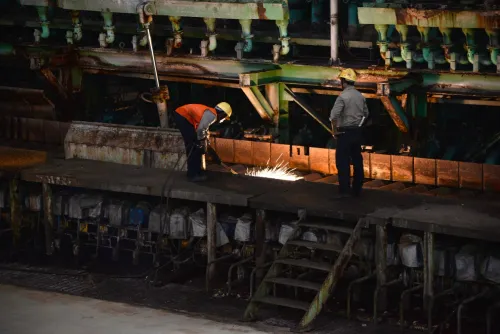
The minister underscored the transformative potential of Artificial Intelligence (AI), Machine Learning (ML), Industrial Internet of Things (IIoT), Digital Twins, Robotics, and Advanced Data Analytics in reshaping how steel is made globally. 'These technologies can help minimise unplanned downtime, reduce human errors and improve workplace safety,' Kumaraswamy said.
This comes amid a broader global shift in heavy industry, where digital integration is increasingly separating competitive producers from laggards. Notably, Indian steel plants — particularly public sector units — have historically trailed their East Asian counterparts on automation and real-time data adoption.
Who Attended and What It Signals
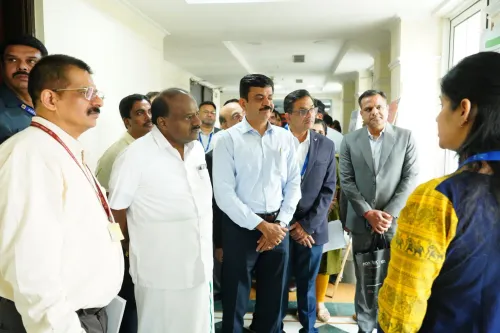
The event, organised by the Ministry of Steel, brought together senior government officials, industry leaders, technology experts, startups, and heads of major public sector steel companies including Steel Authority of India Limited (SAIL), NMDC, and MOIL. The breadth of participation signals that the Centre is treating digital transformation in steel as a policy priority rather than a sectoral aspiration.
With India's steel capacity expansion targets among the most ambitious in the world, the government's push to pair that growth with digital infrastructure will be closely watched by both domestic producers and international investors in the months ahead.
Point of View
But the harder question is execution. India's public sector steel giants — SAIL chief among them — have repeatedly announced modernisation drives that stalled on procurement timelines and workforce resistance. Pairing a 400-million-tonne capacity target with a digital transformation mandate is the right ambition; the risk is that the two tracks run in parallel rather than in sync. If IIoT and AI adoption remain confined to greenfield private plants while legacy PSU furnaces lag, India's global competitiveness gains will be uneven at best. The Chintan Shivir format is useful for signalling intent — what it needs to produce is a measurable digital-adoption benchmark tied to the 2030 capacity milestone.
NationPress
24 Jun 2026
Frequently Asked Questions
What did Steel Minister H.D. Kumaraswamy say about India's steel industry at Chintan Shivir 2026?
Kumaraswamy said digitalisation is no longer optional but essential for the long-term survival and global competitiveness of India's steel sector. He called on the industry to build intelligent, connected, data-driven manufacturing ecosystems, citing AI, ML, IIoT, Digital Twins, and Robotics as transformative technologies.
What are India's steel production capacity targets?
The government aims to scale India's steelmaking capacity to 300 million tonnes by 2030 and further to 400 million tonnes by 2035. Crude steel production has grown at nearly 8 per cent annually since FY22, while finished steel consumption has risen around 13 per cent per year.
Why is digitalisation considered critical for India's steel sector?
According to the minister, digital technologies can minimise unplanned downtime, reduce human errors, and improve workplace safety — directly impacting productivity and global competitiveness. India's steel plants, particularly public sector units, have historically lagged East Asian peers on automation and real-time data integration.
Which companies were represented at Chintan Shivir 2026?
The Ministry of Steel-organised event brought together heads of major public sector companies including SAIL, NMDC, and MOIL, alongside senior government officials, industry leaders, technology experts, and startups.
How does this fit into India's broader development vision?
Kumaraswamy linked the steel sector's digital transformation to Prime Minister Narendra Modi's Viksit Bharat 2047 vision, describing steel as a strategic pillar supporting infrastructure, manufacturing, renewable energy, urbanisation, transportation, and defence production.