CM Hemant Soren Urges Officials to Work with Honesty
Synopsis
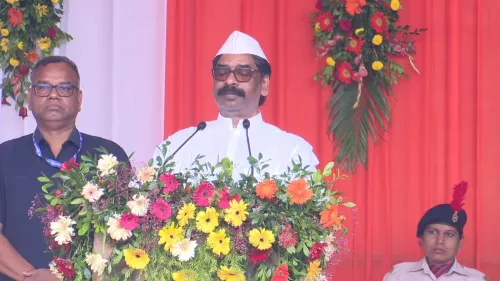
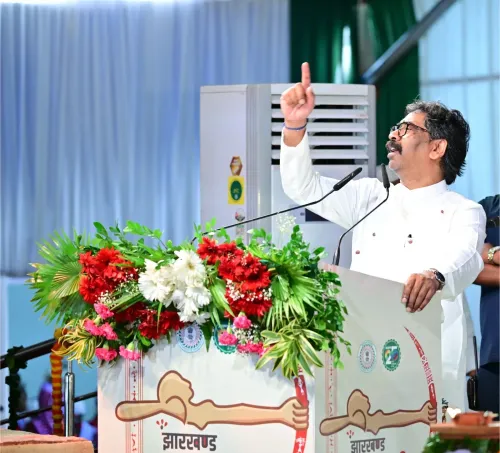
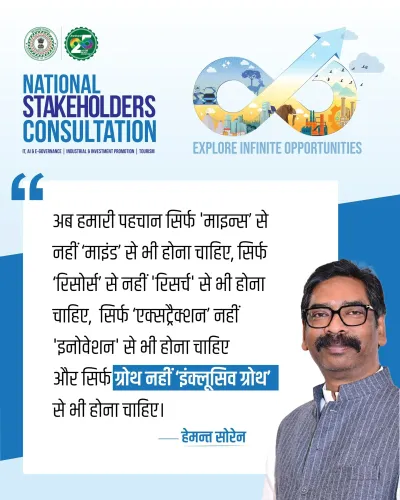
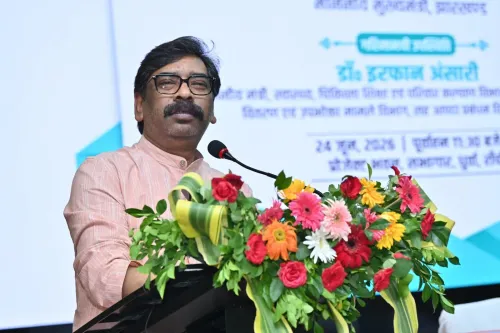
Chief Minister Hemant Soren of Jharkhand on 24 June 2026 publicly directed elected representatives and officials to perform their duties honestly, correct mistakes, and stop evading responsibility by claiming tasks are outside their remit.
Key Takeaways
CM Hemant Soren issued a public directive on 24 June 2026 calling for honesty and accountability among elected officials and state representatives.
He acknowledged that human error is natural but insisted the goal must be to minimise mistakes and correct them once known.
Soren specifically warned against the tendency to deflect duties by saying a task is 'not my responsibility.' The statement is aimed at both JMM elected members and Jharkhand state officials across departments.
The directive aligns with a broader national pattern of chief ministers using public messaging to enforce administrative accountability.
Follow-through via formal orders or legislative discussions will determine the practical impact on service delivery in the state.
The Chief Minister's Office of Jharkhand, on Wednesday, 24 June 2026, shared a directive from Chief Minister Hemant Soren calling on elected representatives and officials to discharge their duties with complete integrity and to actively correct mistakes rather than deflect responsibility.
Context
Addressing those in public office, CM Hemant Soren said: 'आप जिस काम के लिए चुने गए हैं, उसे पूरी ईमानदारी से निभाएं' ('Perform the work for which you have been elected with complete honesty'). He acknowledged that human error is natural, but stressed that the effort must always be to minimise mistakes and to correct them once identified.
Soren also warned against a tendency among officials and representatives to sidestep responsibilities by claiming a task does not fall within their purview — a habit he described as one that must be actively avoided.
Policy Backdrop
Jharkhand, carved out as a separate state in 2000, has seen successive governments issue periodic directives aimed at tightening administrative accountability and reducing bureaucratic evasion. Such public messaging from the Chief Minister's chair carries institutional weight, signalling expectations to both elected members of the ruling Jharkhand Mukti Morcha (JMM) and to the state's civil service.
Across Indian states with significant tribal populations, chief ministers have repeatedly used public platforms to reinforce a culture of performance accountability — a pattern that mirrors national-level pushes for transparent governance and departmental performance reviews.
Stakeholders and Impact
The statement is directed at elected representatives and state government officials across Jharkhand. For citizens — particularly in rural and tribal belts where service delivery gaps are most acutely felt — such a directive from the highest office carries the expectation of more responsive local administration.
The emphasis on not deflecting work as 'not my responsibility' addresses a long-standing complaint among residents who find that grievances are passed between departments without resolution. A firmer accountability norm, if enforced, could improve last-mile delivery of welfare schemes in the state.
What's Next
Observers will watch whether this public statement is followed by formal administrative orders, departmental performance reviews, or discussions in the Jharkhand Legislative Assembly on accountability mechanisms. The JMM-led government has positioned tribal welfare and efficient governance as central planks of its administration, and statements of this nature are often precursors to structured reform directives.
Whether the message translates into measurable change in service delivery will depend on the institutional follow-through that the Chief Minister's Office signals in the weeks ahead.
Point of View
Proactive governance. The explicit call-out of duty-deflection suggests the Chief Minister's Office has received feedback, formal or informal, about evasion of responsibility within the system. In a state like Jharkhand, where tribal and rural communities depend heavily on responsive local administration, such messaging carries political as well as administrative stakes. Whether it remains rhetorical or is backed by institutional mechanisms will be the real test of its impact.
NationPress
23 Sept 2026
Frequently Asked Questions
What did Jharkhand CM Hemant Soren say about government officials?
On 24 June 2026, CM Hemant Soren directed elected representatives and officials to perform their duties with complete honesty, minimise mistakes, correct errors once identified, and stop deflecting responsibilities by claiming tasks are outside their purview.
Why did Hemant Soren issue this governance directive?
The directive addresses a recurring concern in public administration — officials and representatives evading duties by claiming a task does not fall within their responsibility. Soren used the public platform to set a clear accountability expectation.
What is Jharkhand Mukti Morcha's stance on governance?
The Jharkhand Mukti Morcha, led by Hemant Soren, has positioned tribal welfare and efficient, accountable governance as central to its political platform since the party's founding.
How does this statement affect Jharkhand government employees?
The statement signals that the Chief Minister expects proactive ownership of duties from all officials. It could precede formal orders or performance reviews that hold departments accountable for service delivery outcomes.
What should Jharkhand residents expect after CM Soren's accountability message?
Residents, especially in rural and tribal areas, may see more responsive administration if the directive is backed by formal mechanisms. Observers will watch for legislative discussions or departmental orders in the weeks following the statement.