CM Hemant Soren Hands Out Appointment Letters to Jharkhand Health Officers
Synopsis
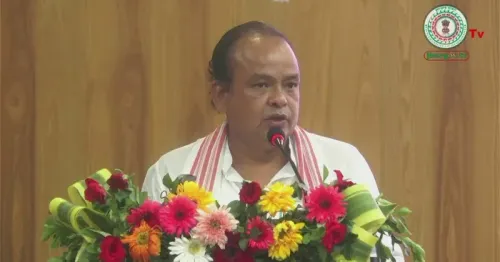
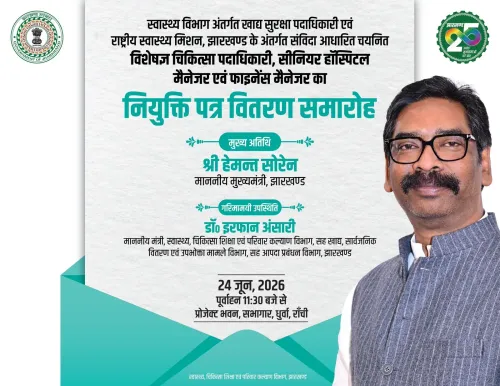
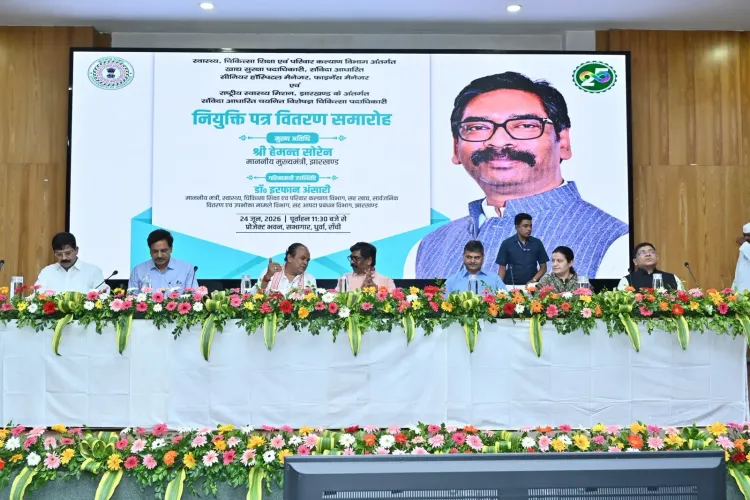
Chief Minister Hemant Soren on 24 June 2026 presided over an appointment letter ceremony in Jharkhand, handing out letters to JPSC-selected Food Safety Officers and NHM contractual Specialist Medical Officers, Senior Hospital Managers, and Finance Managers to bolster the state's public health workforce.
Key Takeaways
CM Hemant Soren personally attended the appointment letter distribution ceremony on 24 June 2026 .
Food Safety Officers selected through the Jharkhand Public Service Commission (JPSC) received permanent government appointment letters.
Specialist Medical Officers , Senior Hospital Managers , and Finance Managers were appointed on a contractual basis under National Health Mission, Jharkhand .
The dual-track recruitment — permanent JPSC and contractual NHM — reflects a standard model used by Indian states to address health workforce shortages faster.
The appointments are aimed at improving healthcare delivery in Jharkhand's tribal and remote districts, which face chronic staffing gaps.
Contractual NHM appointees may seek regularisation in future, a recurring policy pressure in state health administrations across India.
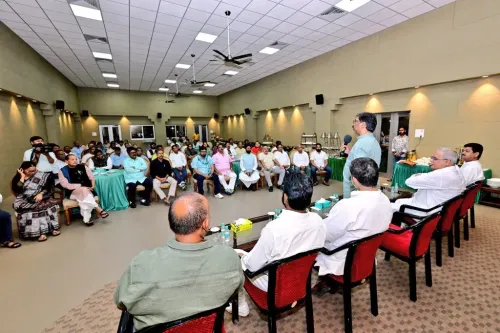
The Chief Minister's Office of Jharkhand announced on Wednesday, 24 June 2026 that Chief Minister Hemant Soren attended an appointment letter distribution ceremony for newly selected health department officials, covering both permanent and contractual posts under two separate recruitment frameworks.
Context
The ceremony brought together candidates selected through two distinct channels. The first group comprises Food Safety Officers chosen by the Jharkhand Public Service Commission (JPSC) — a permanent, gazetted cadre. The second group includes Specialist Medical Officers, Senior Hospital Managers, and Finance Managers recruited on a contractual basis under the National Health Mission (NHM), Jharkhand.
The Chief Minister's Office described the event as a niyukti patra vitaran samaroh (appointment letter distribution ceremony), with Hemant Soren presiding in person — a signal of political emphasis on health sector workforce expansion.
Policy Backdrop
The National Health Mission, launched by the Central government in 2005 as the National Rural Health Mission, was designed specifically to address chronic shortages in public health personnel, particularly in states with large rural and tribal populations. Jharkhand, formed in 2000, has consistently struggled with vacancies in district and sub-district health facilities.
JPSC-selected posts represent permanent government employment, while NHM contractual appointments allow states to scale up staffing faster than the slower PSC pipeline permits. Across Indian states, the dual-track model — permanent plus contractual — has become standard practice under NHM, though contractual workers frequently seek regularisation over time.
The Soren government has previously conducted large-scale health recruitment drives, positioning workforce augmentation as central to improving service delivery in Jharkhand's tribal and remote districts, which historically record poor health outcome indicators.
Stakeholders and Impact
The immediate beneficiaries are the newly appointed officials who gain formal employment in a state where government jobs remain highly competitive. For Food Safety Officers, the JPSC route confers job security and service protections; for the NHM contractual specialists and managers, the appointments address immediate facility-level gaps in clinical and administrative capacity.
Rural patients and communities in underserved districts stand to benefit from faster deployment of Specialist Medical Officers to public hospitals. Senior Hospital Managers and Finance Managers filling administrative roles can improve operational efficiency and fund utilisation at district hospitals — a persistent weakness in state NHM performance reviews.
What's Next
Attention will now turn to whether the state follows through with adequate postings in hard-to-reach areas, or whether newly appointed officers cluster in urban centres — a pattern seen in other states. Contractual appointees under NHM are also likely to raise demands for regularisation, a politically sensitive issue that has surfaced in multiple state legislatures.
Observers will watch Jharkhand's upcoming budget sessions for allocations that sustain NHM staffing costs, and whether the government announces further recruitment rounds to fill remaining vacancies across the health department.
Point of View
The contractual route carries a structural tension: NHM workers across India have repeatedly agitated for regularisation, and Jharkhand is unlikely to be an exception. The longer-term test will be whether these appointments translate into improved health outcomes in underserved districts, or remain a headline number without commensurate service delivery gains.
NationPress
24 Jun 2026
Frequently Asked Questions
Who are the officials appointed at the Jharkhand health department ceremony on 24 June 2026?
The appointees include Food Safety Officers selected by the Jharkhand Public Service Commission (JPSC) and contractual Specialist Medical Officers, Senior Hospital Managers, and Finance Managers recruited under the National Health Mission, Jharkhand.
What is the difference between JPSC-selected and NHM contractual appointments in Jharkhand?
JPSC-selected posts are permanent government positions with full service protections, while NHM contractual posts are time-bound appointments that allow faster hiring but do not carry the same job security, often leading to regularisation demands later.
What is the National Health Mission and why does Jharkhand use it for recruitment?
The National Health Mission is a Central government scheme launched in 2005 to strengthen public health systems, especially in rural areas. It allows states like Jharkhand to hire specialist and managerial staff contractually to fill vacancies more quickly than the regular PSC process permits.
What is the role of a Food Safety Officer in Jharkhand's health department?
Food Safety Officers are gazetted government officials responsible for inspecting food businesses, testing food samples, and enforcing food safety regulations under the Food Safety and Standards Act, 2006. In Jharkhand they are selected through JPSC.
Will NHM contractual health workers in Jharkhand be regularised?
No official announcement on regularisation has been made. Across India, contractual NHM employees frequently demand regularisation, and the Jharkhand government's position on this will likely be watched in upcoming assembly sessions and budget allocations.