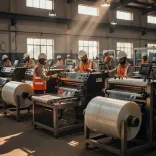
AI and robotics can reshape India's warehousing, cold-chain networks: DPIIT official

Synopsis
A senior DPIIT official has made the case for deploying AI, robotics, and automation across India's warehousing and cold-chain networks — arguing that smarter supply chains could not only cut costs but also save lives during disasters and pandemics. The remarks signal growing policy-level momentum for tech-driven logistics reform in one of the world's fastest-growing economies.
Key Takeaways
DPIIT Joint Secretary Pankaj Kumar on 29 September said AI, robotics, and automation could transform India's warehousing and cold-chain infrastructure .
AI systems integrating geographical and disaster data could forecast regional supply needs and pre-position essential goods.
Kumar cited the Covid-19 pandemic — particularly oxygen and vaccine distribution — as evidence of critical gaps in current supply-chain planning.
The cold-chain sector , handling medicines and vaccines, was identified as a priority area for AI-powered monitoring and automation.
Robotics could automate routine warehouse tasks, with AI mapping product locations and robots handling retrieval and distribution.
India's logistics sector accounts for an estimated 13-14% of GDP , yet lags global peers in warehouse automation adoption.
Artificial intelligence (AI), robotics, and automation hold the potential to fundamentally transform India's warehousing and cold-chain infrastructure, making supply networks more efficient, resilient, and capable of responding swiftly to disasters and emergencies, Department for Promotion of Industry and Internal Trade (DPIIT) Joint Secretary Pankaj Kumar said on Tuesday, 29 September. Kumar's remarks signal growing policy-level interest in deploying advanced technologies across India's logistics backbone.
Beyond Storage: AI as a Supply-Chain Brain
According to Kumar, AI-driven technologies could enable warehouses and cold-chain networks to move well beyond their conventional roles of storage and distribution. By integrating geographical, geopolitical, and disaster-related data with warehousing systems, AI platforms could forecast what supplies a particular region would need — and precisely when.
Such predictive capability, he argued, could allow both authorities and businesses to determine which essential commodities should be pre-positioned at specific locations, ensuring critical goods are available when and where demand spikes.
Lessons from Covid-19 and Disaster Response
'During floods, natural disasters, wars or any major crisis, one of the biggest challenges is ensuring the timely availability of essential goods and resources,' Kumar said, stressing that AI-enabled supply-chain systems could prove decisive in such situations.
He cited the Covid-19 pandemic as a stark illustration of what can go wrong when demand for critical resources surges unexpectedly. The distribution of oxygen cylinders and other essential supplies became acute logistical bottlenecks during the crisis, exposing structural gaps in India's supply-chain planning. Kumar said those lessons should now be embedded into future systems through AI-based demand anticipation and coordinated network management.
He also pointed to the large-scale rollout of Covid-19 vaccines as evidence that a robust cold-chain network can support major public health operations — and argued that AI and automation could further strengthen such systems by improving monitoring, storage management, and last-mile distribution.
Cold Chain: The High-Stakes Frontier
The cold-chain sector, Kumar noted, stands to gain particularly from AI integration. Temperature-sensitive products — including medicines, vaccines, and other high-value goods — require precise controlled conditions throughout storage and transit. Failures in this chain can render entire consignments unusable, with serious public health and economic consequences.
AI-powered monitoring systems could reduce such failures by continuously tracking temperature parameters and flagging deviations in real time, while automation could streamline inventory management across cold-storage facilities.
Robotics in the Warehouse
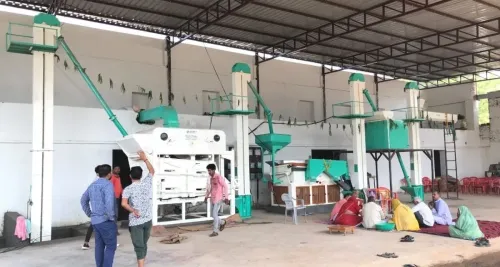
On the robotics front, Kumar said automated systems could take over several routine, labour-intensive warehouse processes. AI systems could map the precise location of products across warehouse racks, while robots retrieve required items and route them through the distribution pipeline — potentially delivering significant gains in speed and operational efficiency.
This comes amid a broader global push toward warehouse automation, with countries such as China, the United States, and several European nations having already deployed large-scale robotic fulfilment centres. India's logistics sector, which accounts for an estimated 13-14% of GDP according to industry estimates, has historically lagged in automation adoption.
What Comes Next
Kumar's remarks reflect an emerging policy consensus that technology integration in logistics is no longer optional for a rapidly growing economy. Whether the DPIIT translates this vision into concrete incentive frameworks or regulatory guidelines remains to be seen, but the direction of travel appears clear. Industry stakeholders and logistics firms will be watching for follow-up policy signals in the months ahead.
Point of View
Procurement mandates, or regulatory nudges that compel adoption. India's logistics costs as a share of GDP remain nearly double those of advanced economies, and the gap is not primarily a technology awareness problem — it is a capital, skilling, and last-mile infrastructure problem that AI alone cannot solve. Without a credible policy instrument attached to this vision, the risk is that it becomes another conference talking point rather than a structural shift.
NationPress
29 Sept 2026
Frequently Asked Questions
What did the DPIIT official say about AI and India's warehousing sector?
DPIIT Joint Secretary Pankaj Kumar said on 29 September that AI, robotics, and automation could transform India's warehousing and cold-chain networks, enabling them to anticipate demand and respond more effectively to disasters and emergencies. He argued that integrating geographical and geopolitical data with AI systems could help pre-position essential supplies where they are needed most.
How could AI improve India's cold-chain infrastructure?
According to Kumar, AI-powered monitoring systems could continuously track temperature conditions for sensitive products such as medicines and vaccines, flagging deviations in real time. Automation could also streamline inventory management and distribution, reducing spoilage and improving reliability across cold-storage facilities.
Why did the DPIIT official cite the Covid-19 pandemic?
Kumar referenced the pandemic to illustrate the consequences of inadequate supply-chain planning, particularly the acute shortages of oxygen and the logistical complexity of distributing Covid-19 vaccines at scale. He argued these lessons should inform the design of AI-based systems capable of anticipating and managing future demand surges.
What role could robotics play in Indian warehouses?
Robotics could automate routine and labour-intensive warehouse tasks, with AI systems mapping the precise location of products across racks and robots retrieving and routing items through the distribution process. This could improve both speed and operational efficiency in warehouse management.
Where does India stand on warehouse automation compared to global peers?
India's logistics sector is estimated to account for 13-14% of GDP but has historically lagged countries such as China, the United States, and several European nations in deploying large-scale warehouse automation. High logistics costs relative to GDP remain a structural challenge that policymakers are increasingly looking to technology to address.