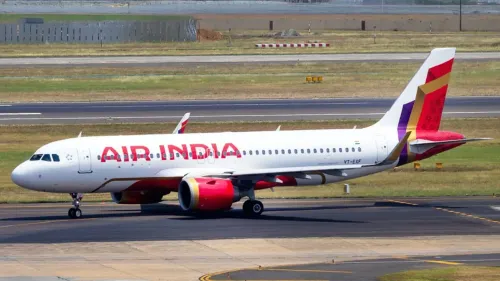
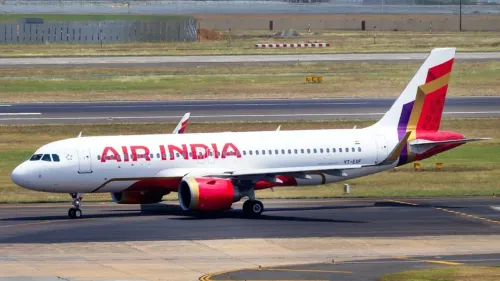
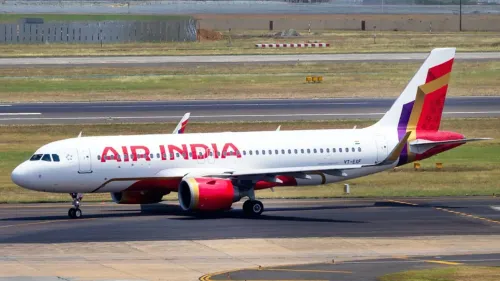
Air India Phuket-Delhi flight incident: AAIB preliminary report expected soon, says minister

Synopsis
The Air India Phuket-Delhi flight that suddenly dropped 300 feet at cruising altitude — injuring 24 — now has a second layer of alarm: the pilot reportedly tested positive for marijuana twice post-flight. With the AAIB's preliminary report imminent, the government is signalling a push for stricter laws and exemplary punishment, making this one of the most consequential aviation safety cases India has seen in recent years.
Key Takeaways
Air India Flight AI-2379 lost 300 feet of altitude suddenly at 36,000 feet on 4 August , injuring at least 24 people — 20 passengers and 4 crew members .
Two crew members sustained spinal injuries near the tailbone and neck.
The pilot reportedly tested positive for marijuana in two separate post-flight screenings in Delhi.
Civil Aviation Minister Ram Mohan Naidu confirmed the AAIB preliminary report is expected 'very soon'.
The government has asked the AAIB to expedite the probe to enable stricter laws and exemplary punishment.
The AAIB is examining technical, operational, medical, and human-factor evidence.
Civil Aviation Minister Ram Mohan Naidu on Thursday, 3 September confirmed that the Aircraft Accident Investigation Bureau (AAIB) is actively probing the Air India Flight AI-2379 incident of 4 August, in which the aircraft abruptly lost 300 feet of altitude at 36,000 feet while en route from Phuket to Delhi, injuring at least 24 people. A preliminary report from the AAIB is expected 'very soon', the minister told reporters in New Delhi.
What Happened on Flight AI-2379
The Air India aircraft, carrying 137 passengers and eight crew members, experienced a sudden loss of altitude during its cruise phase on 4 August. At least 20 passengers and four crew members were injured in the incident. Of the crew, two members sustained spinal injuries near the tailbone and neck, according to Minister Naidu.
Pilot Tests Positive for Psychoactive Substances
Adding a serious dimension to the investigation, the pilot of AI-2379 reportedly tested positive for psychoactive substances during post-flight screening in Delhi. A second test conducted subsequently also returned a positive result, reportedly confirming the presence of marijuana. The development has intensified calls for stricter regulatory oversight of aircrew medical screening.
Government Pushes for Stringent Action
Minister Naidu stated that the government has directed the AAIB to expedite its investigation so that 'more stringent laws can be put in place' and 'exemplary punishment meted out' to prevent recurrence. Once the preliminary report is released, he said, 'further course of action will then be decided.' The government also engages with airlines monthly on operational and financial challenges, and has urged carriers to strengthen their financial operations.
Scope of the AAIB Probe
The AAIB is examining all relevant technical, operational, medical, and human-factor evidence connected to the incident. This is a comprehensive multi-domain inquiry — a reflection of the complexity of the case, which spans aircraft systems, crew conduct, and regulatory compliance. Notably, this incident has put a spotlight on India's aviation safety framework at a time when the sector is seeing rapid capacity expansion.
What Comes Next
The release of the preliminary report will be a critical milestone, potentially triggering regulatory changes to aircrew drug-testing protocols and altitude-deviation response procedures. Industry observers and passenger safety advocates will be watching closely for the government's follow-through on its stated commitment to exemplary accountability.
Point of View
Crew oversight, and post-incident accountability mechanisms have not kept pace. The government's language around 'exemplary punishment' is pointed, but the real test is whether the AAIB report triggers durable rule changes or merely a one-off enforcement action. With 24 injured and a pilot allegedly flying under the influence, the credibility of India's aviation safety architecture is on the line.
NationPress
19 Oct 2026
Frequently Asked Questions
What happened on Air India Flight AI-2379 on 4 August?
Air India Flight AI-2379, travelling from Phuket to Delhi with 137 passengers and 8 crew members, experienced a sudden loss of 300 feet of altitude during its cruise phase at 36,000 feet. At least 24 people were injured, including two crew members who sustained spinal injuries.
Did the Air India pilot test positive for drugs?
Yes. The pilot of AI-2379 reportedly tested positive for psychoactive substances — specifically marijuana — in two separate post-flight screenings conducted in Delhi after the 4 August incident.
When will the AAIB preliminary report on the Air India incident be released?
Civil Aviation Minister Ram Mohan Naidu said on 3 September that the AAIB preliminary report is expected 'very soon.' Once released, the government will decide on further course of action, including potential regulatory changes.
What action is the government taking after the Air India flight incident?
The government has directed the AAIB to expedite its investigation so that more stringent laws can be enacted and exemplary punishment given to prevent recurrence. The minister also said airlines are being engaged monthly on operational and financial challenges.
What is the AAIB investigating in the Air India Phuket-Delhi case?
The Aircraft Accident Investigation Bureau is examining all technical, operational, medical, and human-factor evidence related to the incident. This includes the aircraft's systems, crew conduct, and compliance with aviation safety regulations.