Sam Altman: AI jobs apocalypse fears were overstated, says OpenAI CEO
Synopsis
OpenAI’s Sam Altman told a Sydney conference he was ‘delighted to be wrong’ — his earlier fears of AI wiping out entry-level white-collar jobs en masse have not come to pass. Coming from the man who unleashed ChatGPT on the world, the admission is significant: the jobs apocalypse narrative, at least for now, may have been the tech industry’s most consequential overcorrection.
Key Takeaways
Sam Altman said at a Commonwealth Bank of Australia conference in Sydney that AI is unlikely to trigger a global jobs apocalypse.
He admitted his earlier expectations — that ChatGPT ’s 2022 launch would rapidly eliminate entry-level white-collar roles — were overstated.
Altman said OpenAI was ‘roughly right’ on AI’s technological pace but ‘pretty wrong’ on its social and economic consequences.
He experimented with AI-generated replies on Slack and email before reverting to personal responses, citing the irreplaceable value of human interaction.
Global firms including HSBC , Amazon , Standard Chartered , and CBA have acknowledged AI is reshaping some roles within their organisations.
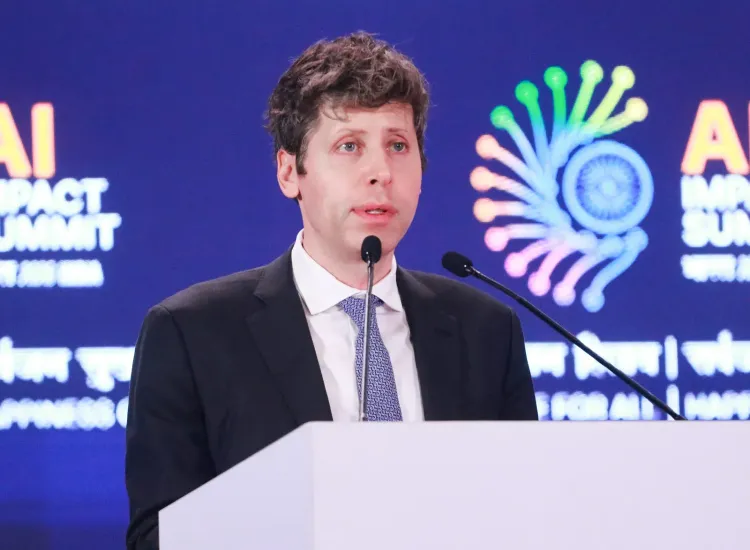
OpenAI CEO Sam Altman on Tuesday said the rapid expansion of artificial intelligence is unlikely to produce the sweeping global jobs catastrophe that many economists and technologists had warned about, conceding that his own earlier projections of large-scale white-collar job displacement were off the mark. The remarks were made at a conference hosted by Commonwealth Bank of Australia (CBA) in Sydney.
What Altman Said
Speaking in conversation with CBA Chief Executive Matt Comyn, Altman said OpenAI had been “roughly right” about the pace of AI’s technological advancement but “pretty wrong” about its social and economic consequences. He specifically noted that the elimination of entry-level white-collar roles — which he had anticipated would accelerate sharply following the 2022 launch of ChatGPT — had not materialised at the scale he expected.
“I’m delighted to be wrong about this,” Altman said. “I thought there would have been more impact on entry-level white-collar jobs being eliminated by now than has actually happened.”
On Earlier Warnings
Altman acknowledged that his previous public warnings about AI-driven job destruction had contributed to widespread anxiety, but defended the caution as warranted at the time. “People are like ‘oh you could have saved the world a lot of fear mongering and a lot of doom and gloom,’ but at the time I was like ‘I see this is a real risk we should probably talk about it,’ and it still may,” he said.
The remarks reflect a notable shift in tone from the head of the company widely credited with triggering the current generative AI boom. Notably, this is not the first time Altman has recalibrated his public stance on AI risk — he has previously oscillated between sounding alarms and expressing optimism about the technology’s trajectory.
The Human Element in Jobs
Altman said he has come to appreciate that human interaction is a core, difficult-to-automate component of many professional roles. He shared a personal anecdote: he experimented with using AI-generated responses for his Slack and email messages, labelling them ‘this is Sam’s AI,’ before ultimately reverting to responding himself.
“It was an amazing example to me of we really do care about people. We really do care about our interactions with people,” he said.
Industry Context
His comments come as several global financial institutions — including HSBC, Amazon, Standard Chartered, and Commonwealth Bank of Australia — have publicly acknowledged that AI-driven tools and automation are reshaping or replacing certain roles within their organisations. The tension between AI adoption and workforce stability remains a live debate across boardrooms and policy circles worldwide.
Whether Altman’s revised optimism holds will depend significantly on how quickly AI capabilities advance in the next two to three years — a timeline he has previously described as transformative.
Point of View
How much should policymakers trust current projections about AI’s next wave? The anecdote about reverting from AI-generated Slack replies to personal ones is telling — it suggests even Altman’s day-to-day behaviour contradicts the most alarmist displacement scenarios. Yet the caveat ‘it still may’ keeps the door open, and with agentic AI systems now entering enterprise workflows, the jobs question is far from settled.
NationPress
24 Sept 2026
Frequently Asked Questions
What did Sam Altman say about AI and jobs at the Sydney conference?
Altman said the feared global jobs apocalypse driven by AI has not materialised, and that his earlier predictions of widespread white-collar job losses were overstated. He described himself as ‘delighted to be wrong’ on the issue.
Why had Altman previously warned about AI-driven job losses?
Altman said that following the launch of ChatGPT in 2022, he genuinely believed AI would eliminate a large number of entry-level white-collar roles at speed. He defended those warnings as reflecting a real risk at the time, even if the outcome has so far been less severe.
Which companies have acknowledged AI is reshaping jobs?
Several major global firms — including HSBC, Amazon, Standard Chartered, and Commonwealth Bank of Australia — have publicly stated that AI tools and automation are replacing or restructuring certain roles within their organisations.
What personal experiment did Altman share about AI replacing human interaction?
Altman said he tested AI-generated replies for his Slack and email messages, labelling them as coming from ‘Sam’s AI,’ but eventually returned to responding personally. He said the experience reinforced his view that people genuinely value human-to-human interaction.
Does Altman still think AI could affect jobs in the future?
Yes. While revising his near-term outlook, Altman did not rule out future disruption, saying ‘it still may’ happen. With agentic AI systems increasingly entering enterprise workflows, the long-term employment question remains open.