Amul, Mother Dairy hike milk prices by ₹2–4 per litre from November 12
Synopsis
Amul and Mother Dairy have simultaneously raised milk prices by ₹2–4 per litre from 12 November 2026 — Amul's second hike this year. With fodder prices up 20%, cattle feed up 10%, and operational costs surging 25%, the dairy sector is passing a heavy input-cost burden directly to millions of Indian households.
Key Takeaways
Amul and Mother Dairy both raised milk prices by ₹2–4 per litre , effective 12 November 2026 .
Amul Taaza toned milk rises by ₹2 per litre (3.3%); Amul Gold rises by ₹4 per litre (5.5%).
This is Amul's second price revision in 2026 , following an earlier hike in May .
Fodder prices have risen up to 20 per cent and cattle feed costs by 10 per cent over the past year.
Packaging, transportation, and operational costs are up by as much as 25 per cent , according to Mother Dairy.
Amul and Mother Dairy, two of India's largest dairy brands, announced a price hike of ₹2–4 per litre across liquid milk variants on Wednesday, 11 November 2026, effective 12 November 2026. Both companies cited a sharp rise in input and operational costs — spanning fodder, cattle feed, packaging, and transportation — as the primary driver of the revision.
What Changes and by How Much
The Gujarat Co-operative Milk Marketing Federation (GCMMF), which markets dairy products under the Amul brand, said prices of fresh pouch milk have risen by 4–5 per cent across major variants and packs nationwide. Specifically, the price of Amul Taaza toned milk (3 per cent milk fat) has been raised by ₹2 per litre — a 3.3 per cent increase — while Amul Gold milk (6 per cent milk fat) has gone up by ₹4 per litre, a 5.5 per cent rise.
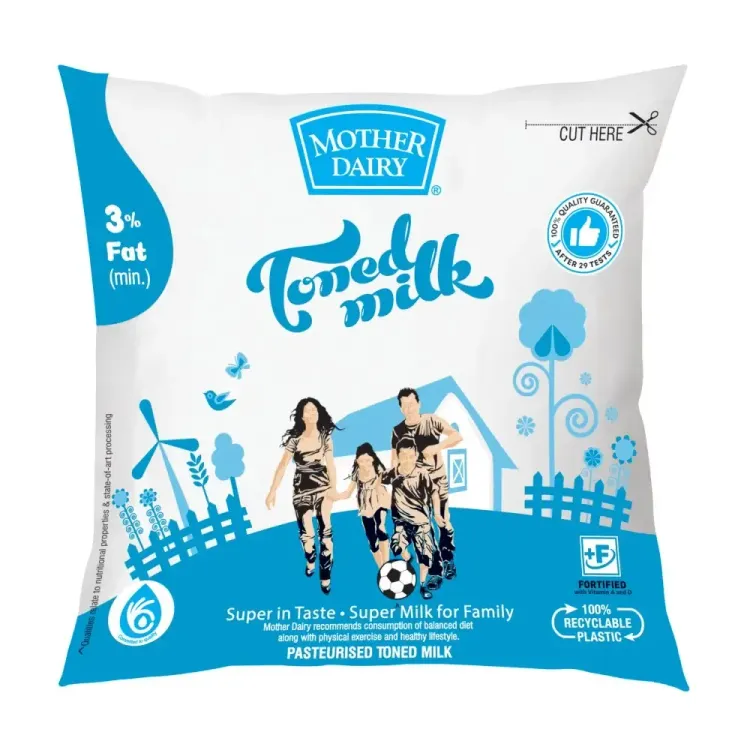
Separately, Mother Dairy announced an identical revision of ₹2–4 per litre across its liquid milk range, also effective 12 November 2026.
The Cost Pressures Behind the Hike
Mother Dairy attributed the increase to a convergence of supply-side and inflationary shocks. A spokesperson said uneven monsoon conditions across several parts of the country have pushed green and dry fodder prices up by as much as 20 per cent, while cattle feed costs have risen by around 10 per cent over the past year — directly increasing production costs for dairy farmers. Compounding that, persistent inflationary pressures have driven packaging, transportation, and other operational costs higher by up to 25 per cent.
'Uneven monsoon conditions in several parts of the country have impacted fodder availability — green and dry fodder prices have increased by up to 20 per cent, while cattle feed prices have risen by around 10 per cent over the past year — adding to the cost of milk production for dairy farmers,' the Mother Dairy spokesperson said.
Amul's Second Revision This Year
For GCMMF, this marks the second milk price revision in 2026, following an earlier increase in May. The cooperative's statement noted that the revision reflects 'sustained increases in input and operational costs' that have made the adjustment unavoidable. This pattern is consistent with GCMMF's approach in previous years, where mid-year and year-end revisions have been used to pass on accumulated cost increases to consumers.
Impact on Consumers and What Comes Next
Milk is a daily household staple for millions of Indian families, making even a marginal per-litre increase consequential for monthly budgets — particularly for large-family and low-income households. The simultaneous hike by both Amul and Mother Dairy, which together dominate organised milk supply in Delhi-NCR and several other major metros, leaves consumers with limited alternatives in the branded segment.
This comes amid a broader inflationary environment in food commodities, with the two price actions adding fresh pressure on urban household expenditure. Analysts and consumer groups are likely to watch whether other regional dairy cooperatives follow suit in the coming weeks.
Point of View
It sets a de facto floor for the organised milk market, leaving consumers little room to switch. The 25% rise in operational costs cited by Mother Dairy is a sharper figure than most food-sector commentators have flagged publicly, and deserves scrutiny alongside the broader CPI food basket. With the monsoon's fodder impact still unwinding and no near-term relief in cattle feed costs, a third revision before mid-2027 cannot be ruled out.
NationPress
11 Nov 2026
Frequently Asked Questions
By how much have Amul and Mother Dairy raised milk prices?
Both Amul and Mother Dairy have increased liquid milk prices by ₹2–4 per litre across variants, effective 12 November 2026. Amul Taaza toned milk has gone up by ₹2 per litre and Amul Gold by ₹4 per litre.
Why are Amul and Mother Dairy hiking milk prices in November 2026?
Both companies cite a sharp rise in input and operational costs, including fodder prices up by 20%, cattle feed costs up by 10%, and packaging and transportation expenses rising by up to 25%. Uneven monsoon conditions are cited as a key factor affecting fodder availability.
Is this Amul's first milk price hike in 2026?
No, this is Amul's second milk price revision in 2026. The first hike was announced in May 2026, making this the second time this year that GCMMF has raised consumer prices.
From when are the new milk prices effective?
The revised prices for both Amul and Mother Dairy variants are effective from 12 November 2026, the day after the announcement was made.
Which milk variants are affected by the price hike?
For Amul, the hike covers Amul Taaza toned milk and Amul Gold milk, with prices rising by ₹2 and ₹4 per litre respectively. Mother Dairy has revised prices across all its liquid milk variants in the ₹2–4 per litre range.