CM Bhajan Lal Backs Cabinet's ₹62,370 Cr Rabi Fertiliser Subsidy
Synopsis
Rajasthan CM Bhajan Lal Sharma welcomed the Union Cabinet's approval of Nutrient Based Subsidy rates on phosphatic and potassic fertilisers for Rabi 2026-27, backed by a ₹62,370.02 crore allocation, saying the move will lower cultivation costs and ensure affordable DAP and NPKS supply for farmers.
Key Takeaways
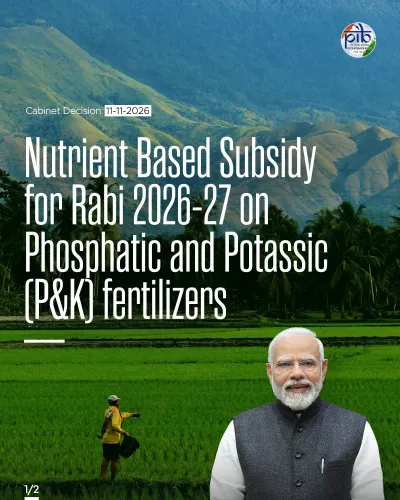
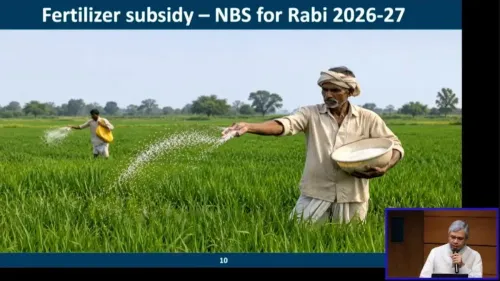
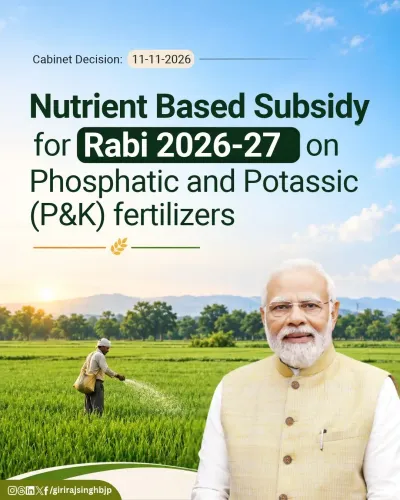
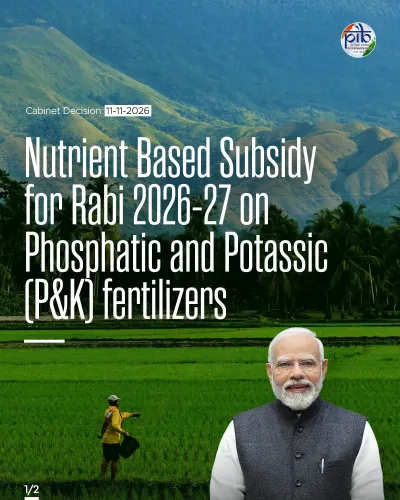
The Union Cabinet approved NBS rates on phosphatic and potassic fertilisers for Rabi season 2026-27 .
The budgetary provision stands at approximately ₹62,370.02 crore .
DAP and NPKS fertilisers will be made available to farmers at affordable, subsidised rates this winter season.
The NBS scheme , introduced in April 2010, pegs subsidies to nutrient content rather than brand, insulating farmgate prices from global commodity swings.
Rajasthan CM Bhajan Lal Sharma endorsed the decision, emphasising reduced cultivation costs and stronger farm incomes.
Timely approval before peak Rabi sowing is critical for supply-chain readiness across major wheat- and mustard-growing states.
A central cabinet decision that directly determines what every wheat and mustard farmer pays for fertiliser this winter just received a sharp endorsement from Rajasthan Chief Minister Bhajan Lal Sharma. On Wednesday, 11 November 2026, the CM welcomed the Union Cabinet's approval of Nutrient Based Subsidy (NBS) rates on phosphatic and potassic fertilisers for the Rabi season 2026-27, calling it a commendable and farmer-friendly move backed by a budgetary provision of approximately ₹62,370.02 crore.
What the cabinet cleared — and why Rabi season timing matters
The Nutrient Based Subsidy (NBS) scheme, introduced in April 2010, replaced an older cost-plus model by pegging fertiliser subsidies to the actual nutrient content — nitrogen, phosphorus, potassium and sulphur — rather than the brand or the manufacturer. Every season, the Union Cabinet revises these per-nutrient subsidy rates to absorb swings in global commodity prices, keeping farmgate prices for DAP (Di-Ammonium Phosphate) and NPKS (Nitrogen-Phosphorus-Potassium-Sulphur) fertilisers within reach of smallholders.
Rabi sowing — the winter crop cycle that produces the bulk of India's wheat, mustard and pulses — typically kicks off across northern and western India between October and December. Approving NBS rates before or at the start of this window is not ceremonial; it is the signal that determines whether supply chains move fertiliser stocks to mandis and cooperative stores in time.
Sharma's welcome and what it means for Rajasthan's farmers
CM Sharma said the decision would ensure DAP and NPKS fertilisers are available to farmers 'in adequate quantities at affordable rates' — directly addressing two persistent complaints: shortage at the point of sale and price volatility. He framed the allocation as a step toward reducing cultivation costs, boosting agricultural output and strengthening the financial position of the farming community.
Rajasthan is one of India's largest Rabi crop producers, with wheat and mustard dominating the winter acreage. Access to phosphatic fertilisers at subsidised rates is especially critical in the state's semi-arid districts, where soil nutrient deficiencies make purchased inputs a non-negotiable part of the season's economics. The CM's response signals that state machinery will be aligned to ensure the central subsidy actually reaches farmers on the ground.
The ₹62,370 crore figure in context
The budgetary provision cited — roughly ₹62,370 crore — reflects the scale of India's annual fertiliser subsidy commitment under the NBS framework. Successive union budgets have treated this line item as a core pillar of farmer-welfare spending, particularly as global phosphate and potash prices have remained volatile since the supply disruptions of 2021-22. Without the subsidy buffer, retail DAP prices could spike sharply, compressing margins for farmers who cannot reduce their input use without hitting yields.
Sharma concluded his post by conveying gratitude to Prime Minister Narendra Modi and the Union Cabinet for 'keeping farmers' interests paramount' — a formulation that doubles as a political alignment signal ahead of continued agricultural-policy rollout.
The next indicator to watch: whether fertiliser stocks reach Rajasthan's district-level distribution points before peak sowing demand — and whether this season's NBS allocation proves sufficient without a supplementary outlay mid-year.
Point of View
State-guaranteed farmgate price, and each approval cycle is a visible proof-point of the BJP's farmer-welfare narrative ahead of election seasons. Sharma's public endorsement is strategically timed: Rajasthan's Rabi sowing window is open, and aligning with a central subsidy decision lets the state government claim co-ownership of the farmer-relief story. The ₹62,370 crore allocation, if fully disbursed, would represent one of the larger NBS tranches in recent years, signalling that Delhi is willing to absorb elevated subsidy costs rather than pass global price volatility to farmers. The real test, as always, lies downstream — in whether the allocation translates to stocked shelves at the district level before peak demand.
NationPress
11 Nov 2026
Frequently Asked Questions
What is the Nutrient Based Subsidy (NBS) scheme for fertilisers?
The NBS scheme, launched in April 2010, provides government subsidies on phosphatic and potassic fertilisers calculated on the basis of nutrient content (nitrogen, phosphorus, potassium, sulphur) rather than the product brand, keeping retail prices affordable for farmers despite fluctuating global input costs.
How much has the government allocated for fertiliser subsidy in Rabi 2026-27?
The Union Cabinet approved a budgetary provision of approximately ₹62,370.02 crore for NBS rates on phosphatic and potassic fertilisers for the Rabi season 2026-27.
Which fertilisers will be subsidised under this cabinet decision?
The approval covers phosphatic and potassic fertilisers, specifically including DAP (Di-Ammonium Phosphate) and NPKS (Nitrogen-Phosphorus-Potassium-Sulphur) compounds, which are widely used during the Rabi sowing season.
Why did Rajasthan CM Bhajan Lal Sharma react to a central cabinet decision?
CM Bhajan Lal Sharma welcomed the decision because Rajasthan is a major Rabi crop-producing state, and affordable fertiliser access directly affects farmers growing wheat, mustard and pulses across the state's large agricultural belt.
When is the Rabi sowing season in India?
Rabi sowing typically runs from October to December across northern and western India, with the harvesting of crops such as wheat, mustard and pulses occurring between March and May the following year.