Anand Mahindra on Naandi's 28 Years Fighting Poverty
Synopsis
Mahindra Group chairman Anand Mahindra marked the Naandi Foundation's 28th anniversary on 2 November 2026, linking a new World Bank poverty report to on-ground impact — half a million lifted from poverty, 10 million lives touched — through programmes spanning girls' education, regenerative farming, and rural water access.
Key Takeaways
World Bank report on India's poverty decline has drawn both praise and criticism; Anand Mahindra used it as a springboard to highlight ground-level work.
Despite progress, 2.6% of India's 1.4 billion people — roughly 36 million individuals — still live in extreme poverty, more than Australia's entire population.
Naandi Foundation , now 28 years old , was founded by N.
Chandrababu Naidu and chaired first by Dr.
Anji Reddy , who recruited Mahindra to the board before his passing.
Naandi's programmes include Nanhi Kali (girls' education), Araku Coffee (regenerative farming), Naandi Water , and UFCo India .
Mahindra cites half a million people lifted from poverty and the lives of 10 million people touched and improved through Naandi's work.
Mahindra argues poverty is not only an income deficit but also 'the absence of opportunity, of confidence, of the freedom to dream.'
A World Bank report documenting India's steep decline in extreme poverty has ignited a familiar debate — optimists celebrating the numbers, skeptics picking them apart. But Mahindra Group chairman Anand Mahindra, writing on X on Monday, 2 November 2026, stepped past the argument entirely and landed on something far harder to dispute: a half-million people lifted out of poverty, and 10 million lives touched, by a single organisation most Indians have never heard of.
The number behind the number
Mahindra opens with a jolt of perspective. Yes, India's poverty reduction is dramatic. But 2.6% of 1.4 billion people still equals roughly 36 million individuals in extreme poverty — 'more than the entire population of Australia,' he writes. The headline figure flatters; the residual figure haunts. It is a classic Mahindra move: acknowledge the progress, then refuse to let the room relax.
He also flags that Kalshi, the US-based prediction market exchange, found the World Bank's India data worth tracking — a quiet signal that India's social indicators are now moving markets abroad, not just policy rooms at home.
Naandi at 28: from Naidu's idea to a national force
The deeper story in Mahindra's post is the Naandi Foundation, which marked its 28th anniversary the day before. Naandi was conceived by Andhra Pradesh's former Chief Minister N. Chandrababu Naidu as a public-private initiative to attack rural poverty at its roots. It was Dr. K. Anji Reddy — founder of Dr. Reddy's Laboratories and Naandi's first chairman — who brought Mahindra onto the board. Before his passing, Dr. Reddy entrusted Mahindra with carrying the work forward. It is a lineage of responsibility that Mahindra describes with visible weight.
Mahindra credits Manoj Kumar (@manoj_naandi) for 'irrepressibly energetic and imaginative leadership' across Naandi's journey. The operational vehicles are striking in their variety: Nanhi Kali, the girls' education programme; Araku Coffee, a market-linked regenerative farming initiative in the Araku Valley; UFCo India; and Naandi Water. Together they represent what development economists call a blended model — NGO mission, commercial discipline, government partnership.
Birdsong and football dreams: what income alone cannot measure
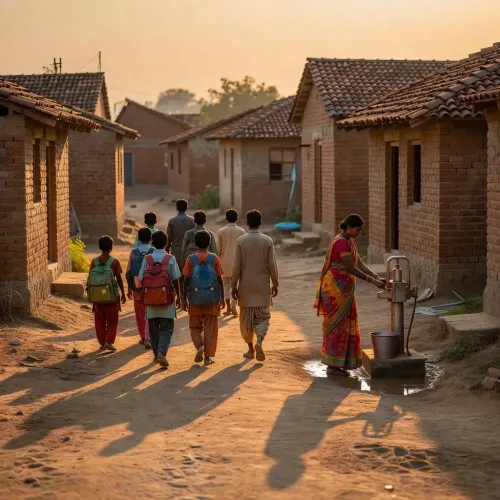
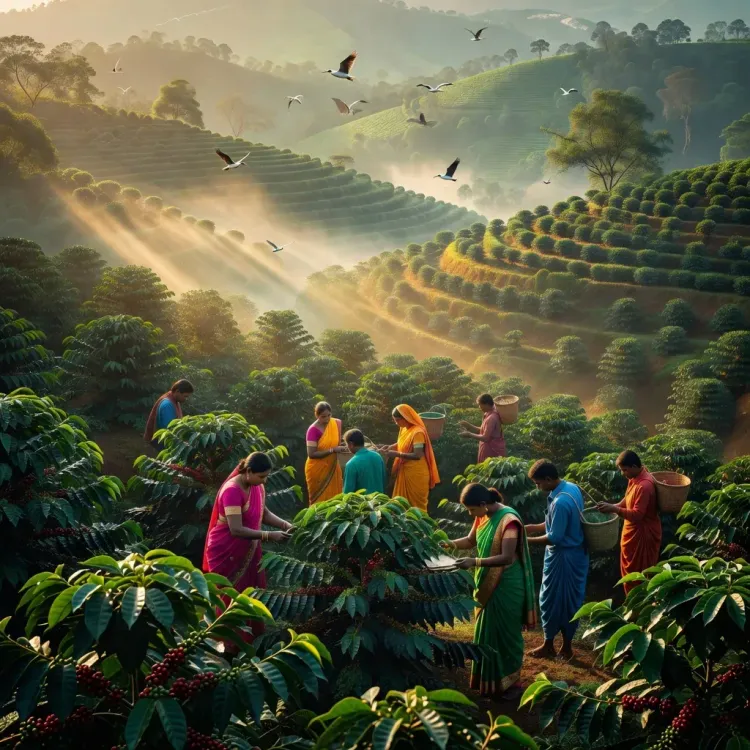
The most arresting section of Mahindra's post is not a statistic. It is a scene: farmers in Araku describing how regenerative farming has returned birdsong to their villages. And young women who no longer dream merely of a livelihood — they dream of playing for India's national women's football team. Mahindra draws an explicit line: 'Poverty is not just about the absence of income. It is also about the absence of opportunity. Of confidence. Of the freedom to dream.'
That framing matters in a policy context where poverty metrics are almost entirely income-based. The World Bank's headcount ratio captures who falls below a consumption threshold. It does not capture who has stopped dreaming.
One organisation among many — and a call to watch the rest
Mahindra is careful to position Naandi not as an exception but as an example. 'Naandi is just one among many organisations that have been quietly transforming lives across India,' he writes. The implication is deliberate: the real story of India's poverty reduction is not just in government data or multilateral reports. It is also in the unglamorous, decades-long grind of civil society organisations operating in districts that rarely make headlines.
His closing line is unambiguous: 'The World Bank report is data. The change is real.' For a chairman who chairs one of India's largest conglomerates and sits on the board of a poverty-fighting foundation, it reads less like a social media post and more like a statement of purpose.
The debate over the numbers will continue. But for 36 million people still waiting on the wrong side of the poverty line, the only metric that will matter is what comes next.
Point of View
It underscores the growing strategic value of blended-finance models where conglomerates co-own NGOs with commercial arms like Araku Coffee, turning social impact into a reputational and potentially revenue-generating asset. The invocation of Kalshi's market attention is a subtle but pointed signal that India's social indicators are now priced into global risk models, raising the stakes for both government and private actors. As large Indian business houses face mounting scrutiny on their CSR mandates under the Companies Act, Mahindra's public articulation of a 28-year personal commitment — not a compliance exercise — sets a benchmark that peers will find difficult to ignore.
NationPress
2 Nov 2026
Frequently Asked Questions
What is the Naandi Foundation and who started it?
The Naandi Foundation is an Indian non-profit focused on poverty alleviation through education, sustainable agriculture, and community development. It was founded in 1998 by N. Chandrababu Naidu , then Chief Minister of Andhra Pradesh, as a public-private initiative to address rural poverty.
What did the World Bank report say about poverty in India?
The World Bank's latest report documented a dramatic decline in India's poverty rate. However, Anand Mahindra noted that 2.6% of India's 1.4 billion people — roughly 36 million individuals — still live in extreme poverty, cautioning against complacency despite the headline progress.
What is Araku Coffee and how does it fight poverty?
Araku Coffee is a market-linked regenerative farming initiative supported by the Naandi Foundation, based in the Araku Valley . It links tribal farmers to premium coffee markets using sustainable cultivation methods, generating income while restoring local ecosystems — an approach Mahindra described as bringing 'birdsong back to villages.'
How many people has Naandi Foundation helped?
According to Anand Mahindra's post on 2 November 2026 , Naandi's work has lifted roughly half a million people out of poverty and touched and improved the lives of 10 million people across India, though these figures have not been independently verified.