Apple launches AI Health Study App with OpenEvidence to research medical queries
Synopsis
Apple has stepped directly into AI-driven healthcare research with a new study app built alongside OpenEvidence, inviting up to 2 lakh US participants to ask medical questions and share HealthKit data — all while promising that none of it will train AI models. The findings could quietly reshape how consumer AI health tools are designed and regulated.
Key Takeaways
Apple launched the Apple Health AI Study App in collaboration with OpenEvidence on 16 November 2026 .
The study is open to up to 2 lakh participants in the US , requiring an iPhone 15 Pro or a device running iOS 26 or later.
Responses are sourced from peer-reviewed journals including NEJM , JAMA , and Nature .
Participants can optionally share HealthKit data such as heart rate, sleep, activity, and lab results.
Apple confirmed that collected data will not be used to train AI models.
Expansion to other markets, including India , has not been announced.
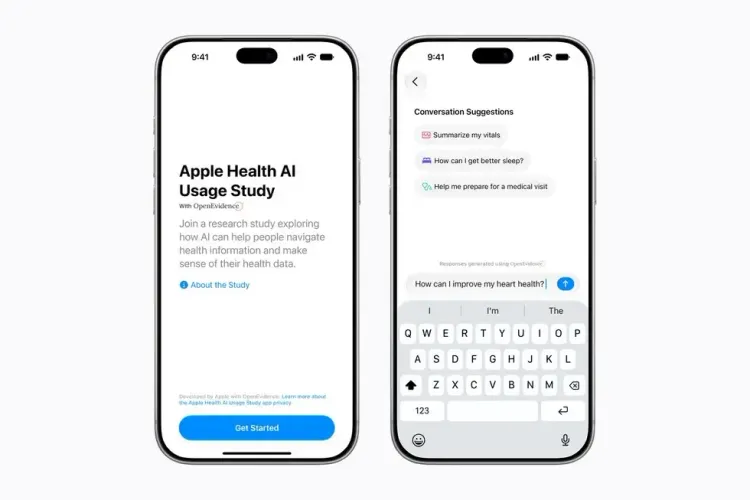
Apple has launched the Apple Health AI Study App, a dedicated research application developed in collaboration with healthcare-focused AI company OpenEvidence, to examine how people use artificial intelligence to seek medical information, evaluate the quality of AI-generated health responses, and understand how such tools shape their healthcare decisions. The app was announced on 16 November 2026 and is currently open to participants in the United States.
How the App Works
Participants can ask health-related questions through the app and receive responses grounded in medical research and clinical guidelines. Each response is accompanied by links to supporting sources, including peer-reviewed citations from established publications such as The New England Journal of Medicine, the Journal of the American Medical Association (JAMA), and Nature. The app is also designed to translate complex medical terminology into plain language accessible to non-specialists.
Who Can Participate
The study is open to up to 2 lakh participants in the US, and eligibility requires an Apple Intelligence-enabled iPhone 15 Pro or any model running iOS 26 or later. Interested users can download the dedicated study app from the App Store, review the research details, and choose whether to enrol. Apple has not announced plans to expand the study to other markets, including India.
Data Sharing and Privacy Safeguards
Participants may optionally share health data from Apple's Health app via HealthKit — including resting heart rate, physical activity levels, sleep data, and laboratory results. The study will assess whether access to personal health data makes AI responses more relevant and easier to understand. Notably, Apple has stated that collected data will not be used to train AI models, and participants retain full control over what they share. Privacy protections and safety measures are built into the study design, the company said.
What the Research Aims to Find
Beyond measuring AI response quality, the study will explore whether AI tools can help people better prepare for medical appointments — for instance, by understanding a health condition before discussing it with a doctor. Participants may also gain guidance on whether their health conditions warrant a follow-up with a healthcare provider. This comes amid growing scrutiny of AI-generated health information, with regulators and researchers worldwide debating accuracy, liability, and the risk of patients acting on unverified AI advice without professional consultation.
Broader Context
The launch marks one of Apple's most direct moves into AI-assisted healthcare research, extending its existing health ecosystem — which includes the Apple Watch, HealthKit, and ResearchKit — into the generative AI domain. Whether findings from this study will feed into new AI-powered health features in Apple's consumer products remains unclear; the company has not commented on that possibility. The outcome of the study could, however, inform industry standards for AI health tools more broadly.
Point of View
But the competitive intelligence Apple gains from understanding how 2 lakh users query health AI is itself enormously valuable. The exclusion of markets like India — where Apple has been aggressively expanding — also raises questions about whether the study's findings will reflect the full diversity of health literacy and access. If the results do eventually feed into consumer products, the absence of non-US data in the foundational research could embed biases from the outset.
NationPress
16 Nov 2026
Frequently Asked Questions
What is the Apple Health AI Study App?
The Apple Health AI Study App is a research application launched by Apple in collaboration with OpenEvidence that allows participants to ask health-related questions and receive AI-generated responses backed by peer-reviewed medical literature. Its goal is to study how people use AI to seek health information and how those interactions influence their healthcare decisions.
Who can participate in Apple's AI health study?
The study is open to up to 2 lakh participants in the United States who own an Apple Intelligence-enabled iPhone 15 Pro or any device running iOS 26 or later. Users can download the app from the App Store and choose whether to enrol after reviewing the study details.
Will Apple use participant health data to train AI models?
No. Apple has explicitly stated that data collected through the study will not be used to train AI models. Participants also retain full control over what HealthKit information — such as heart rate, sleep data, or lab results — they choose to share.
Will the Apple Health AI Study expand to India?
Apple has not announced any plans to expand the study beyond the United States. Whether findings from the US-based research will lead to new AI-powered health features available in India or other markets also remains unconfirmed.
What medical sources does the app draw on for its responses?
The app provides responses grounded in clinical guidelines and medical research, with citations drawn from leading peer-reviewed publications including The New England Journal of Medicine, the Journal of the American Medical Association (JAMA), and Nature. Responses are also designed to explain medical topics in plain language.