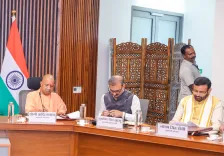
Andhra Pradesh's first semiconductor plant inaugurated in Visakhapatnam, 96 mn chips yearly

Synopsis
India's semiconductor push crossed a symbolic threshold on 1 August 2026 — Andhra Pradesh's first chip plant, built with South Korean partnership and over ₹460 crore in investment, is now operational in Visakhapatnam. With 12 facilities approved nationwide and ₹1.64 lakh crore committed, the country is finally moving from semiconductor ambition to factory-floor reality.
Key Takeaways
PM Narendra Modi inaugurated Andhra Pradesh's first semiconductor plant in Visakhapatnam on 1 August 2026 .
The facility, built by ASIP Technologies Pvt Ltd with South Korean partner APACT , required an investment of over ₹460 crore .
Annual production capacity stands at approximately 96 million semiconductor chips .
India now has 12 semiconductor facilities approved under the India Semiconductor Mission across six states , with cumulative investments of ₹1.64 lakh crore .
Semicon 2.0 has been cleared with a fiscal outlay of ₹1,27,500 crore , targeting design, materials, and advanced manufacturing.
24 semiconductor design projects are active under the Design Linked Incentive Scheme .
Andhra Pradesh's first semiconductor manufacturing facility was inaugurated by Prime Minister Narendra Modi in Visakhapatnam on 1 August 2026 under the India Semiconductor Mission, marking a significant milestone for the state's chip ecosystem. The plant, developed by ASIP Technologies Pvt Ltd in partnership with APACT, Republic of Korea, is expected to produce approximately 96 million semiconductor chips annually and generate high-skilled employment in the region, according to industry experts.
About the Facility
The plant represents the first semiconductor manufacturing unit in Andhra Pradesh to receive approval under the India Semiconductor Mission. It was built with an investment of over ₹460 crore and brings together Indian enterprise and South Korean expertise through the ASIP-APACT partnership. Experts describe the inauguration as a shift from policy intent to on-ground execution in India's semiconductor journey.
Industry Response
Ashok Chandak, President of the India Electronics and Semiconductor Association (IESA) and SEMI India, said the facility is 'testament to the sweeping momentum of India's semiconductor ecosystem, which is rapidly moving from announcement to execution.' He added that 'momentum is building on the policy front as well.' Chandak also noted that Andhra Pradesh is 'rapidly emerging as a leading technology destination,' with its electronics manufacturing and data centre sectors becoming important pillars of India's broader semiconductor ambitions.
India Semiconductor Mission: Scale and Scope
The Union Cabinet approved two additional semiconductor projects on 5 May 2026, bringing the total count of facilities approved under the India Semiconductor Mission to 12 across six states, with cumulative investments of approximately ₹1.64 lakh crore. The Cabinet has also cleared Semicon 2.0 (India Semiconductor Mission 2.0) with a fiscal outlay of ₹1,27,500 crore, extending the programme's focus to local design, materials production, advanced manufacturing, and resilient global supply chains. Additionally, 24 semiconductor design projects are currently being supported under the Design Linked Incentive (DLI) Scheme.
What This Means for Andhra Pradesh
The Visakhapatnam plant positions Andhra Pradesh as a serious contender in India's semiconductor geography, alongside states like Gujarat and Assam that already host approved facilities. For the state, the facility signals a pivot toward high-value manufacturing, complementing its existing electronics and data centre investments. Industry observers note that high-skilled job creation in chip manufacturing typically has a strong multiplier effect on ancillary sectors, from precision engineering to advanced materials supply chains.
What Comes Next
With Semicon 2.0 now cleared and 12 facilities in various stages of development, the focus will shift to execution timelines, ramp-up of domestic design capabilities, and integration with global supply chains. The 24 active DLI design projects are expected to feed into the manufacturing pipeline, potentially reducing India's reliance on chip imports over the medium term.
Point of View
But the harder question is whether India's semiconductor facilities will achieve meaningful chip self-sufficiency or remain assembly-adjacent operations dependent on imported wafers and materials. With 12 facilities approved and ₹1.64 lakh crore committed, the policy architecture is in place — yet India's chip import bill continues to grow. Semicon 2.0's emphasis on local design and materials is the right corrective, but the 24 DLI design projects need to graduate into manufacturable products at scale, not remain in perpetual incubation. The South Korean partnership at Visakhapatnam also raises a question mainstream coverage glosses over: how much of the actual intellectual property and process know-how stays in India once the joint venture matures?
NationPress
15 Sept 2026
Frequently Asked Questions
What is Andhra Pradesh's first semiconductor plant and where is it located?
It is a semiconductor manufacturing facility developed by ASIP Technologies Pvt Ltd in partnership with South Korea's APACT, located in Visakhapatnam, Andhra Pradesh. The plant was inaugurated by Prime Minister Narendra Modi on 1 August 2026 under the India Semiconductor Mission.
How many chips will the Visakhapatnam semiconductor plant produce?
The facility has an annual production capacity of approximately 96 million semiconductor chips. It was built with an investment of over ₹460 crore.
What is the India Semiconductor Mission and how many facilities has it approved?
The India Semiconductor Mission is a government programme to build a domestic chip manufacturing ecosystem. As of May 2026, it has approved 12 facilities across six states, with cumulative investments of approximately ₹1.64 lakh crore.
What is Semicon 2.0 and what does it cover?
Semicon 2.0, or India Semiconductor Mission 2.0, is an expanded programme cleared by the Union Cabinet with a fiscal outlay of ₹1,27,500 crore. It extends the original mission's focus to include local chip design, materials production, advanced manufacturing, and building resilient global supply chains.
How does this plant benefit Andhra Pradesh?
The plant is Andhra Pradesh's first semiconductor manufacturing facility and positions the state as a significant player in India's chip geography. It is expected to create high-skilled jobs and complement the state's existing electronics manufacturing and data centre sectors.