Saudi Aramco CEO warns oil market risks rising as inventories hit critical lows
Synopsis
Saudi Aramco’s CEO Amin Nasser has delivered a stark warning from London: global oil inventories are ‘scarily thin’ and could take two years to rebuild even after the Strait of Hormuz fully reopens. With Brent holding near $100 and emergency reserve releases dismissed as insufficient, the global energy supply crunch looks far from over.
Key Takeaways
Saudi Aramco CEO Amin Nasser warned at the Energy Intelligence Forum in London on 5 October 2026 that global oil inventories are critically low.
Nasser said inventory rebuilding could take up to two years after the Strait of Hormuz fully reopens.
Major economies announced plans to release up to 100 million barrels of emergency reserves, but Nasser cautioned this addresses only short-term supply gaps.
Saudi Aramco has restored its East-West pipeline to about 80% of capacity and boosted exports from its Ras Tanura terminal.
Brent crude has been trading near $100 per barrel over the past month, reflecting sustained geopolitical risk premiums.
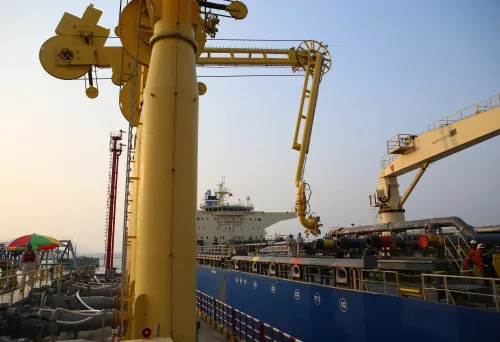
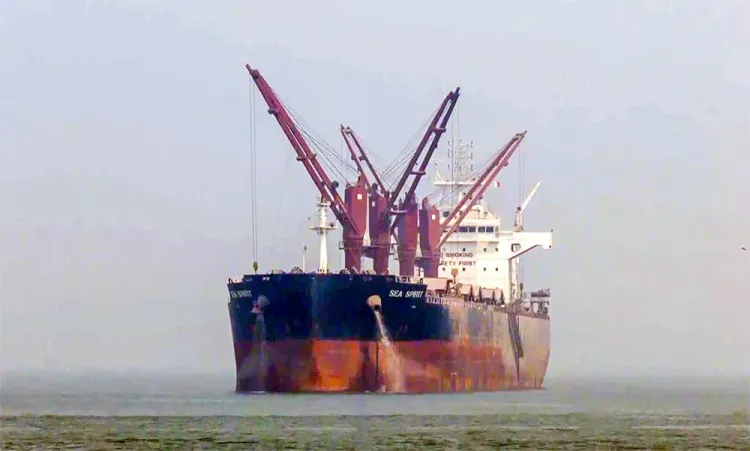
Saudi Arabia , the UAE , and Kuwait have been using their own tanker fleets to move crude through the Hormuz waterway.
Saudi Aramco Chief Executive Amin Nasser on Monday, 5 October 2026 warned that global oil stockpiles have fallen to dangerously low levels, leaving energy markets acutely exposed to further supply disruptions unless the Strait of Hormuz fully reopens. Nasser made the remarks at the Energy Intelligence Forum in London, delivering one of the most pointed assessments yet of the fragility underpinning global crude and fuel markets.
The Inventory Crisis in Numbers
“Oil inventories that normally cushion markets against shocks have become scarily thin,” Nasser said, framing the depletion not as a cyclical blip but as a structural vulnerability. He cautioned that pressure on both crude oil and refined fuel markets is likely to intensify until confidence returns and shipping through the Hormuz corridor normalises. Critically, Nasser estimated that rebuilding depleted inventories could take as long as two years even after the waterway reopens fully — a timeline that underscores the depth of the supply hole.
Why Emergency Reserve Releases Fall Short
Major economies had announced plans to release up to 100 million barrels of emergency oil and diesel reserves in the days before Nasser’s remarks, aiming to contain rising fuel prices. However, Nasser argued these releases offer only short-term relief and do not address the underlying supply-demand imbalances in global energy markets. This is not the first time strategic petroleum reserve drawdowns have been deployed as a price-stabilisation tool — a similar coordinated release was executed during the 2022 Russia-Ukraine supply shock — but critics have consistently noted that such moves merely defer the reckoning.
Hormuz Disruptions and Gulf Producers’ Response
The Strait of Hormuz — a critical chokepoint for global energy trade — has faced significant disruptions following conflict triggered by US and Israeli attacks on Iran earlier this year. Gulf producers, however, have stepped up efforts to restore export flows, with crude shipments reportedly approaching pre-conflict levels. Saudi Arabia, the UAE, and Kuwait have increasingly leaned on their own tanker fleets to move crude through the waterway.
Saudi Aramco has also ramped up exports from its Ras Tanura terminal and restored flows on its East-West pipeline to approximately 80% of capacity following a recent attack that temporarily disrupted operations. Despite higher export volumes, markets continue to price in ongoing geopolitical and security risks across the Persian Gulf and Red Sea.
Brent at $100 Signals Persistent Risk Premium
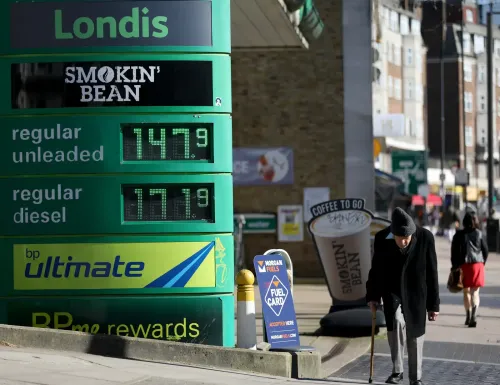
International oil benchmark Brent crude has traded around the $100-per-barrel mark over the past month, reflecting persistent market anxiety over potential supply interruptions. The three-digit price level signals that traders are far from convinced that the Hormuz situation is resolved, even as Gulf producers move to reassure buyers. For major oil-importing nations — including India, one of the world’s largest crude consumers — a sustained $100-plus environment poses meaningful inflationary and fiscal risks.
What to Watch Next
The pace of Hormuz normalisation and any further attacks on Gulf infrastructure will be the primary variables to track. Nasser’s two-year inventory rebuild estimate suggests that even an optimistic reopening scenario leaves markets exposed well into 2027. Energy ministers and central banks in import-dependent economies will be monitoring each data point closely, and any fresh security incident in the Persian Gulf could rapidly push Brent beyond current levels.
Point of View
But as the 2022 episode demonstrated, it buys time rather than solves the problem. What is different this time is the scale of the geopolitical disruption: Hormuz is not just congested, it is contested. For India, which imports roughly 85% of its crude, a sustained $100 Brent environment is not an abstract market story — it is a direct threat to the current account, retail fuel prices, and the RBI’s inflation management calculus.
NationPress
5 Oct 2026
Frequently Asked Questions
What did Saudi Aramco’s CEO say about oil markets at the Energy Intelligence Forum?
Amin Nasser warned that global oil inventories have fallen to dangerously low levels and that markets will remain under pressure until the Strait of Hormuz fully reopens. He added that rebuilding depleted stockpiles could take up to two years even after normal shipping resumes.
Why is the Strait of Hormuz so important to global oil supply?
The Strait of Hormuz is one of the world’s most critical energy chokepoints, through which a significant share of global crude exports transits daily. Disruptions to the waterway — caused by conflict following US and Israeli attacks on Iran earlier this year — have directly curtailed supply flows and elevated risk premiums in oil markets.
Will the release of 100 million barrels of emergency reserves solve the oil supply problem?
According to Nasser, no. He argued that strategic petroleum reserve releases provide only short-term relief and do not address fundamental supply-demand imbalances. A durable solution, in his assessment, requires the Strait of Hormuz to reopen and inventories to be rebuilt over an extended period.
Where is Brent crude trading and what does that signal?
Brent crude has been trading around $100 per barrel over the past month, a level widely seen as reflecting a sustained geopolitical risk premium rather than demand-driven price pressure. Markets are pricing in continued uncertainty around Hormuz security and Gulf shipping routes.
How has Saudi Aramco responded to the supply disruptions?
Saudi Aramco has ramped up exports from its Ras Tanura terminal and restored its East-West pipeline to approximately 80% of capacity after a recent attack disrupted operations. Saudi Arabia, the UAE, and Kuwait have also been using their own tanker fleets to maintain crude flows through the Strait of Hormuz.