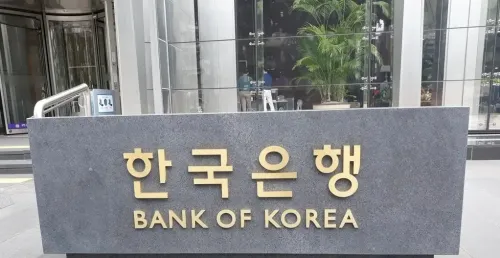
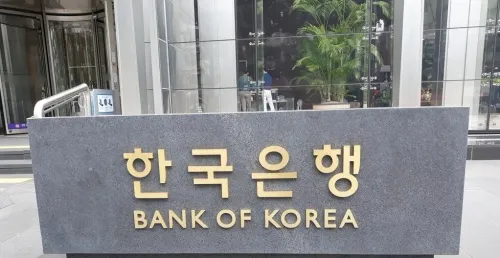
Bank of Korea hikes rate to 3.25%, highest since October 2024
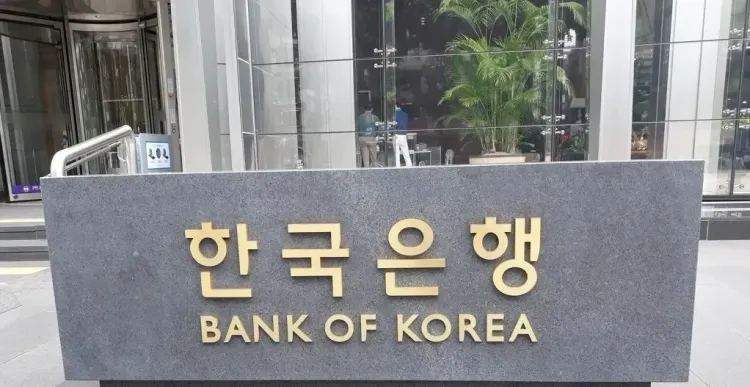
Synopsis
South Korea's central bank has resumed rate hikes, lifting its key rate to 3.25%, the highest since October 2024. Two board members dissented, and the bank quietly dropped 'pace' from its guidance. Growth is strong at a projected 3.9% this year, but oil-driven inflation remains above target, which keeps the bank hawkish for now.
Key Takeaways
The Bank of Korea raised its key rate to 3.25% on 26 November 2026 , the highest since October 2024 .
The hike ends a three-month pause , after increases in July and August and a hold in October .
Board members Hwang Kun-il and Lee Soo-hyung dissented and favoured holding at 3% .
Consumer inflation was 2.8% in October, above the 2% target.
Core inflation rose to 2.8% .
The BOK projects growth of 3.9% in 2026 and 4.1% in 2027.
The economy grew 3.6% in the first nine months.
The Bank of Korea (BOK) on Thursday, 26 November 2026, raised its key policy rate to 3.25%, resuming monetary tightening after a three-month pause. The Monetary Policy Board cited persistent inflation and faster-than-expected growth in Seoul. The move takes South Korea's benchmark rate to its highest level since October 2024. The central bank now projects growth of 3.9% this year and 4.1% in 2027.
Key Developments
The board took the decision at its regular rate-setting meeting. It lifted the base rate from 3%, a 25-basis-point increase. The BOK had raised rates at consecutive meetings in July and August before holding steady in October.
The vote was not unanimous. Two board members, Hwang Kun-il and Lee Soo-hyung, voted against the hike and proposed holding the key rate at 3%.
What the Central Bank Said
In its statement, the board said: “Domestic economic growth has further strengthened, inflation is projected to remain above the target level for a considerable time, and financial stability risks persist.”
It added: “The Board will decide on matters such as the timing of further increases in the Base Rate while assessing the trends in inflation and in the domestic economy, as well as financial stability.”
The wording changed in one notable way. The October statement said the board would decide “the timing and pace of further increases.” Thursday's statement dropped the word “pace”, which is being read as a slightly dovish signal for future rate decisions.
Inflation Picture
Government data showed consumer prices rose 2.8% year-on-year in October. That was down slightly from 2.9% in September and 3.1% in August, but still well above the BOK's 2% target.
Core inflation moved the other way. The measure, which excludes volatile food and energy prices, rose to 2.8% in October from 2.7% in September. That rise suggests price pressures are spreading beyond fuel.
The central bank has kept a hawkish tone throughout this cycle. It has pointed to higher oil prices and renewed uncertainty in the Middle East as sources of inflation risk. International crude prices have stayed elevated amid lingering military tensions between the United States and Iran.
Growth Momentum and Wider Impact
The tightening comes amid a stronger-than-expected recovery. Asia's fourth-largest economy grew 3.6% in the first nine months of 2026. It is on track for annual growth of 3% or more for the first time in five years.
For Asian markets, including India, the BOK's move adds to evidence that oil-driven inflation is keeping some regional central banks in tightening mode. Importers face similar crude price pressures, so central banks across the region will be watching how Seoul balances growth against price stability.
What Comes Next
The board has made further hikes conditional on incoming inflation, growth and financial-stability data. With two members already favouring a pause and the word “pace” dropped from guidance, the next few policy meetings could show whether Thursday's hike is the last in this cycle.
Point of View
Which is rarer than it sounds in a world where most central banks are worried about slowdowns. But the signals are mixed: headline inflation has eased for two straight months, two board members wanted a pause, and the word 'pace' has disappeared from guidance. That points to a bank nearing the end of its cycle and using one more hike as insurance against oil shocks from US-Iran tensions. For India and other oil importers, the lesson is clear: as long as Middle East risk keeps crude elevated, monetary easing across Asia will stay on hold.
NationPress
26 Nov 2026
Frequently Asked Questions
What is the Bank of Korea's new key interest rate?
The Bank of Korea raised its key rate to 3.25% on 26 November 2026, up from 3%. It is the highest level since October 2024.
Why did the Bank of Korea raise interest rates?
The central bank cited stronger domestic growth, inflation expected to stay above its 2% target for a considerable time, and ongoing financial stability risks. Higher oil prices linked to US-Iran tensions have added to the price pressure.
Was the Bank of Korea's rate decision unanimous?
No. Board members Hwang Kun-il and Lee Soo-hyung voted against the hike and proposed keeping the rate at 3%.
What is South Korea's inflation rate?
Consumer prices rose 2.8% year-on-year in October 2026, easing from 2.9% in September and 3.1% in August. Core inflation rose to 2.8% from 2.7% in September.
Will the Bank of Korea raise rates again?
Further hikes depend on inflation, growth and financial-stability data, according to the board. Dropping the word 'pace' from its guidance is seen as a slightly dovish signal.