How is BharatNet Transforming India into a Digitally Empowered Society?
Synopsis
BharatNet is redefining India's digital landscape by bridging the connectivity gap in rural areas. Union Minister Jyotiraditya Scindia emphasizes the initiative's importance in ensuring every citizen has access to the internet, paving the way for a more digitally inclusive society. Discover the significant milestones achieved under this transformative program.
Key Takeaways
BharatNet is bridging the digital divide in India.
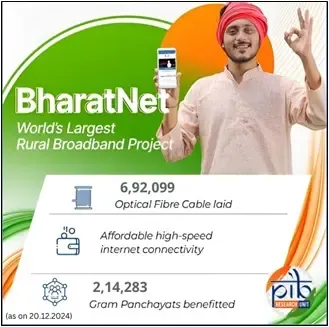
Over 2.14 lakh gram panchayats are now connected.
The project is a significant investment of Rs 42,000 crore.
Collaboration from states is crucial for success.
Right of Way application processing time has dramatically decreased.
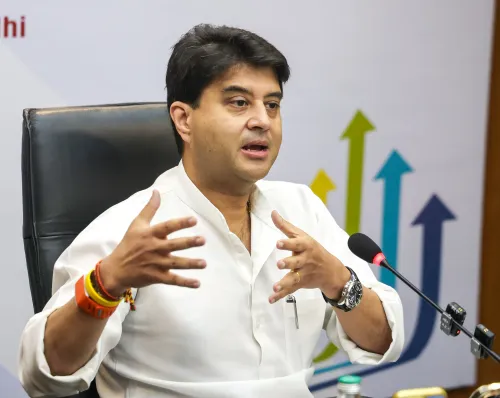
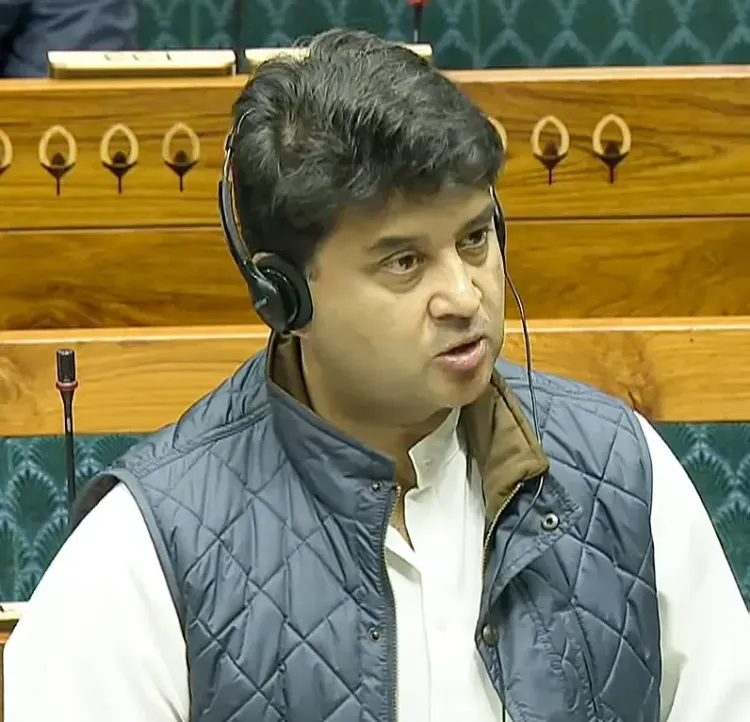
New Delhi, Feb 12 (NationPress) Union Minister for Communications and Development of North Eastern Region, Jyotiraditya Scindia, remarked on Thursday that BharatNet is revolutionizing India into a digitally empowered society by reducing the digital gap and enhancing broadband availability in rural regions.
In response to a query in the Rajya Sabha, the Minister characterized BharatNet as one of the largest government-initiated connectivity endeavors globally, showcasing the government's dedication to ensuring internet access for all citizens.
He highlighted that in the past eleven years, under the guidance of Prime Minister Narendra Modi, India has experienced remarkable growth in mobile and broadband connectivity, marking a significant digital evolution.
“During this eleven-year period, under the leadership of Prime Minister Narendra Modi, India has seen an unmatched growth in mobile and broadband connectivity, propelling a significant digital transformation,” Scindia affirmed.
Emphasizing the advances made through BharatNet, the Minister stated that the initiative connects gram panchayats via Optical Fibre Cable (OFC). Of the 2.56 lakh gram panchayats nationwide, nearly 2.14 lakh have gone online through BharatNet Phases I and II, executed at an estimated cost of Rs 42,000 crore.
In Tamil Nadu, the project is being carried out through the state's dedicated entity, Tanfinet.
From 12,525 gram panchayats in the state, 10,869 have already been connected. The remaining gram panchayats and 4,767 non-gram panchayat villages will be included under the revised BharatNet Programme, a $16.9 billion project recognized as the largest government-driven connectivity initiative worldwide.
Scindia stressed that collaboration from states in enforcing Right of Way regulations and portals will greatly speed up broadband expansion, ensuring timely advantages for citizens.
Additionally, Scindia mentioned the launch of the National Broadband Mission (NBM) 2.0 on April 1, 2025, which sets crucial targets for achievement by 2030.
He noted that OFC connectivity with a 95 percent uptime has already been achieved in 42,000 villages as of December 2025, with an objective of reaching 2.7 lakh villages by 2030.
The Minister pointed out that the average duration for processing Right of Way (RoW) applications has been significantly reduced from 455 days to 30.4 days, successfully achieving the 2030 target ahead of schedule.
Point of View
The BharatNet initiative is a pivotal step towards digital inclusion in India. It reflects the government's commitment to overcoming the digital divide, especially in rural areas. As connectivity improves, it empowers citizens, enhances educational opportunities, and drives economic growth. The focus on timely implementation and cooperation with states is essential for realizing these goals effectively.
NationPress
29 Sept 2026
Frequently Asked Questions
How many gram panchayats have been connected?
As of now, nearly 2.14 lakh out of 2.56 lakh gram panchayats have been connected under BharatNet.
What is the cost of the BharatNet project?
The BharatNet project has been implemented at an approximate cost of Rs 42,000 crore.
What are the targets of the National Broadband Mission?
The National Broadband Mission aims to achieve significant broadband connectivity milestones by 2030, including connecting 2.7 lakh villages.
How has the processing time for Right of Way applications changed?
The average processing time for Right of Way applications has been reduced from 455 days to 30.4 days.