CEA Nageswaran calls for E10 petrol return to protect older two-wheelers

Synopsis
India's Chief Economic Adviser has flagged a policy blind spot in the country's ethanol blending push: 75–80 million older carburettor-based two-wheelers that can't handle E20. His fix is simple — bring E10 back to the pumps. The real question is whether the government will act before engine damage becomes a mass consumer grievance.
Key Takeaways
Anantha Nageswaran has recommended restoring E10 petrol at fuel stations alongside E20 , in an article published in The Indian Express .
An estimated 75–80 million pre-BS4 two-wheelers with carburettors are at risk of running hot on E20 because carburettors cannot adjust for ethanol's additional oxygen content.
Nageswaran said E20 causes an energy penalty of about 7 per cent — far less than figures circulating on social media — and that testing in the US and India found no increased engine wear in non-rated vehicles.
He urged the government to hold at E20 and conduct a full cost-benefit assessment of the food-versus-fuel trade-off before advancing blending ratios further.
The original ethanol roadmap had called for a lower blend to remain available but it 'quietly vanished from the pumps,' according to Nageswaran.
Chief Economic Adviser V. Anantha Nageswaran has advocated restoring E10 petrol at fuel stations alongside E20, arguing that the lower ethanol blend is essential to safeguard an estimated 75–80 million older two-wheelers currently at risk under India's accelerated ethanol blending programme. His recommendation, published in an article in The Indian Express, comes as public debate over E20's impact on engine health intensifies across social media.
The Core Concern: Carburettor-Era Vehicles
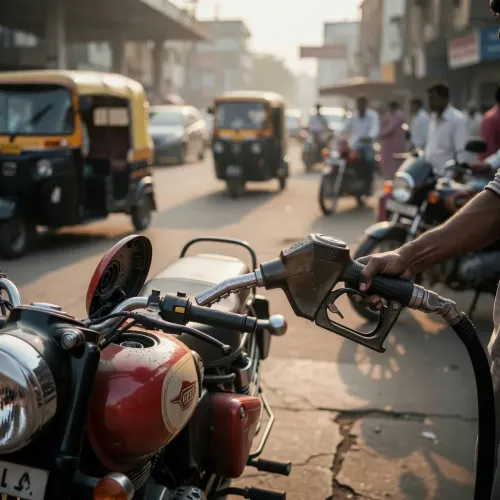
Nageswaran identified a specific and, he argued, genuine vulnerability in India's older vehicle fleet — two-wheelers manufactured before the BS4 emission norms that rely on carburettors rather than fuel-injection systems. A carburettor, he explained, cannot sense the additional oxygen present in ethanol blends and automatically adjust the fuel-air mixture. On E20, such engines draw in too little fuel relative to the air intake, causing them to run hotter than designed. Older rubber seals that are not ethanol-compatible may also degrade when exposed to higher ethanol concentrations.
The CEA stressed that this cohort of vehicles — numbering between 75 million and 80 million — represents a real-world policy gap that the original ethanol roadmap had anticipated but not adequately addressed. 'The original roadmap anticipated this and requested that a lower-blend fuel remain on sale for these vehicles, but that fuel quietly vanished from the pumps and needs to return,' he wrote.
What Nageswaran Actually Proposed
The adviser's recommendation is straightforward: restore E10 as a parallel option at pumps, rather than replacing E20. 'Restoring a lower blend at the pumps, say, E10, alongside the option to buy E20, would calm most public concern, lower total ethanol use instead of raising it, and protect the existing fleet while the retrofit programme catches up,' he wrote.
Notably, Nageswaran also pushed back on what he described as exaggerated claims circulating online. He noted that ethanol carries roughly two-thirds the energy content of petrol, meaning E20 results in an energy penalty of approximately 7 per cent — not the far steeper mileage loss widely cited on social media platforms. Testing conducted in both the US and India, he said, found no increased engine wear in vehicles not rated for E20.
Broader Policy Caution on Ethanol Blending
Beyond the immediate fleet-protection argument, Nageswaran urged the government to hold at E20 and conduct a thorough cost-benefit assessment of the food-versus-fuel trade-off before pushing blending ratios higher. He flagged unresolved distortions in pricing, water use, and edible-oil policy as issues that must be addressed in tandem with any expansion of the ethanol blending programme.
This comes amid India's broader push to reach 20 per cent ethanol blending in petrol nationwide — a target that has been advanced over the years as part of the country's energy transition and farm income support strategy. Critics and independent analysts have long warned that rapid scaling of food-crop-based ethanol risks straining domestic sugar and grain supplies.
What Happens Next
The CEA's article does not carry the weight of a formal policy directive, but recommendations from the office of the Chief Economic Adviser typically inform budget and sectoral policy discussions. Industry bodies representing two-wheeler manufacturers and fuel retailers are likely to weigh in as the debate gains traction. The government's response — particularly from the Ministry of Petroleum and Natural Gas and the Ministry of Road Transport and Highways — will determine whether E10 makes a formal return to forecourts.
Point of View
Yet it disappeared from pumps without public explanation. That is not a market failure; it is a policy execution failure. The CEA's food-versus-fuel caution is also worth watching — it signals that at least one senior economic voice inside the establishment is uncomfortable with the pace of ethanol scaling before distortions in sugar pricing and water use are resolved. Whether that caution translates into a pause, or gets drowned out by the programme's political momentum, is the real story.
NationPress
1 Oct 2026
Frequently Asked Questions
Why is CEA Nageswaran recommending the return of E10 petrol?
Nageswaran recommends restoring E10 petrol because an estimated 75–80 million older two-wheelers with carburettors cannot safely handle E20 blends. Carburettors cannot adjust for the extra oxygen in ethanol, causing engines to run hot and risking degradation of older rubber seals.
What is the difference between E10 and E20 petrol?
E10 contains 10 per cent ethanol mixed with petrol, while E20 contains 20 per cent ethanol. E20 delivers roughly a 7 per cent energy penalty compared to pure petrol, according to Nageswaran, and poses a greater risk to older carburettor-based engines that cannot self-adjust for the higher ethanol content.
Does E20 actually damage engines as claimed on social media?
Nageswaran says the most extreme claims are not supported by evidence. Testing in the US and India found no increased engine wear in vehicles not rated for E20. However, he acknowledged a genuine risk for pre-BS4 carburettor-based two-wheelers, which cannot compensate for ethanol's additional oxygen and may run hotter as a result.
How many vehicles in India are potentially affected by E20?
According to Nageswaran, approximately 75 to 80 million older two-wheelers — those built before BS4 emission norms and fitted with carburettors — are potentially at risk from E20 petrol.
What broader policy changes did Nageswaran recommend on ethanol blending?
Beyond restoring E10, Nageswaran recommended that India hold at E20 and carry out a rigorous cost-benefit analysis of the food-versus-fuel trade-off before increasing blending ratios further. He also flagged unresolved distortions in pricing, water use, and edible-oil policy that need to be addressed alongside the ethanol programme.