Centre urges states to fast-track watershed development funds for farmers
Synopsis
The Centre has pressed states to accelerate spending on science-based watershed development as India prepares to transition from WDC-PMKSY 2.0 to 3.0. At a World Bank-assisted national consultation in Nagpur, officials flagged implementation gaps and called for stronger community ownership — signalling that the next phase will demand faster, more accountable delivery for farmers.
Key Takeaways
The Centre urged states on 5 November 2026 to swiftly utilise allocated funds for watershed development to benefit farmers.
Department of Land Resources Secretary Dilip Kumar called for uniform essential parameters across states while allowing local flexibility.
Robust baseline data and impact assessments are required to evaluate WDC-PMKSY 2.0 and design WDC-PMKSY 3.0 .
Project timelines have been reduced from seven years under WDC-PMKSY 1.0 to five years under WDC-PMKSY 2.0.
Strengthening FPOs , SHGs , and community groups flagged as key to sustaining watershed infrastructure beyond project periods.
Consultation held under the World Bank-assisted REWARD programme with participation from Odisha , Karnataka , ICRISAT , NABARD , and ICAR institutes.
The Centre on Thursday urged state governments to effectively and swiftly utilise allocated funds for science-based watershed development programmes, aiming to build agricultural resilience and deliver tangible benefits to farmers and rural communities across India. The directive came from an official statement issued on 5 November 2026 in New Delhi.
Key Developments at Nagpur Consultation
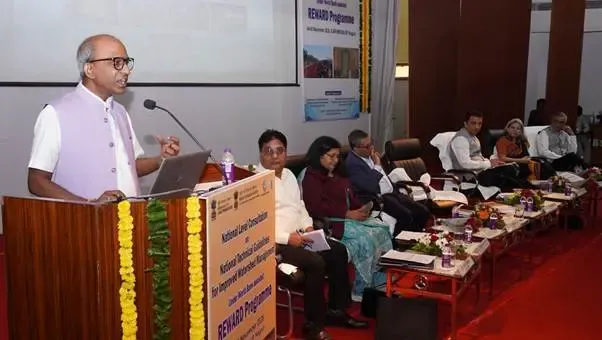
Speaking at a national-level consultation meeting on the draft National Technical Guidelines (NTG) for improved watershed management held in Nagpur, Dilip Kumar, Secretary of the Department of Land Resources, stressed the importance of identifying a set of essential parameters to be followed uniformly across all states, while allowing flexibility for states to adopt additional, locally relevant parameters.
Kumar called for robust baseline data and comprehensive impact assessments to evaluate outcomes of WDC-PMKSY 2.0, identify implementation gaps, and draw lessons for the effective design and execution of the upcoming WDC-PMKSY 3.0.
Focus on Ground-Level Impact
Kumar emphasised that watershed development must remain centred on producing concrete outcomes for farmers and communities. He underscored that scientific interventions must translate into practical, location-specific solutions that can be effectively implemented at the grassroots level. He also called for recognising and motivating well-performing states and field-level officers to strengthen institutional commitment and improve overall programme delivery.
Notably, project timelines have already been progressively tightened — from seven years under WDC-PMKSY 1.0 to five years under WDC-PMKSY 2.0 — reflecting a push for faster execution.
Community Participation and Institutional Strengthening
Participants at the two-day session underscored the critical role of community ownership. There was a strong call to strengthen Farmer Producer Organisations (FPOs), User Groups (UGs), Self-Help Groups (SHGs), and other community-based institutions for livelihood enhancement, value addition, and improved market access. The need to sustain community involvement in maintaining water-harvesting structures beyond the project period was also highlighted.
World Bank-Assisted REWARD Programme
The consultation is being held under the World Bank-assisted 'Rejuvenating Watersheds for Agricultural Resilience through Innovative Development' (REWARD) initiative. Representatives from the Department of Land Resources, NRAA, the World Bank, REWARD project states of Odisha and Karnataka, NGOs, and consortium partners including ICRISAT, NABARD, and various ICAR institutes participated in the deliberations.
The consultation serves as a platform for technical discussions on land resource inventory, hydrological assessments, GIS and remote sensing applications, decision support systems, community participation strategies, livelihood interventions, and monitoring and evaluation frameworks. With WDC-PMKSY 3.0 on the horizon, the guidelines being developed here will shape watershed policy for the years ahead.
Point of View
But the structural challenge of community ownership and post-project maintenance remains largely unsolved. The call for baseline data and impact assessments before WDC-PMKSY 3.0 is overdue; without it, successive iterations risk perpetuating the same gaps. With the World Bank engaged through REWARD and states like Odisha and Karnataka as pilots, there is now a data-rich opportunity to build a credible framework — but only if the Centre follows through on outcome-linked disbursements rather than process-based compliance.
NationPress
5 Nov 2026
Frequently Asked Questions
What is WDC-PMKSY and why is the Centre pushing states on it?
WDC-PMKSY (Watershed Development Component of Pradhan Mantri Krishi Sinchayee Yojana) is India's flagship programme for science-based watershed management to support farmers and rural communities. The Centre is urging states to accelerate fund utilisation because implementation gaps persist and the government is preparing to transition to the next phase, WDC-PMKSY 3.0.
What is the REWARD programme?
REWARD — Rejuvenating Watersheds for Agricultural Resilience through Innovative Development — is a World Bank-assisted initiative under which the two-day national consultation in Nagpur is being held. It focuses on improving watershed management practices across participating states, currently Odisha and Karnataka.
How have project timelines changed under WDC-PMKSY?
Project timelines have been progressively reduced from seven years under WDC-PMKSY 1.0 to five years under WDC-PMKSY 2.0, reflecting a push for faster and more accountable programme delivery.
What role do community organisations play in watershed development?
Farmer Producer Organisations (FPOs), User Groups (UGs), Self-Help Groups (SHGs), and other community-based institutions are considered essential for livelihood enhancement, value addition, and market access. Officials also stressed the need for these groups to maintain water-harvesting structures even after the formal project period ends.
What comes next after the Nagpur consultation?
The consultation is expected to finalise draft National Technical Guidelines (NTG) for watershed management, which will inform the design and execution of WDC-PMKSY 3.0. Impact assessments of the current phase will be used to identify gaps before the next iteration is launched.