CIDSCON 2026: 950+ infectious disease experts converge in Gandhinagar on AI and AMR
Synopsis
Over 950 infectious disease specialists from India and overseas descend on Gandhinagar this week for CIDSCON 2026 — and the agenda signals a field at an inflection point. AI's role in clinical decision-making and Gujarat's state-level AMR surveillance network are the standout themes, framing a conference that goes well beyond academic exchange into live policy and technology questions.
Key Takeaways
CIDSCON 2026 runs from 20 to 23 August 2026 at the Mahatma Mandir Convention and Exhibition Centre , Gandhinagar.
More than 950 delegates from India and abroad, including international faculty from the United States and Singapore , will attend.
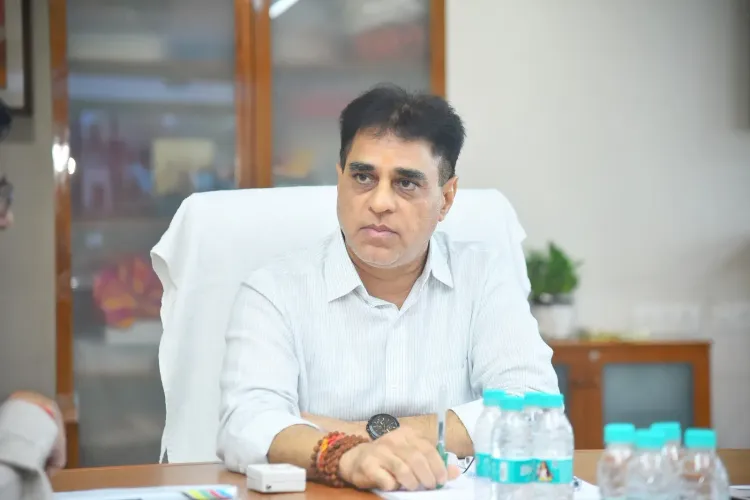
Gujarat Health Minister Praful Pansheriya will inaugurate the event and unveil a new book on AMR and antimicrobial stewardship .
A dedicated AI and Technology in ID Practice workshop will examine AI applications beyond large language models in infectious disease care.
A special session on 22 August will spotlight the Gujarat State AMR Surveillance Network (GUJSAR-N) and the state's AMR dashboard.
The programme covers AMR, tuberculosis, HIV, fungal infections, phage therapy, next-generation sequencing , and infections in immunocompromised patients.
More than 950 delegates from India and abroad will convene in Gandhinagar from 20 to 23 August 2026 for the 16th annual conference of the Clinical Infectious Diseases Society (CIDSCON 2026), with antimicrobial resistance (AMR), infection control, and artificial intelligence in clinical practice headlining the agenda. The four-day event, hosted at the Mahatma Mandir Convention and Exhibition Centre, is one of India's largest annual gatherings of infectious disease specialists.
Key Themes and Focus Areas
The conference will bring together infectious disease specialists, clinicians, researchers, microbiologists, and other healthcare professionals to share advances in the diagnosis, prevention, and treatment of infectious diseases — with a particular emphasis on challenges specific to India. The main scientific programme spans antimicrobial resistance, tropical infections, tuberculosis, HIV, fungal infections, virology, infection control, antimicrobial stewardship, and infections in immunocompromised patients. Emerging technologies including next-generation sequencing, phage therapy, and AI-enabled clinical practice will also feature prominently.
Inauguration and Opening Workshops
Gujarat Health Minister Praful Pansheriya will inaugurate CIDSCON 2026 and unveil a book on antimicrobial resistance (AMR) and antimicrobial stewardship (AMS) authored by an eminent infectious diseases specialist. The conference opens on 20 August with five specialised workshops: 'ID 360: Mastering the Basics', 'Microbiology 360: Diagnostics, Stewardship and Infection Control', 'The Zero Defence Challenge: Mastering ID in the Immunocompromised', 'AI and Technology in ID Practice', and 'ID Issues in Surgical Practice'. These sessions will blend expert-led discussions, case-based learning, and hands-on exercises.
Artificial Intelligence Takes Centre Stage
A dedicated workshop on AI will examine the current landscape of artificial intelligence in infectious disease practice, exploring applications beyond large language models. Participants will probe how AI compares with human clinical decision-making and work through practical problem-solving projects. This comes amid growing interest across Indian healthcare in deploying AI tools for diagnostics and antimicrobial stewardship — fields where data bottlenecks have historically slowed progress.
Gujarat's AMR Push in the Spotlight
A special session on 22 August will focus exclusively on Gujarat's efforts to contain antimicrobial resistance. It will examine state-level initiatives, the Gujarat State AMR Surveillance Network (GUJSAR-N), monitoring of antimicrobial stewardship programmes, and laboratory-data-based disease surveillance through a dedicated AMR dashboard. Notably, Gujarat's structured surveillance infrastructure positions it as a potential model for other Indian states grappling with rising drug-resistant infections.
Leadership, Faculty, and Conclusion
CIDS President Subramanian Swaminathan, Secretary Neha Gupta, Treasurer Kavitha Saravu, Organising Chairman Atul Patel, Organising Co-Chairman Harsh Toshniwal, and Organising Secretary Surbhi Madan are among the key figures associated with the event. Co-Organising Secretaries Vipul Shah, Manoj Sevakani, and Swati Gohel will also participate. International faculty from countries including the United States and Singapore will join national experts across sessions. The conference concludes on 23 August with a valedictory session, alongside award presentations, poster rounds, and dedicated tracks for postgraduate students and fellows.
Point of View
Yet national surveillance infrastructure remains patchy outside a handful of states. Gujarat's GUJSAR-N and AMR dashboard, spotlighted at this conference, deserve scrutiny as a replicable model — but also as a reminder of how far most states lag behind. The AI workshop is timely, yet the field must be careful: enthusiasm for large language models in clinical settings has outrun evidence of safety in low-resource, high-pathogen-diversity environments like India's. The real value of a gathering this size is not the keynotes but whether it produces actionable stewardship protocols that travel beyond the conference hall.
NationPress
5 Oct 2026
Frequently Asked Questions
What is CIDSCON 2026?
CIDSCON 2026 is the 16th annual conference of the Clinical Infectious Diseases Society (CIDS), being held from 20 to 23 August 2026 at the Mahatma Mandir Convention and Exhibition Centre in Gandhinagar, Gujarat. It brings together over 950 infectious disease specialists, clinicians, researchers, and microbiologists from India and abroad.
What are the main topics at CIDSCON 2026?
The conference focuses on antimicrobial resistance (AMR), antimicrobial stewardship, infection control, tuberculosis, HIV, fungal infections, and the use of artificial intelligence in infectious disease practice. Emerging technologies such as next-generation sequencing and phage therapy are also on the agenda.
What is the Gujarat State AMR Surveillance Network (GUJSAR-N)?
GUJSAR-N is Gujarat's state-level antimicrobial resistance surveillance network, which will be highlighted in a dedicated session on 22 August. The session will also cover the state's AMR dashboard, which uses laboratory data for disease surveillance and monitoring of stewardship programmes.
How is artificial intelligence being addressed at CIDSCON 2026?
A dedicated workshop titled 'AI and Technology in ID Practice' will examine the current AI landscape in infectious disease care, including applications beyond large language models. Participants will compare AI's role with human clinical decision-making and work through practical projects and problem-solving exercises.
Who is inaugurating CIDSCON 2026?
Gujarat Health Minister Praful Pansheriya will inaugurate the conference on 20 August 2026. He will also unveil a new book on antimicrobial resistance and antimicrobial stewardship authored by an eminent infectious diseases specialist.