AI to complement natural intelligence in medicine: Doctors at Delhi Critical Care Symposium 2026
Synopsis
At the 21st Delhi Critical Care Symposium, senior critical care specialists drew a sharp distinction: AI is a clinical alarm system, not a clinician. With ECMO, point-of-care ultrasound, and AI all on the agenda, DCCS 2026 signals how rapidly India's critical care landscape is shifting — while insisting the human mind must remain at the centre of every treatment decision.
Key Takeaways
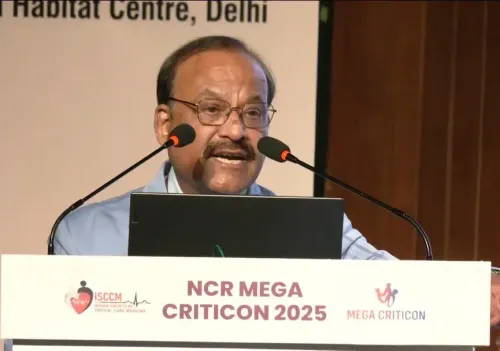
The 21st Delhi Critical Care Symposium (DCCS 2026) is being held from 13 to 15 November 2026 across Kailash Hospital, Noida and India Habitat Centre, New Delhi .
Anil Gurnani , Group Director of Critical Care at Kailash Hospital, said AI will 'complement natural intelligence' but human minds must ultimately treat patients.
Six pre-conference hands-on workshops covered respiratory care, cardiovascular monitoring, toxicology, proning, nursing excellence, and AI.
Akhil Taneja , Organising Chairperson, highlighted advances including ECMO , point-of-care ultrasound, and precision medicine over the past two decades.
Amit Goel , Organising Secretary, said the symposium's goal is to skill the next generation and improve patient outcomes through the latest critical care knowledge.
Doctors at the 21st Delhi Critical Care Symposium (DCCS 2026), being held from 13 to 15 November 2026 in New Delhi, on Saturday spoke about the growing role of Artificial Intelligence (AI) in medicine and critical care, asserting that AI will complement — not replace — human intelligence in clinical settings. The conference brings together critical care specialists from across the country to share advances in the field.
Key Developments at DCCS 2026
The symposium's Friday lecture series and pre-conference workshops were held at Kailash Hospital in Noida, covering hands-on training in respiratory care, cardiovascular monitoring, toxicology, proning, nursing excellence, and AI in medicine. The Main Scientific Conference is currently underway at the India Habitat Centre in New Delhi.
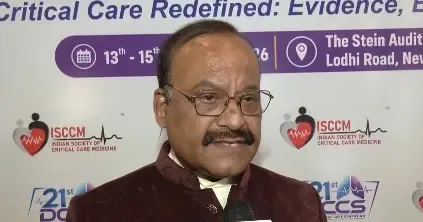
Dr. Anil Gurnani, Group Director of Critical Care at Kailash Hospital, emphasised that human judgment remains central to patient care. 'It's the man behind the machine which is most important,' he said, describing the six pre-conference workshops as 'the actual learning exercise where we allowed the delegates and the people participating in these workshops and conferences to learn hands-on.'
What Doctors Said About AI in Critical Care
Dr. Gurnani drew a clear line between AI's supportive function and the irreplaceable role of clinicians. 'Because of the software feeded in it, computers will only give an alarm whenever you are going wrong but ultimately human minds have to treat patients. So, in the coming times AI is going to complement natural intelligence,' he said.
Dr. Akhil Taneja, Organising Chairperson of DCCS 2026, reflected on how dramatically the specialty has evolved. 'Two decades of learning has already taken place. Now, critical care as a specialty, it has grown a lot over the last two decades. Initially, it was only about the organ support; now it is about precision medicine, lot of advancements like ECMO, then point-of-care ultrasound, now AI is entering the medical field,' he said. Taneja underscored that the ultimate measure of the symposium's success lies in how delegates translate learning into better patient outcomes.
Purpose and Scope of the Symposium
Dr. Amit Goel, Organising Secretary of DCCS 2026, outlined the broader mission behind the annual event. 'It is also about learning, and delivering the best care so that it transforms into the best outcome of the patient,' he said. The symposium, now in its 21st edition, is designed to skill the upcoming generation of critical care practitioners with the latest clinical tools and knowledge.
Advances Shaping Critical Care Today
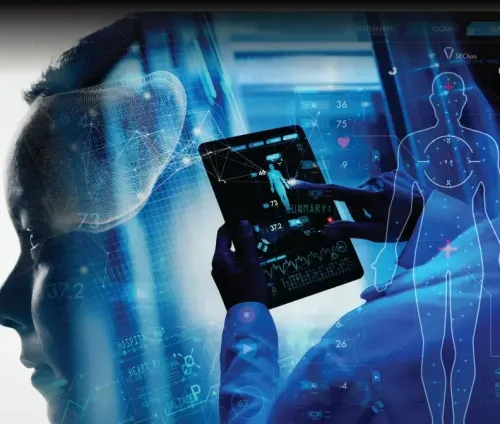
Among the technologies discussed at DCCS 2026 are ECMO (Extracorporeal Membrane Oxygenation) and point-of-care ultrasound — both representing a shift from broad organ support to precision-driven interventions. AI, in this context, is being framed not as an autonomous decision-maker but as a clinical alert system that flags anomalies for physician review. This nuanced framing reflects a broader consensus emerging in Indian medical circles: that AI augments, rather than supplants, trained clinicians. The symposium concludes on 15 November 2026, with further sessions expected to address ICU protocols and emerging treatment pathways.
Point of View
Clinician as decision-maker — is reassuring but deserves scrutiny. As AI diagnostic tools grow more accurate, the boundary between 'alerting' and 'deciding' will blur, and India's critical care community will need robust protocols for when and how much to defer to algorithmic outputs. The symposium's emphasis on hands-on skills training is well-placed, but the field also urgently needs regulatory clarity on AI-assisted clinical decisions — something neither the government nor professional bodies have fully addressed. The 21st edition of DCCS signals that Indian intensivists are engaged with these questions; the harder work of institutional frameworks lies ahead.
NationPress
14 Nov 2026
Frequently Asked Questions
What is the Delhi Critical Care Symposium 2026?
The Delhi Critical Care Symposium (DCCS 2026) is a three-day annual medical conference for critical care specialists, running from 13 to 15 November 2026. Its 21st edition is being held at Kailash Hospital in Noida and the India Habitat Centre in New Delhi, covering advances in ICU medicine, AI, ECMO, and clinical skills training.
What did doctors say about AI replacing human doctors?
Doctors at DCCS 2026 were clear that AI will not replace clinicians. Dr. Anil Gurnani stated that AI-powered systems will primarily serve as alarm tools that flag errors, while 'ultimately human minds have to treat patients,' adding that AI is going to complement natural intelligence rather than supplant it.
What topics were covered at the DCCS 2026 workshops?
Six pre-conference workshops held at Kailash Hospital, Noida on 14 November covered respiratory care, cardiovascular monitoring, toxicology, proning, nursing excellence, and artificial intelligence. The workshops were designed as hands-on learning exercises for delegates.
Who are the key organisers of DCCS 2026?
The symposium is organised by Dr. Akhil Taneja as Organising Chairperson and Dr. Amit Goel as Organising Secretary. Dr. Anil Gurnani, Group Director of Critical Care at Kailash Hospital, is among the senior faculty addressing the conference.
Why is AI becoming important in critical care medicine?
AI is entering critical care as the specialty shifts from basic organ support to precision medicine, alongside technologies like ECMO and point-of-care ultrasound. At DCCS 2026, it was discussed as a tool that can process data and alert clinicians to deviations, potentially improving response times in intensive care settings.