Grassroots innovators: Dr Jitendra Singh calls for national innovation pathway
Synopsis
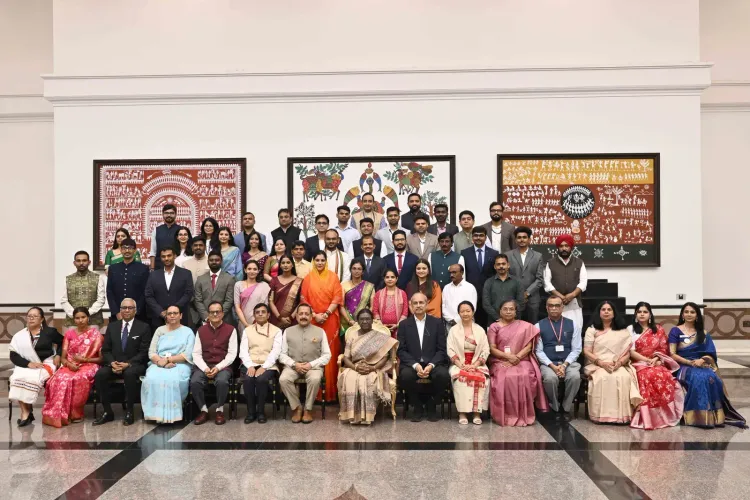
At the Rashtrapati Bhavan Cultural Centre, Union Minister Dr Jitendra Singh honoured 26 grassroots innovators and made a pointed call: recognition is not enough. He pushed for AIM-NIDHI convergence to give village and small-town innovators access to incubators, IP support, and market linkages — a structural shift in how India scales grassroots ideas into national enterprises.
Key Takeaways
Dr Jitendra Singh addressed the Grassroots Innovator Recognition Ceremony 2026 at the Rashtrapati Bhavan Cultural Centre on 31 July 2026 .
26 grassroots innovators were honoured for solutions in agriculture, healthcare, clean energy, water management, and more.
The minister called for stronger integration between Atal Innovation Mission (AIM) and NIDHI to move beyond recognition toward incubation and market adoption.
25 Atal Community Innovation Centres (ACICs) are operational, supporting over 2,500 grassroots innovators ; another 25 ACICs are in the pipeline.
India is the world's third-largest startup ecosystem with over 2.4 lakh startups .
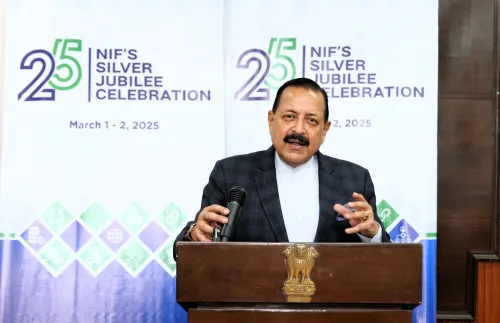
Union Minister Dr Jitendra Singh on Friday, 31 July 2026 called for a seamless national innovation pathway to bridge grassroots innovators with India's formal innovation ecosystem, addressing the Grassroots Innovator Recognition Ceremony 2026 at the Rashtrapati Bhavan Cultural Centre in New Delhi. The event saw 26 grassroots innovators honoured for developing practical, affordable, and community-driven solutions.
Who Was Recognised and What They Built
The 26 innovators honoured at the ceremony have created solutions spanning agriculture, healthcare, clean energy, assistive technology, water management, circular economy, and sustainable livelihoods. Dr Singh described these contributions as representing the 'true spirit of inclusive development' — innovations that reduce drudgery, enhance productivity, and generate local livelihoods.
What the Minister Called For
Dr Singh urged stronger integration between the grassroots innovation ecosystem nurtured by the Atal Innovation Mission (AIM) and the Department of Science and Technology's National Initiative for Developing and Harnessing Innovations (NIDHI). He stressed that recognition alone is insufficient — innovators must be supported through scientific validation, technology translation, incubation, and market adoption.
Such convergence, he said, would give innovators structured access to Technology Business Incubators, Centres of Excellence, prototype development, intellectual property support, product testing, certification, manufacturing partnerships, finance, and market linkages.
Scale of India's Grassroots Innovation Ecosystem
India currently hosts over 2.4 lakh startups, ranking it as the world's third-largest startup ecosystem. AIM has extended the innovation footprint beyond premier institutions and metropolitan centres, enabling innovators from rural, tribal, hilly, coastal, aspirational, and remote regions to participate in India's development journey.
Notably, 25 Atal Community Innovation Centres (ACICs) are already operational and have collectively supported more than 2,500 grassroots innovators. An additional 25 ACICs are in the pipeline, signalling a significant expansion of this infrastructure.
The Broader Vision
Dr Singh asserted that India's next wave of growth will emerge from villages and small towns — not exclusively from laboratories and large cities. The government, he said, has transformed innovation into a nationwide movement by democratising access to science, technology, and entrepreneurship.
With the ACIC pipeline expanding and AIM-NIDHI convergence on the agenda, the coming months will test whether this vision translates into scalable enterprise creation at the grassroots level.
Point of View
But recognition ceremonies without structural follow-through have a poor conversion record. Dr Singh's call for AIM-NIDHI convergence is the right diagnosis — the gap between a village innovator winning an award and that innovation reaching a market has always been the policy failure point. With 25 ACICs operational and 2,500 innovators supported, the numbers sound impressive, but the share of those who have reached commercial scale remains unquantified. Until the government publishes verifiable enterprise-creation and revenue data from ACIC cohorts, the 'democratisation of innovation' narrative risks remaining a ceremonial one.
NationPress
31 Jul 2026
Frequently Asked Questions
What is the Grassroots Innovator Recognition Ceremony 2026?
It is an event organised to honour grassroots innovators from across India who have developed practical, affordable solutions in sectors such as agriculture, healthcare, clean energy, and water management. The 2026 edition was held at the Rashtrapati Bhavan Cultural Centre in New Delhi on 31 July, where 26 innovators were recognised.
What did Dr Jitendra Singh call for at the ceremony?
Dr Singh called for a seamless national innovation pathway connecting grassroots innovators with the formal ecosystem, specifically urging stronger integration between the Atal Innovation Mission (AIM) and the Department of Science and Technology's NIDHI programme. He stressed that innovation must progress beyond recognition to scientific validation, incubation, and market adoption.
What are Atal Community Innovation Centres and how many exist?
Atal Community Innovation Centres (ACICs) are facilities under AIM designed to support grassroots innovators with resources, mentorship, and infrastructure. As of July 2026, 25 ACICs are operational and have supported more than 2,500 innovators, with another 25 centres in the pipeline.
What would AIM-NIDHI convergence mean for innovators?
Convergence between AIM and NIDHI would give grassroots innovators structured access to Technology Business Incubators, Centres of Excellence, prototype development, intellectual property support, product testing, certification, manufacturing partnerships, and market linkages — resources currently fragmented across separate government programmes.
Where does India rank in the global startup ecosystem?
India currently ranks as the world's third-largest startup ecosystem, hosting over 2.4 lakh startups, according to figures cited by Dr Singh at the ceremony.