Delhi LG Sandhu: India shifting from ease of doing to ease of scaling business
Synopsis
Delhi LG Taranjit Singh Sandhu told industry leaders at PHDCCI's 121st annual session that India has moved past 'ease of doing business' — the next leap is 'ease of scaling', built on skilled labour, technology adoption and investment that creates real jobs, not just capital inflows. The shift signals a maturation in how India is pitching itself to global business.
Key Takeaways
Delhi LG Taranjit Singh Sandhu addressed the 121st Annual Session of PHDCCI in New Delhi on 10 October 2026 .
He said India's next phase is 'ease of scaling business' — moving beyond procedural ease to innovation and employment creation.
Three priorities identified: talent and labour quality , technology and innovation , and investment and value creation .
Sandhu stressed measurable business outcomes over procedural reforms, aligning with PM Modi's economic vision.
He called for Delhi to become a clean, labour-centric investment hub, citing Dwarka as a model investment zone.
PHDCCI Senior VP Anil Gupta called for 'wise growth' that does not compromise future generations' resources and opportunities.
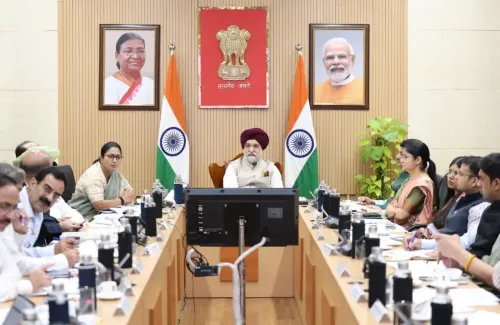
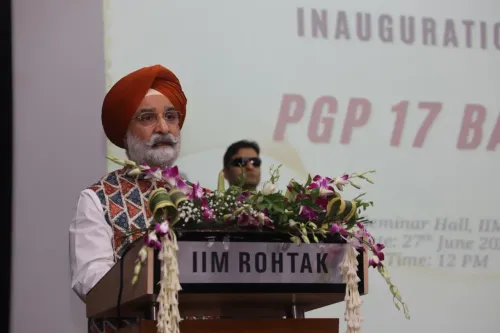
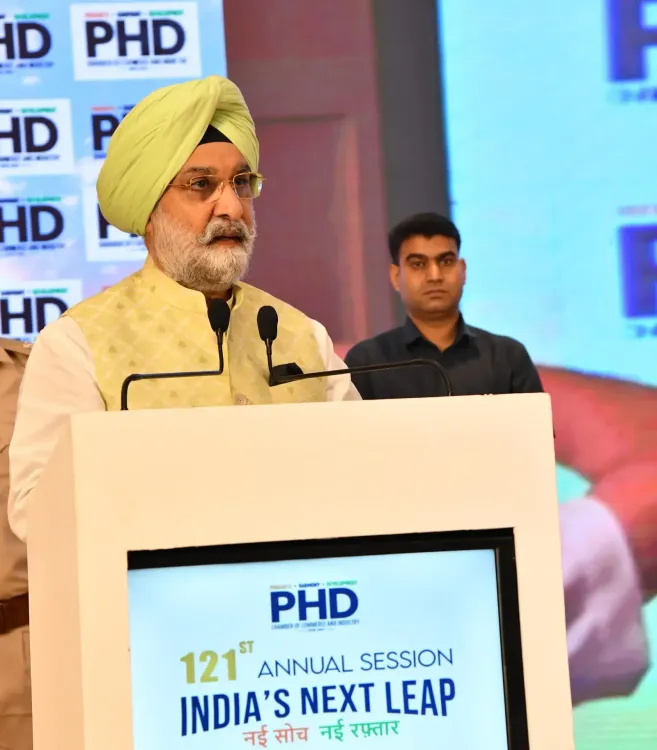
Delhi Lieutenant Governor Taranjit Singh Sandhu on Saturday, 10 October 2026 said India has completed its transition from a climate of fear around business to one of ease of doing business, and that the country's next frontier is the 'ease of scaling business' — focused on innovation and employment creation in line with Prime Minister Narendra Modi's economic vision. He was speaking at the 121st Annual Session of the PHD Chamber of Commerce and Industry (PHDCCI) in New Delhi.
The Three Pillars of India's Next Economic Leap
Sandhu laid out three structural priorities for India's next phase of growth. The first is talent and labour quality. 'A competitive economy requires a skilled, adaptable and productive workforce with focus on employability, industry-oriented skills, vocational training and preparing workers for emerging technologies,' he said at the session.
The second pillar is technology and innovation, encompassing technology adoption, research and development, entrepreneurship and the commercialisation of new ideas. The third is investment and value creation — with Sandhu arguing that investment must be assessed not just by capital inflows but by its contribution to employment, technological advancement, productivity and domestic value addition.
Beyond Market Size: The Competitiveness Argument
Sandhu cautioned that a large consumer market, while a vital foundation for growth, is not sufficient on its own to guarantee international competitiveness. He said businesses also evaluate whether a country offers the capabilities, infrastructure and institutional conditions to serve a market efficiently and use it as a platform for wider expansion.
This framing reflects a broader shift in India's economic policy discourse — from merely attracting investment on the basis of market scale to building the ecosystem that converts that scale into productive and export-competitive capacity.
Focus on Outcomes, Not Just Procedures
The LG emphasised that the coming phase of economic development must prioritise measurable improvements in business outcomes rather than procedural reform alone. He called for aligning governance, infrastructure, skills, technology, investment facilitation and enterprise development to strengthen India's position as a competitive destination for international business.
Next-phase priorities, according to Sandhu, include transforming market potential into productive capacity, enabling investment to generate employment, improving productivity through skills, supporting innovation through technology, and reducing business costs through efficient logistics.
Delhi as a Hub: Clean, Labour-Centric Growth
Sandhu specifically noted that the national capital must emerge as a centre of enterprise, investment and employment. He stressed that growth in Delhi must be clean, non-polluting and labour-centric, so that economic progress translates directly into livelihoods for residents. He cited the push to develop Dwarka as a major investment hub as one concrete expression of this principle.
Industry Voice: Wise Growth Over Fast Growth
Anil Gupta, Senior Vice President of PHDCCI, echoed the long-term framing at the session, stating that true economic progress lies not merely in how fast a country grows, but in how wisely it grows — creating prosperity today without compromising the resources, opportunities and well-being of future generations. The remarks signal that industry bodies are increasingly aligning with a sustainability-conscious growth narrative alongside traditional GDP metrics.
With India's economic policymakers and business chambers converging on a 'scale and innovate' agenda, the direction of reforms in the months ahead will be closely watched.
Point of View
But its policy substance remains to be tested. India has repeatedly set competitiveness targets — on manufacturing share, skill density, R&D investment — that have stalled at the implementation stage. The emphasis on measurable outcomes over procedural reform is the right instinct, yet the Delhi LG's speech offered principles rather than benchmarks. Unless the Centre and states agree on concrete metrics — jobs created per rupee of incentive, R&D spend as a share of GDP, logistics cost reduction — the 'next phase' risks being another well-articulated aspiration.
NationPress
10 Oct 2026
Frequently Asked Questions
What did Delhi LG Taranjit Singh Sandhu say at the PHDCCI session?
Delhi LG Taranjit Singh Sandhu said India has moved from a fear of doing business to ease of doing business, and the next phase must be 'ease of scaling business' — focused on innovation and employment creation. He was speaking at the 121st Annual Session of PHDCCI in New Delhi on 10 October 2026.
What are the three pillars Sandhu outlined for India's next economic phase?
Sandhu identified three pillars: talent and labour quality (employability, vocational training, readiness for emerging technologies), technology and innovation (R&D, entrepreneurship, commercialisation), and investment and value creation (measuring investment by employment and productivity impact, not just capital inflows).
Why is 'ease of scaling' different from 'ease of doing business'?
'Ease of doing business' focused on reducing regulatory and procedural friction for companies to start and operate. 'Ease of scaling' goes further — it is about building the ecosystem of skills, technology, infrastructure and institutional quality that allows businesses to grow, innovate and compete internationally.
What did the LG say about Delhi's economic role?
Sandhu said Delhi must emerge as a centre of enterprise, investment and employment, with growth that is clean, non-polluting and labour-centric. He cited the development of Dwarka as a major investment hub as an example of this vision in practice.
Who is Anil Gupta and what did he say at the PHDCCI session?
Anil Gupta is the Senior Vice President of PHDCCI. He said true economic progress lies not in how fast India grows but in how wisely it grows — creating prosperity today without compromising the resources and well-being of future generations.