DoT mandates Calling Name Display for telecom users from 1 November 2026
Synopsis
From 1 November 2026, Indian mobile users will see the registered name of unknown callers — not just a number — as the DoT rolls out mandatory CNAP across 4G and higher networks. No opt-in needed. It is the most significant upgrade to India's caller ID system in years, and a direct strike against spam and fraud calls.
Key Takeaways
The Department of Telecommunications (DoT) has mandated Calling Name Presentation (CNAP) services from 1 November 2026 .
For unsaved domestic numbers, the caller's name from the originating operator's subscriber database will be displayed automatically — no opt-in required.
The mandate initially covers 4G and higher-generation wireless networks; 2G, 3G and PSTN implementation will follow after further review.
International calls will appear simply as 'International Call' .
Businesses may display a preferred name, provided it is a registered trademark or GST trade name .
Operators must use a 'security-by-design' approach; caller name data must not be retained after a call ends.
The Department of Telecommunications (DoT) has directed all telecom service providers to roll out Calling Name Presentation (CNAP) services across their service areas by 1 November 2026, enabling mobile users to see a caller's name — not just a number — on incoming calls. The directive marks a significant upgrade to India's existing Calling Line Identification (CLI) framework, which currently displays only the telephone number.
How CNAP Will Work
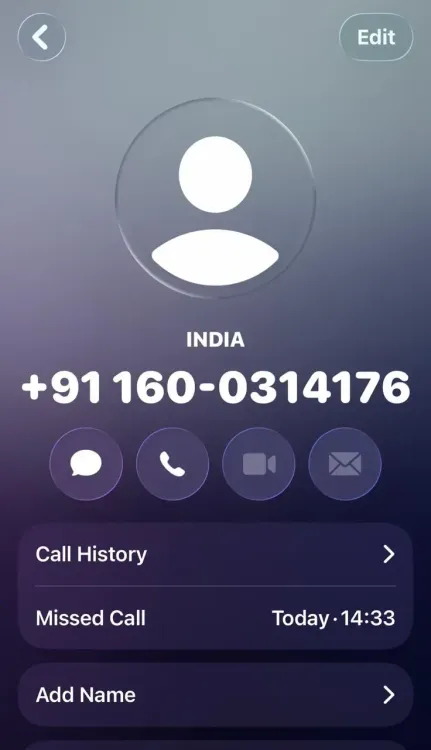
Under the new framework, the CLI shown on a recipient's handset will carry two fields: one for the caller's telephone identifier and a second for the caller's name. If the number is already saved in the recipient's contacts, the stored name will continue to appear. For unsaved numbers on domestic calls, the name recorded in the originating telecom operator's subscriber database will be displayed instead. Incoming international calls will simply be identified as 'International Call'.
The facility will be activated automatically for eligible users and will require no separate opt-in request from subscribers, according to the guidelines.
Which Networks Are Covered First
Telecom operators have already conducted trials of CNAP on wireless terrestrial networks running on 4G and higher-generation technologies. The 1 November 2026 mandate applies to these networks. Implementation on 2G, 3G and public switched telephone networks (PSTN) will be addressed separately after further examination by the government.
Privacy Safeguards and Security Requirements
To protect user privacy and network integrity, operators are required to adopt a 'security-by-design' approach. Critically, the query-response mechanism used to retrieve a caller's name must not retain that identity information once the call ends, limiting the risk of data accumulation. Operators must also ensure their networks, databases, and connectivity infrastructure can handle CNAP requests without degrading service quality.
The framework has been introduced in line with Rule 48(1) of the Telecommunications (Authorisation for Provision of Principal Telecommunication Services) Rules, 2026, which mandates secure presentation of CLI and prohibits tampering.
Special Provisions for Businesses and Bulk Customers
The guidelines extend flexibility to businesses and bulk telecom customers, allowing them to display a preferred name rather than the name in their subscriber record. However, such preferred names must be either a registered trademark under the Trade Marks Registry or a registered trade name on the Goods and Services Tax (GST) portal — a safeguard designed to prevent spoofing by bad actors mimicking legitimate brands.
What This Means for Users
The rollout of CNAP is widely seen as a direct countermeasure against the surge in spam and fraudulent calls that have plagued Indian mobile users. By surfacing the caller's registered name for unknown numbers, the system aims to give recipients an informed choice before answering. This comes amid a broader government push to tighten telecom security, including earlier mandates around SIM card verification and the Sanchar Saathi citizen-safety platform. All eyes will now be on whether telecom majors — Reliance Jio, Bharti Airtel, and Vodafone Idea — meet the 1 November deadline seamlessly.
Point of View
But its real-world impact hinges on the accuracy of telecom subscriber databases — which, in India, have historically been patchy due to unverified bulk SIM registrations and outdated KYC records. If the name surfaced for an unknown caller is wrong or blank, the system erodes trust rather than building it. The carve-out for businesses to display trademark or GST-registered names is sensible on paper, but enforcement will be the test: fraudsters have previously exploited similar display-name systems in other markets to impersonate brands. The exclusion of 2G and 3G networks from the initial mandate also means rural India — where older network technology still dominates — gets the least immediate protection, precisely where telecom fraud is hardest to contest.
NationPress
15 Oct 2026
Frequently Asked Questions
What is Calling Name Presentation (CNAP) and how does it work in India?
CNAP is a telecom feature that displays a caller's registered name alongside their phone number on the recipient's screen. From 1 November 2026, Indian users on 4G and higher networks will see the name from the originating operator's subscriber database for unsaved numbers, with no opt-in required.
From when will CNAP be available to Indian mobile users?
The DoT has directed telecom operators to implement CNAP by 1 November 2026 for 4G and higher-generation networks. Rollout on 2G, 3G and public switched telephone networks will be taken up separately after further government examination.
Will users need to register or opt in for the CNAP service?
No. The facility will be activated automatically for eligible subscribers. Users do not need to submit a separate request to access the caller name display feature.
How will CNAP handle privacy and prevent misuse of caller data?
Operators must follow a 'security-by-design' approach under which the query-response system that fetches a caller's name must not retain that information once the call ends. Networks and databases must also be equipped to handle CNAP requests without affecting service quality.
Can businesses display a custom name instead of their subscriber record name?
Yes. Businesses and bulk customers may display a preferred name, but it must be either a trademark registered under the Trade Marks Registry or a trade name registered on the GST portal, to prevent fraudulent impersonation of legitimate brands.