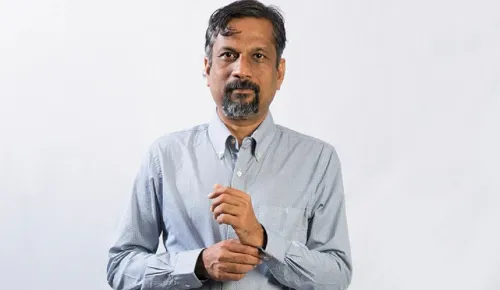
Zomato CEO Deepinder Goyal's Temple wearable under fire over scientific claims

Synopsis
A hepatologist known as The Liver Doc has called out podcaster Ranveer Allahbadia for publicly defending Deepinder Goyal's Temple wearable without disclosing his own angel investor stake in the $54 million-funded startup — putting undisclosed influencer-investor conflicts squarely in the spotlight.
Key Takeaways
Dr Cyriac Abby Philips (The Liver Doc) urged Ranveer Allahbadia to disclose his financial interest in Temple after Allahbadia publicly defended the wearable on X.
Allahbadia , known as BeerBiceps , is an angel investor in Temple's $54 million seed funding round, though his exact equity percentage has not been disclosed.
Deepinder Goyal holds a 28.59% stake in Temple, making him the largest shareholder, according to a breakdown reported by Inc42 Media .
Institutional investors include Steadview Capital (5.28%) , Peak XV Partners (3.17%) , Dharana Fund (2.9%) , and QLT Technology (2.11%) .
Employee stock ownership plans account for 10% of Temple's equity; other shareholders collectively hold 38.06% .
Temple has not yet published peer-reviewed data to address the scientific credibility questions raised publicly.
Zomato CEO Deepinder Goyal's health-tech wearable startup Temple has come under renewed scrutiny after hepatologist Dr Cyriac Abby Philips, widely known online as The Liver Doc, called out podcaster Ranveer Allahbadia for publicly endorsing the device without disclosing his financial stake in the company. The dispute, playing out on X (formerly Twitter), has reignited broader questions about the scientific credibility of Temple's claims and the ethics of undisclosed investor promotion.
The Liver Doc's Challenge to Allahbadia
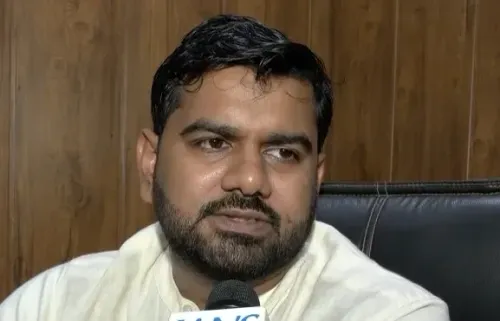
Reacting to a post by Allahbadia — popularly known by his online identity BeerBiceps — in which he defended Temple against critics, Dr Philips pointed directly to a conflict of interest. 'Hello Ranveer, it is also prudent and ethical to disclose your interests,' he wrote in his response on X.
Dr Philips further noted that Allahbadia had participated in Temple's landmark $54 million seed funding round as a prominent angel investor. While the exact percentage of Allahbadia's personal equity has not been publicly specified in regulatory filings, his dual role — as both a vocal public backer and a financial stakeholder — lies at the heart of the transparency concern.
Allahbadia's Defence of Temple
Ranveer Allahbadia pushed back against detractors in a post on X, arguing that critics lacked sufficient information about Temple's underlying research and development to dismiss the technology as unscientific. He maintained that there was not enough evidence available at this stage to conclusively reject Goyal's project, calling for a more measured assessment before forming judgements.
Notably, Allahbadia's involvement with Temple extends beyond public endorsement — he is also a confirmed angel investor in the startup, though the precise details of his shareholding have not been made public.
Who Owns Temple: The Shareholding Breakdown
According to a shareholding breakdown reported by Inc42 Media, Deepinder Goyal holds a 28.59% stake in Temple, making him the company's largest individual shareholder. Among institutional investors, Steadview Capital holds 5.28%, followed by Peak XV Partners at 3.17%, Dharana Fund at 2.9%, and QLT Technology at 2.11%.
The shareholder list also includes several prominent names from India's startup and business ecosystem, among them Akshant Goyal, Vijay Shekhar Sharma, Varun Alagh, Abhiraj Singh Bhal, Kunal Shah, and Raj Shamani. Employee stock ownership plans account for 10% of equity, with other shareholders collectively holding 38.06%.
The Wider Debate on Health-Tech Credibility
The controversy is not merely about one investor's disclosure — it surfaces a recurring tension in India's fast-growing health-tech space, where celebrity and influencer backing can outpace independent scientific validation. Critics argue that wearables making health or diagnostic claims carry a higher burden of proof than conventional consumer gadgets, and that undisclosed financial interests in promotional content can mislead consumers.
This comes amid a broader global conversation about influencer accountability in health and wellness marketing, with regulators in several jurisdictions tightening rules on paid endorsements. Whether Indian regulatory frameworks — including SEBI's guidelines on investment disclosures or the Advertising Standards Council of India's rules on sponsored content — apply to Allahbadia's posts remains an open question.
What Happens Next
Temple has yet to issue a formal response to the scientific criticism or the conflict-of-interest allegations. As the debate grows, observers will watch whether the company publishes peer-reviewed data to substantiate its claims and whether Allahbadia moves to voluntarily disclose his stake in future endorsements. The episode is likely to sharpen scrutiny of how India's startup ecosystem handles influencer-investor overlaps in health-related ventures.
Point of View
Temple risks becoming a case study in how India's startup ecosystem conflates hype with substance.
NationPress
8 Nov 2026
Frequently Asked Questions
What is the Temple wearable and who founded it?
Temple is a health-tech and AI-powered wearable startup founded by Deepinder Goyal , the CEO of Zomato. The device has attracted scrutiny over the scientific basis of its health claims, with critics calling for independent validation of its underlying research.
Why is Ranveer Allahbadia being criticised over Temple?
Ranveer Allahbadia (BeerBiceps) is being criticised because he publicly defended Temple's technology on X without disclosing that he is also an angel investor in the startup. Hepatologist Dr Cyriac Abby Philips (The Liver Doc) argued this created a conflict of interest that should be transparently disclosed to his audience.
How much did Temple raise in its seed funding round?
Temple raised $54 million in its seed funding round, one of the largest seed rounds for an Indian health-tech startup. The round drew investment from institutional players and angel investors including Ranveer Allahbadia, though individual equity percentages for some backers have not been made public.
Who are the major shareholders in Temple?
Deepinder Goyal is the largest shareholder with a 28.59% stake, according to data reported by Inc42 Media. Institutional investors include Steadview Capital (5.28%) , Peak XV Partners (3.17%) , Dharana Fund (2.9%) , and QLT Technology (2.11%) . Other shareholders collectively hold 38.06% , with employee stock plans at 10% .
Has Temple responded to the scientific and disclosure criticism?
As of the time of reporting, Temple has not issued a formal response to either the scientific credibility questions or the conflict-of-interest concerns raised about Ranveer Allahbadia's undisclosed investor role. The company has also not published peer-reviewed research to publicly substantiate its health claims.