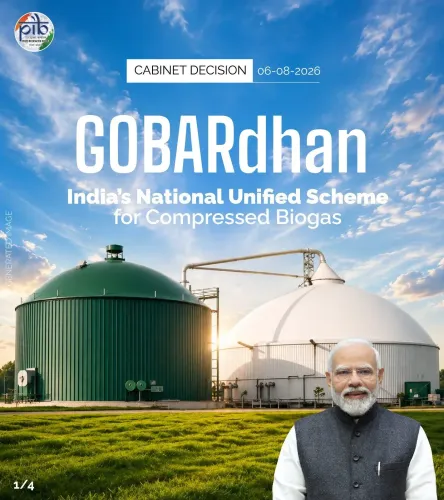
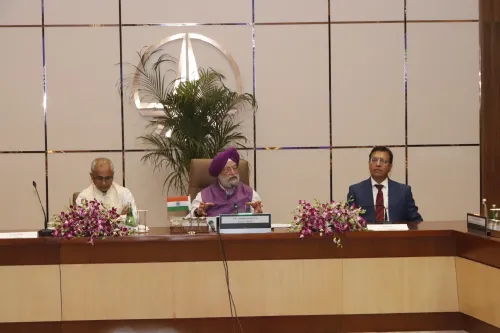
Could an Excise Waiver on CBG-CNG Blend Unlock Rs 1 Lakh Crore in Investments?

Synopsis
Could a proposed excise duty waiver on biogas-CNG blends unlock significant investments in India? The IBA believes this move could lead to a staggering Rs 1 lakh crore in funding, enhancing clean energy initiatives and supporting rural development. Explore how this policy could transform the energy landscape and contribute to India's Net Zero goals.
Key Takeaways
Proposed excise waiver could unlock investments of Rs 1 lakh crore .
Supports clean energy initiatives and rural development.
CBG production could mitigate greenhouse gas emissions.
Financial viability of projects is expected to improve.
Stable policy framework is crucial for maximizing potential.
New Delhi, Feb 22 (NationPress) The anticipated excise duty waiver on biogas mixed with compressed natural gas (CNG) may catalyze investments reaching up to Rs 1 lakh crore in India, according to a statement from the Indian Biogas Association (IBA) on Sunday.
The industry organization highlighted that this initiative, revealed in the recent Union Budget 2026, marks a significant advancement in promoting clean energy and aligning with India’s 2070 Net Zero objectives.
The IBA asserted that the excise exemption on compressed biogas (CBG) blended with CNG would enhance project financial viability and draw substantial private investment.
They indicated that if city gas distribution networks achieve a modest 5% blending of biogas in the coming five years, it will necessitate approximately 2.5 to 3 million metric tonnes per annum (MMTPA) of CBG.
This scenario alone could stimulate investments ranging from Rs 45,000 crore to Rs 55,000 crore.
The IBA also mentioned that with a clear and stable policy framework, along with predictable pricing, blending levels could elevate to 7-8% by 2032.
In such a case, the overall investment potential could nearly double to almost Rs 1 lakh crore.
This waiver is seen as a correction of a long-standing disparity, as CBG, which is a renewable and environmentally friendly fuel, was previously taxed similarly to CNG.
Eliminating the excise charge on the biogas portion of the blended fuel will render it more economical.
For city gas distribution firms, this implies reduced average fuel costs. Consumers stand to gain from stable or potentially lower gas prices, while producers would benefit from assured sales and more reliable revenue streams.
The IBA highlighted that this policy adjustment could expedite private investments, bolster energy security, and foster rural development.
India's potential for CBG production is estimated at around 60 million tonnes per annum, utilizing organic waste materials like paddy straw, press mud, municipal solid waste, and cattle dung.
The expected excise waiver is projected to enhance the internal rate of return for typical plants producing 4.8 to 10 tonnes per day, contingent upon feedstock and logistics.
This enhancement could facilitate funding for numerous projects that were previously deemed financially unviable.
CBG has the capacity to lower greenhouse gas emissions by 70 to 90% throughout its lifecycle, particularly when derived from agricultural waste.
The IBA stated that a 10% blending level could reduce carbon emissions by 12 to 15 million tonnes of CO2-equivalent annually, positioning the policy as a crucial advancement for India’s climate commitments.
Point of View
The proposed excise waiver on biogas-CNG blends represents a pivotal shift towards fostering sustainable energy solutions in India. The Indian Biogas Association's insights underline the potential for substantial investments, which could not only enhance economic growth but also significantly contribute to the country's climate goals. As we move towards a greener future, it's essential for policymakers to ensure a stable framework that supports this transition, benefiting both consumers and producers alike.
NationPress
24 Sept 2026
Frequently Asked Questions
What is the excise waiver on biogas-CNG blend?
The excise waiver refers to the proposed exemption from excise duty on biogas mixed with compressed natural gas (CNG), aimed at enhancing the financial viability of energy projects.
How much investment could this waiver unlock?
The Indian Biogas Association estimates that the excise waiver could unlock investments of up to Rs 1 lakh crore in India.
What are the environmental benefits of CBG?
Compressed biogas (CBG) can reduce greenhouse gas emissions by 70 to 90% over its lifecycle, particularly when produced from agricultural waste.
What is the potential for CBG production in India?
India has the potential to produce around 60 million tonnes of compressed biogas annually using organic waste.
How does the excise waiver affect consumers?
The waiver is expected to lead to lower average fuel costs for city gas distribution companies, potentially resulting in stable or lower gas prices for consumers.