Maharashtra CM Fadnavis orders fiscal reform roadmap in 6 months via Kelkar panel
Synopsis
Maharashtra CM Devendra Fadnavis has flagged a glaring fiscal inefficiency — state agencies earning 4% on idle funds while the government borrows at 8–9% — and tasked former Finance Secretary Vijay Kelkar's panel with fixing it within six months. The reform push is inseparable from the state's $1 trillion GDP ambition by 2029–30.
Key Takeaways
Maharashtra CM Devendra Fadnavis on 28 September 2026 directed the Maharashtra Sustainable Public Finance Committee to submit an actionable fiscal reform roadmap within six months .
The panel is chaired by former Union Finance Secretary Vijay Kelkar .
State agencies hold ₹6,000–7,000 crore at ~ 4% interest while the state borrows at 8–9% — a key inefficiency the panel must resolve.
Total revenue receipts for 2026–27 are estimated at ₹6,16,099 crore , with 73% raised through the state's own resources.
Own tax revenue as a percentage of GSDP is projected at 7.7% in 2026–27 , slightly below the revised 8% of 2025–26 .
The reforms align with Maharashtra's target of becoming a $1 trillion economy by 2029–30 and a $5 trillion economy by 2047 .
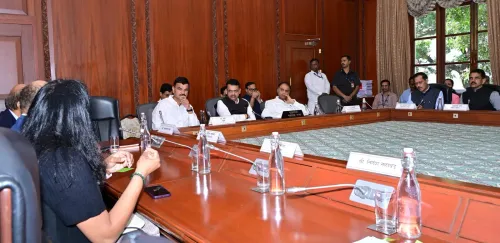
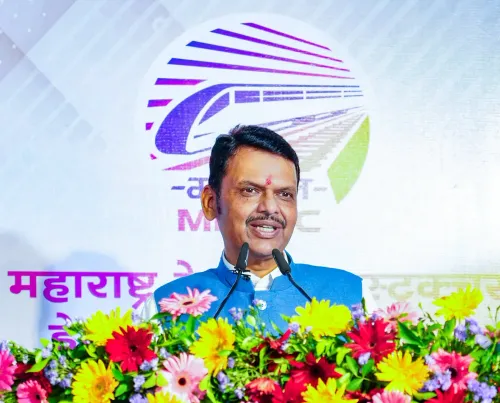
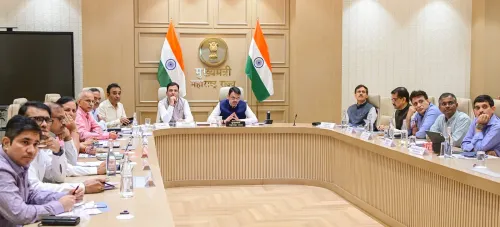
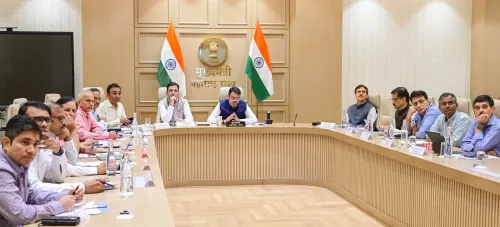
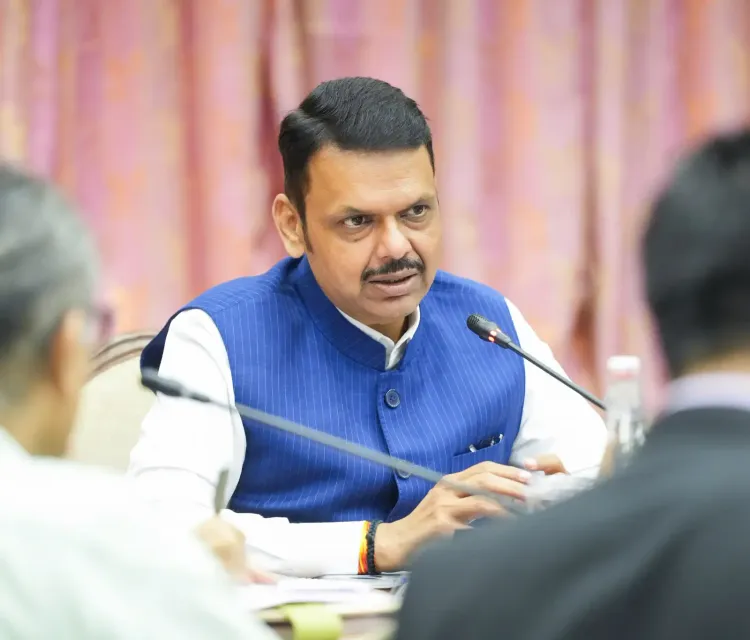
Maharashtra Chief Minister Devendra Fadnavis on Monday, 28 September 2026, directed the newly constituted Maharashtra Sustainable Public Finance Committee — chaired by former Union Finance Secretary Vijay Kelkar — to prepare a comprehensive, actionable roadmap for the state's financial and administrative reforms within six months. The directive came during a high-level meeting in Mumbai, with the Chief Minister stressing the urgent need to move beyond conventional revenue collection and plug costly inefficiencies in how state funds are deployed.
The Core Problem: A ₹6,000–7,000 Crore Interest Rate Mismatch
At the heart of the Chief Minister's concern is a structural anomaly in how Maharashtra's state agencies manage their idle cash. Fadnavis pointed out that roughly ₹6,000 crore to ₹7,000 crore belonging to various government bodies is currently parked at interest rates of around 4%, while the state simultaneously borrows from open markets at rates of 8–9%.
'This discrepancy must be resolved to ensure more effective utilisation of available funds. We must develop innovative financial instruments that protect the security and financial autonomy of state agencies while maximising the use of their capital,' Fadnavis said. The spread between the two rates, critics argue, amounts to a self-imposed fiscal drag that erodes the state's borrowing efficiency year after year.
Scope of the Kelkar Panel's Mandate
The Maharashtra Sustainable Public Finance Committee has been tasked with conducting a full-spectrum review of fund-raising strategies, state accounting practices, and resource allocation frameworks. The Chief Minister made clear the panel is not a ceremonial exercise — the government, he said, intends to seriously implement its recommendations to overhaul existing fiscal and administrative operations.
Project delays were specifically flagged as a concern, with Fadnavis noting that cost and time overruns impair the economic multiplier effect of public investment. A complete audit of state expenditure efficiency is reportedly on the agenda.
Maharashtra's Revenue Landscape in 2026–27
The reform push comes at a critical juncture for the state's finances. Total revenue receipts for 2026–27 are estimated at ₹6,16,099 crore, an increase of 2% over the revised estimates for 2025–26. Of this, ₹4,51,626 crore — or 73% — will be raised by the state through its own resources, while the remaining ₹1,64,473 crore (27%) will flow from the Centre as Maharashtra's share in central taxes and grants.
Maharashtra's own tax revenue is estimated at ₹4,15,498 crore in 2026–27, a 1% increase over revised estimates for the previous year. However, own tax revenue as a percentage of GSDP is projected at 7.7% — slightly lower than the revised 8% for 2025–26, and above the actual 7.5% recorded in 2024–25.
The Bigger Target: A Trillion-Dollar Economy by 2029–30
The financial reform drive is directly linked to Maharashtra's ambitious economic trajectory. The state government is aggressively pursuing a $1 trillion economy target by 2029–30 and a $5 trillion milestone by 2047. Achieving those goals requires not just higher revenue generation but a structurally sound public finance architecture — which is precisely what the Kelkar panel is expected to map out.
Notably, this is the first high-level fiscal reform committee Maharashtra has constituted under Fadnavis's current term, signalling that the government views institutional reform — not just incremental budgeting — as central to its growth strategy. The panel's recommendations, expected by early 2027, will be closely watched by bond markets, multilateral lenders, and industry bodies tracking the state's fiscal health.
Point of View
And Maharashtra is not uniquely culpable. What matters is whether the Kelkar panel produces binding treasury management reforms or another report that sits on a shelf. The trillion-dollar economy framing is politically useful but analytically thin without a credible fiscal consolidation path — Maharashtra's own tax-to-GSDP ratio has barely moved in three years. The real test of this committee is not the roadmap it writes but the institutional mechanisms the government puts in place to implement it.
NationPress
29 Sept 2026
Frequently Asked Questions
What is the Maharashtra Sustainable Public Finance Committee?
It is a high-level panel constituted by the Maharashtra government and chaired by former Union Finance Secretary Vijay Kelkar, tasked with reviewing the state's fund-raising, accounting, and resource allocation systems and submitting an actionable reform roadmap within six months.
What is the interest rate problem CM Fadnavis highlighted?
Fadnavis pointed out that approximately ₹6,000–7,000 crore of state agency funds are invested at around 4% interest, while the state government borrows from open markets at 8–9%. The panel has been asked to design financial instruments that close this costly gap without compromising the autonomy of individual state bodies.
How does this reform connect to Maharashtra's trillion-dollar economy goal?
Maharashtra is targeting a $1 trillion economy by 2029–30 and a $5 trillion economy by 2047. Achieving those milestones requires both higher revenue generation and a structurally efficient public finance architecture, which is the core brief of the Kelkar-led panel.
What are Maharashtra's revenue receipt estimates for 2026–27?
Total revenue receipts for 2026–27 are estimated at ₹6,16,099 crore — a 2% increase over the revised estimates for 2025–26. Of this, 73% (₹4,51,626 crore) will be raised through the state's own resources, and 27% (₹1,64,473 crore) will come from the Centre.
When can the panel's recommendations be expected?
Chief Minister Fadnavis has set a six-month deadline from the date of the meeting on 28 September 2026, which means the panel's roadmap is expected by approximately early 2027.