How do farmer bodies react to Budget proposals on agriculture?
Synopsis
Farmer union leaders have voiced varied opinions on the Budget 2026 proposals presented by Finance Minister Nirmala Sitharaman. While some welcome initiatives for women's empowerment and fisheries, others criticize the lack of focus on small farmers and agricultural research. This article delves into the contrasting perspectives and implications for India's agricultural landscape.
Key Takeaways
Diverse reactions from farmer unions highlight differing priorities.
Proposals like the Lakhpati Didi scheme aim to empower women financially.
The Budget emphasizes fisheries development and crop diversification.
Concerns persist regarding support for small farmers and agricultural research.
Criticism from organizations like AIKS underscores the need for strategic agricultural regeneration.
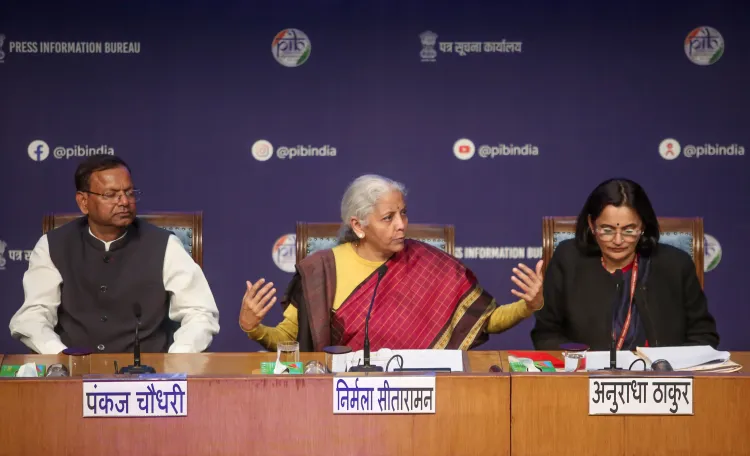
New Delhi, Feb 1 (NationPress) Leaders of farmer unions have shown a diverse response to the agricultural proposals outlined in the Budget 2026, presented by Finance Minister Nirmala Sitharaman in Parliament.
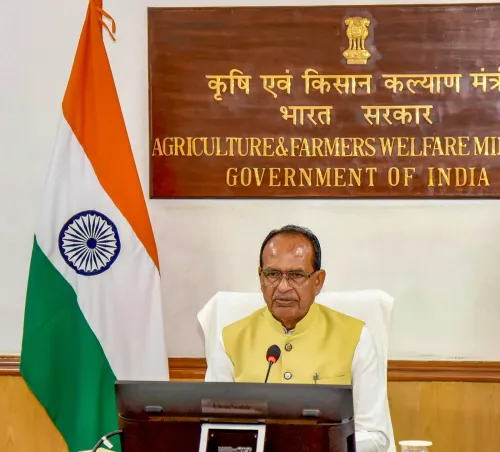
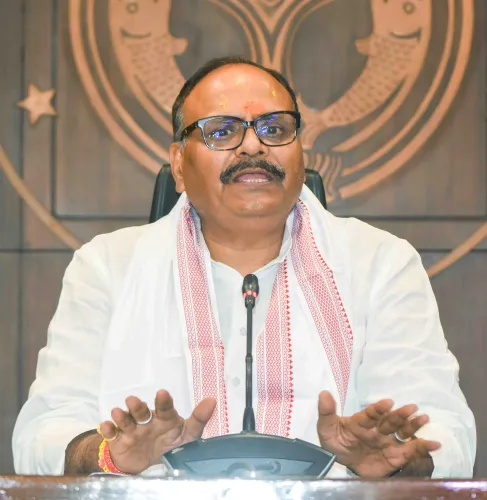
Union Minister of Agriculture and Farmers' Welfare Shivraj Singh Chouhan expressed his support for the Budget's provisions aimed at assisting underprivileged and young farmers, as well as the initiative for “lakhpati didis.”
The Lakhpati Didi scheme was introduced on August 15, 2023, by Prime Minister Narendra Modi, as part of his administration’s efforts to empower women, especially in rural areas, enabling them to achieve a minimum household income of Rs. 1 lakh annually.
“I am confident that these measures will significantly contribute to the development of India. They will help eradicate poverty, enhance farmers' income, and facilitate village development,” Chouhan stated.
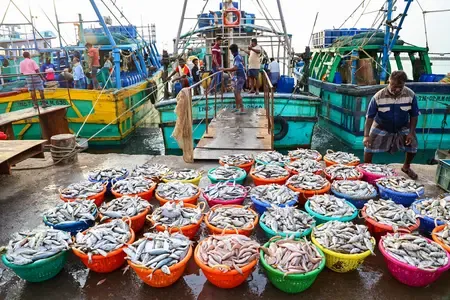
Meanwhile, the Bharatiya Kisan Sangh (BKS), a farming organization aligned with the Rashtriya Swayamsevak Sangh (RSS), praised the initiative to create 500 Amrit Sarovars, boost fisheries in coastal regions, and promote entrepreneurship in the livestock sector as commendable steps.
To enhance the fisheries value chain in coastal areas, the Budget suggested the development of reservoirs along with market linkages that involve startups, women-led groups, and fish farmer producer organizations.
In the area of animal husbandry, the Budget emphasized creating quality employment opportunities in rural and peri-urban locations.
However, the BKS raised alarms over challenges faced by small farmers, including high GST rates on agricultural machinery, insufficient promotion of schemes such as the Kisan Samman Nidhi, the non-implementation of the promised increase in Kisan Credit Card limits to Rs. 5 lakh, and a lack of encouragement for direct cash transfers to farmers engaged in natural farming for organic fertilization.
“The Budget fails to address the issue of chemical levels in crops nationwide in support of natural farming and to curb their usage. Overall, government claims are not reflected in the budget,” asserted BKS General Secretary Mohini Mohan Mishra.
He acknowledged the Budget’s positive aspects for promoting high-value crops such as coconut, cashew, cocoa, and sandalwood under the crop diversification initiative, as well as the establishment of e-marts to empower rural women's cooperatives.
The Budget aims to support these crops to diversify agricultural outputs, boost productivity, enhance farm incomes, and create new job opportunities.
Swabhimani Shetkari Sanghatana President Raju Shetti also welcomed this initiative but described the overall Budget as a “letdown,” stating it lacks provisions beneficial to farmers.
“There is no investment in research and development. The government’s backing for the Indian Council of Agricultural Research is still inadequate. How long must we depend on multinationals and global organizations?” questioned the farmer leader.
In line with these sentiments, the Leftist All India Kisan Sabha has announced plans to burn copies of the Budget later this month, arguing that the government has not made any promises toward the strategic revitalization of agriculture.
“The Finance Minister largely overlooked agriculture in her budget speech; small and marginal farmers were mentioned merely once, with a glaring absence of any reference to rural labor,” claimed AIKS President Ashok Dhawale.
“The only significant announcement related to rural employment was the Mahatma Gandhi Gram Swaraj Yojana, which promotes village industries; however, no substantial financial allocations were made,” noted Vijoo Krishnan, AIKS General Secretary.
“Among the Agriculture and Allied sectors, the only notable budgetary allocation has been made under Animal Husbandry and Dairying, increasing from 5303 crores (RE 2025-26) to 6135 crores (BE 2026-27).
Nevertheless, here too, the focus has been on expanding credit-infused veterinary hospitals, private sector breeding, and attracting foreign investments,” added the agrarian branch of the Communist Party of India (Marxist), a vocal critic of the Union government.
Point of View
It's essential to recognize the complexities within the agricultural sector highlighted by the recent Budget proposals. While some initiatives may empower certain demographics, the outcry from various farmer unions sheds light on the pressing needs of small and marginal farmers. A balanced approach that considers these varied voices is crucial for sustainable agricultural development in India.
NationPress
27 Oct 2026
Frequently Asked Questions
What are the main proposals in Budget 2026 for agriculture?
The Budget 2026 proposes initiatives aimed at women's empowerment, the development of fisheries, support for crop diversification, and increased allocations for animal husbandry and dairying.
What concerns have farmer unions raised regarding the Budget?
Farmer unions have expressed concerns over high GST rates on agricultural machinery, inadequate support for small farmers, and insufficient investment in agricultural research and development.
How does the Lakhpati Didi scheme aim to empower women?
The Lakhpati Didi scheme aims to empower women in rural areas by enabling them to achieve a minimum household income of Rs. 1 lakh annually.
What is the role of the Bharatiya Kisan Sangh in this context?
The Bharatiya Kisan Sangh has expressed positive views on certain initiatives while also raising concerns about challenges faced by small farmers.
What is the significance of the Mahatma Gandhi Gram Swaraj Yojana?
The Mahatma Gandhi Gram Swaraj Yojana promotes village industries and aims to enhance rural employment, although it has faced criticism for lack of significant financial allocations.