Did FM Sitharaman Raise STT on Futures to 0.05% in Budget 2026?
Synopsis
On February 1, 2026, Finance Minister Nirmala Sitharaman announced a substantial increase in the Securities Transaction Tax (STT) on futures and options during the Union Budget presentation, causing concern among traders and analysts regarding its potential impact on market liquidity and trading volumes.
Key Takeaways
STT on futures increased to 0.05% .
STT on options raised to 0.15% .
150% hike in futures tax .
50% hike in options tax .
Potential impact on market liquidity .
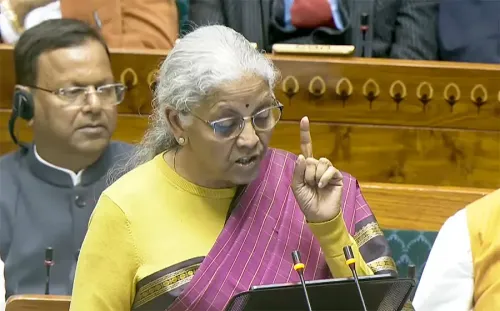
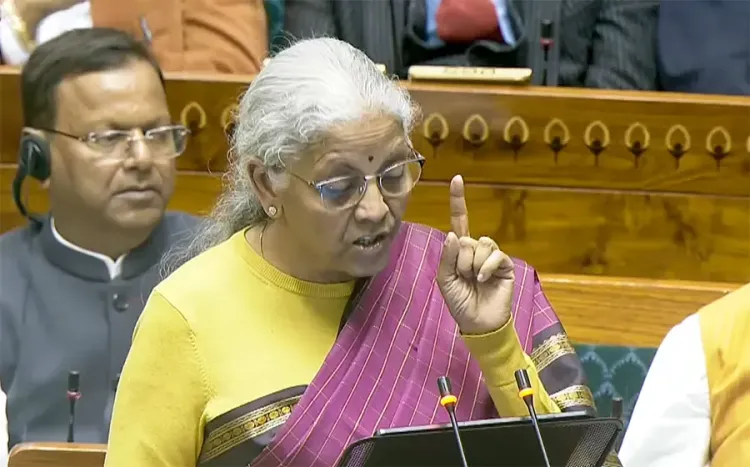
In a significant move on February 1, 2026, Finance Minister Nirmala Sitharaman revealed a substantial increase in the Securities Transaction Tax (STT) on futures and options during her presentation of the Union Budget 2026-27 in Parliament.
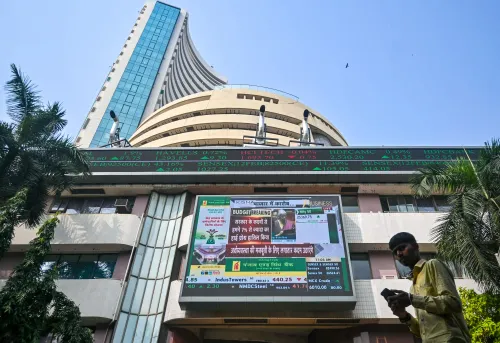
This decision represents a considerable rise in transaction expenses for traders engaged in the derivatives market. Analysts have linked the sharp decline in stock market performance on the same day to the increased tax rates.
The STT on futures has surged to 0.05 percent, up from the previous 0.02 percent, reflecting a staggering 150 percent increase.
For options, the tax has escalated to 0.15 percent from 0.10 percent, marking a 50 percent hike.
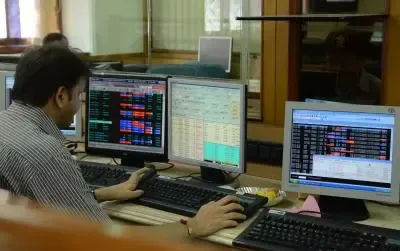
“This is a substantial leap rather than a minor adjustment, and it is likely to adversely affect F&O trading volumes, especially among high-frequency traders, proprietary trading desks, and cost-sensitive strategies,” stated Aakash Shah from Choice Equity Broking.
“While this initiative might bolster short-term tax revenues, it poses a risk of diminishing liquidity and market depth in the derivatives sector, especially as regulators strive to balance speculation control with ensuring that India remains a competitive player in the global trading arena,” he elaborated.
The STT is a levy on the value of securities transactions conducted on recognized stock exchanges in India, applicable to trades involving equities, equity mutual funds, and derivatives like futures and options.
This tax is imposed at the time of the transaction, regardless of whether the investor realizes a profit or incurs a loss.
Introduced on October 1, 2004, the Securities Transaction Tax aimed to simplify tax collection while reducing evasion in equity and derivatives trading.
The tax was instituted following the elimination of the long-term capital gains (LTCG) tax on equities.
However, after the reintroduction of the LTCG tax on listed equities in the Union Budget 2018, the STT continued to be enforced.
In the preceding budget, the government also increased capital gains taxes, raising the LTCG tax from 10 percent to 12.5 percent and the short-term capital gains (STCG) tax from 15 percent to 20 percent.
Point of View
The recent increase in the Securities Transaction Tax marks a pivotal moment. While aimed at enhancing tax revenues, this decision could inadvertently stifle trading activity. It is crucial for regulators to strike a balance between revenue generation and ensuring a vibrant trading ecosystem. The implications of this tax hike warrant close monitoring as the market adjusts to these changes.
NationPress
19 Sept 2026
Frequently Asked Questions
What is the new STT rate on futures?
The new STT rate on futures has been raised to 0.05 percent from the previous 0.02 percent.
How does the STT affect traders?
The increase in STT raises transaction costs for traders in the derivatives market, potentially leading to reduced trading volumes.
What is the purpose of the Securities Transaction Tax?
The STT aims to simplify tax collection and curb tax evasion in equity and derivatives trading.
When was the STT first introduced in India?
The Securities Transaction Tax was introduced in India on October 1, 2004.
Has the government made other changes to capital gains tax recently?
Yes, in the previous budget, the government increased the LTCG tax from 10 percent to 12.5 percent and the STCG tax from 15 percent to 20 percent.