FSSAI deploys 305 mobile food testing labs across 35 States and UTs
Synopsis
India's food safety regulator has put 305 mobile testing vans on the road across 35 States and UTs — but the real story is the infrastructure stack behind them: 47 upgraded state labs, 34 new microbiology units, 259 NABL-accredited facilities, and a compact 'Magic Box' kit for instant adulteration checks. It is the most comprehensive overhaul of India's food testing architecture in recent years.
Key Takeaways
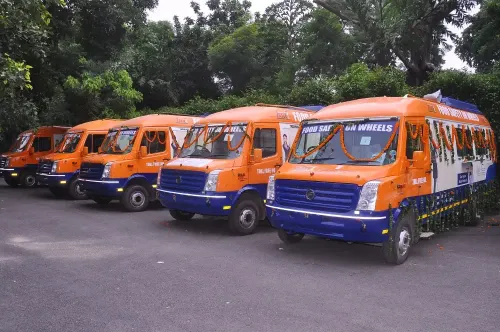
FSSAI has deployed 305 'Food Safety on Wheels' mobile labs across 35 States and UTs as of 31 July 2025 .
Under the SoFTeL scheme , 47 State Food Testing Laboratories have been upgraded with advanced analytical equipment.
34 specialised microbiology laboratories established to detect chemical, heavy metal, and biological contaminants.
259 NABL-accredited laboratories notified for food sample analysis, backed by 24 Referral Food Laboratories .
The 'Magic Box' kit enables rapid field detection of adulterants across 7 food categories including milk, spices, and edible oils.
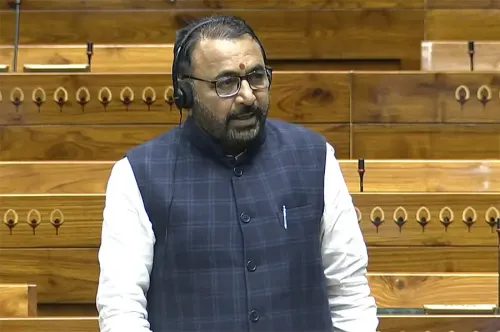
Details were disclosed by MoS Health Prataprao Jadhav in a written reply in the Lok Sabha .
The Food Safety and Standards Authority of India (FSSAI) has deployed 305 mobile food testing laboratories — branded as 'Food Safety on Wheels' (FSW) — across 35 States and Union Territories, the government informed Parliament on Friday, 31 July. The rollout is aimed at strengthening food safety surveillance, on-the-ground testing, and public awareness, particularly in villages, towns, and remote areas.
The SoFTeL Scheme: What It Covers
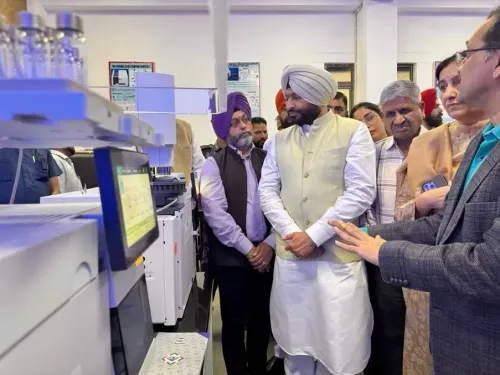
The mobile labs are part of the Strengthening of Food Testing System in the Country (SoFTeL) scheme, a central initiative implemented by FSSAI to overhaul the country's food testing infrastructure. Under the same scheme, 47 State Food Testing Laboratories have been structurally upgraded with advanced analytical equipment, and 34 specialised microbiology laboratories have been established to detect chemical, heavy metal, and biological contaminants.
Union Minister of State for Health and Family Welfare Prataprao Jadhav disclosed the details in a written reply in the Lok Sabha. 'The SoFTeL scheme in the country including provision of MFTL is an initiative implemented by the FSSAI to upgrade state food laboratories, set up microbiology facilities and deploys mobile food testing vans,' he stated.
Reach and Infrastructure Additions
Beyond the mobile units, FSSAI has notified 259 NABL-accredited laboratories — accredited by the National Accreditation Board for Testing and Calibration Laboratories — for the analysis of food samples. An additional 24 Referral Food Laboratories have been designated for testing appeal samples, providing a structured escalation pathway for contested results.
The regulator noted that enforcement of the Food Safety and Standards Act, 2006 is a shared responsibility between the Centre and state governments, making the upgrade of state-level labs a critical component of the broader compliance architecture.
The 'Magic Box' and Rapid Adulteration Detection
FSSAI has also introduced the 'Magic Box', a compact field-testing kit designed for rapid detection of common adulterants across seven categories of food commodities, including milk, spices, edible oils, and grains. The kit is intended for use by food safety officers in the field, reducing dependence on centralised lab turnaround times.
This comes amid persistent concerns about food adulteration in India's supply chain, where enforcement has historically been constrained by limited testing capacity at the district and sub-district level.
Why This Matters
The Food Safety on Wheels programme is among the most visible outreach mechanisms in India's food regulation ecosystem. By taking testing infrastructure directly to consumers and local markets — rather than waiting for samples to travel to fixed labs — the initiative addresses a structural gap that has long undermined enforcement in Tier-2 and Tier-3 geographies.
With 305 units now active and a reinforced laboratory network backing them, the programme's next phase will likely be measured by the volume and quality of samples processed, enforcement actions triggered, and awareness outcomes documented across States and UTs.
Point of View
But deployment is not the same as utilisation. India's food safety enforcement record shows a persistent gap between infrastructure created and samples actually tested or prosecuted. The SoFTeL scheme's real test will be in the data: how many samples are collected per van per month, what proportion trigger enforcement, and whether the 34 new microbiology labs are staffed adequately. Parliament was told what was deployed; what it was not told is whether existing fixed labs are operating at capacity. Without output metrics, this risks being infrastructure investment that looks good on paper but does not shift adulteration outcomes on the ground.
NationPress
15 Sept 2026
Frequently Asked Questions
What is the 'Food Safety on Wheels' programme?
'Food Safety on Wheels' (FSW) refers to FSSAI's fleet of mobile food testing laboratories that travel to villages, towns, and remote areas to conduct on-site food testing, training, and public awareness drives. As of 31 July 2025, 305 such units are deployed across 35 States and Union Territories.
What is the SoFTeL scheme?
The Strengthening of Food Testing System in the Country (SoFTeL) scheme is a central government initiative implemented by FSSAI to upgrade India's food testing infrastructure. It covers mobile food testing vans, upgrades to 47 state laboratories, and the establishment of 34 specialised microbiology labs.
What contaminants can the new microbiology labs detect?
The 34 specialised microbiology laboratories established under SoFTeL are equipped to detect chemical contaminants, heavy metals, and biological contaminants in food samples — categories that standard rapid-test kits cannot reliably identify.
What is the 'Magic Box' introduced by FSSAI?
The 'Magic Box' is a compact, portable testing kit introduced by FSSAI that enables rapid detection of common adulterants across seven categories of food commodities, including milk, spices, edible oils, and grains. It is designed for field use by food safety officers.
How many accredited labs does India now have for food testing?
FSSAI has notified 259 NABL-accredited laboratories for the analysis of food samples, along with 24 Referral Food Laboratories designated for testing appeal samples, providing a two-tier verification system for food safety results.