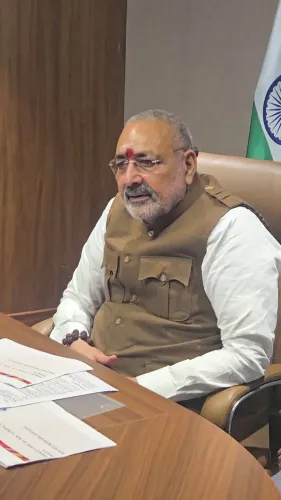
Giriraj Singh visits Welspun Anjar plant, calls green manufacturing key to Viksit Bharat
Synopsis
Textiles Minister Giriraj Singh's visit to Welspun World's Anjar campus wasn't ceremonial — it was a policy signal. With India's textile exports up 10.3% to ₹1.43 lakh crore in just five months, the ministry appears to be positioning green, integrated manufacturing as the template for the sector's next export leap under the Viksit Bharat framework.
Key Takeaways
Union Minister Giriraj Singh visited Welspun World's manufacturing complex in Anjar, Gujarat on 14 November 2026 .
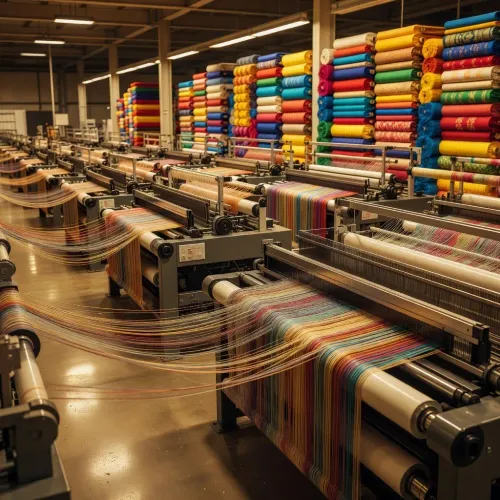
He praised the facility's integrated value chain, covering spinning through towel and bedsheet manufacture on a single campus.
Singh hailed Welspun's water recycling and green manufacturing practices as a model for industry in arid regions like Kutch .
India's cumulative textile exports for April–August 2026 stood at ₹1.43 lakh crore , up 10.3% year-on-year.
Singh linked environmental balance and sustainable manufacturing directly to PM Modi's Viksit Bharat vision.
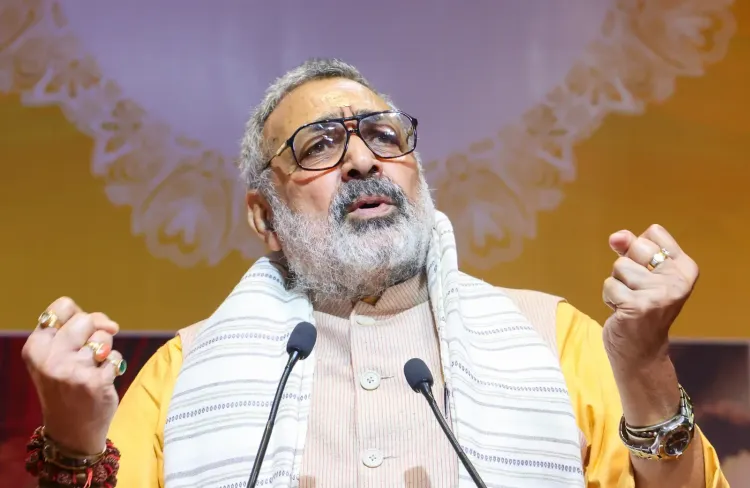
Union Minister of Textiles Giriraj Singh on Saturday, 14 November 2026, visited Welspun World's integrated manufacturing complex in Anjar, Gujarat, declaring that coordination between industrial development and environmental protection is the foundational principle for realising a developed India. The visit, confirmed through an official statement, underscores the Centre's focus on aligning textile sector growth with sustainability goals.
What the Minister Reviewed
Singh walked through the entire production chain at the Welspun campus — spanning spinning through the manufacture of towels and bedsheets — and expressed satisfaction with the facility's integrated value chain. He noted the advanced production technologies and globally benchmarked manufacturing infrastructure housed within a single campus as a model worth replicating across the sector.
Green Manufacturing in an Arid Region
The minister specifically praised Welspun's commitment to green manufacturing, water recycling and the conservation of natural resources — particularly significant given the facility's location in the ecologically fragile, arid district of Kutch. Singh described the complex as embodying the concept of 'a manufacturing facility in a garden', arguing it demonstrates how industrial expansion and environmental stewardship can advance in tandem rather than in conflict.
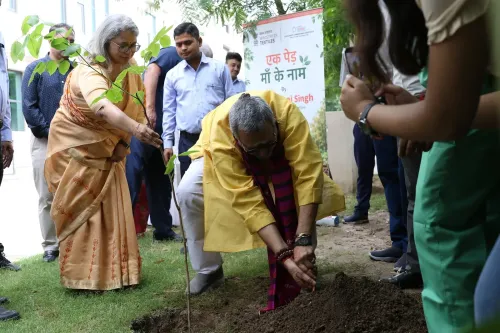
Singh also planted a sapling on the premises, reiterating that trees are 'an invaluable heritage of our planet' and that their protection is a collective social responsibility. He called on every section of society to play an active role in protecting nature.
Textiles as a Pillar of Viksit Bharat
Singh framed the visit within the broader national agenda, stating that Prime Minister Narendra Modi's vision of a Viksit Bharat can only be realised through environmental balance, sustainable manufacturing and the judicious use of natural resources alongside modern industrial development. He added that India's textile sector is already strengthening its global identity by adopting environmentally responsible production processes and setting new development benchmarks.
Notably, India's cumulative textile exports during April–August 2026 reached ₹1.43 lakh crore, registering growth of 10.3% over the corresponding period of the previous year — a figure that lends weight to the minister's argument that sustainability and competitiveness are not mutually exclusive.
Significance of the Welspun Visit
The Welspun complex, one of the largest integrated home textile facilities in the world, serves as a showcase for what industry observers call the 'make and sustain' model — where export-scale manufacturing is paired with closed-loop resource management. Singh's endorsement of this model signals that the textile ministry may look to institutionalise similar standards across other manufacturing clusters. The next policy step, analysts note, will be whether incentive frameworks are updated to reward green compliance alongside production volumes.
Point of View
And Singh's visit effectively stakes the ministry's credibility on the 'sustainable = competitive' thesis. The harder question is whether green compliance will be tied to incentive frameworks or remain voluntary; without that link, the 'manufacturing in a garden' metaphor risks staying a metaphor. The Kutch location is also worth noting: pushing large-scale water-intensive textile manufacturing into one of India's driest districts demands rigorous third-party oversight of recycling claims, not just ministerial appreciation.
NationPress
14 Nov 2026
Frequently Asked Questions
Why did Giriraj Singh visit the Welspun plant in Anjar?
Union Minister of Textiles Giriraj Singh visited Welspun World's integrated manufacturing complex in Anjar, Gujarat on 14 November 2026 to review its production facilities and assess its green manufacturing practices. The visit was part of the ministry's focus on promoting sustainable, export-oriented textile manufacturing as a pillar of the Viksit Bharat agenda.
What is Welspun World's manufacturing complex in Anjar known for?
The Welspun complex in Anjar, Kutch is one of the world's largest integrated home textile facilities, housing the full production chain — from spinning to finished towels and bedsheets — on a single campus. It is recognised for water recycling and green manufacturing practices in an ecologically sensitive arid region.
How much did India's textile exports grow in 2026?
India's cumulative textile exports during April–August 2026 reached ₹1.43 lakh crore, registering growth of 10.3% over the same period in the previous year, according to official data cited during Singh's visit.
What did Giriraj Singh say about environmental protection and industrial growth?
Singh said that coordination between industrial development and environmental protection is the foundation for building a developed India, adding that PM Modi's Viksit Bharat vision can only be realised through environmental balance and sustainable manufacturing. He called on every section of society to play an active role in protecting nature.
What is the significance of green manufacturing in Kutch?
Kutch is an arid district in Gujarat where water scarcity is a persistent challenge, making water recycling and resource conservation critical for large-scale industrial operations. Singh highlighted Welspun's practices in this region as a demonstration that manufacturing growth and environmental protection can progress hand-in-hand even in ecologically fragile areas.