India asks Meta to curb deepfakes, flags intermediary status under IT Act
Synopsis
India has put Meta on notice over deepfakes — but the bigger legal threat is whether Meta's paid promotion and algorithmic curation strip it of the intermediary shield under Section 79 of the IT Act. Lose that, and every piece of harmful content on its platforms becomes Meta's direct legal liability under Indian law, including the Bharatiya Nyaya Sanhita.
Key Takeaways
The Centre has formally asked Meta to act against deepfakes and harmful AI-generated content after several rounds of talks.
The government is examining whether Meta's algorithmic recommendation systems disqualify it from intermediary protections under Section 79 of the IT Act .
Platforms that actively decide what users see — or promote content for payment — may be treated as publishers , not intermediaries, under Indian law.
Losing intermediary status could expose Meta to liability under the IT Act and the Bharatiya Nyaya Sanhita (BNS) .
The government plans to extend the same regulatory review to other major platforms , not just Meta.
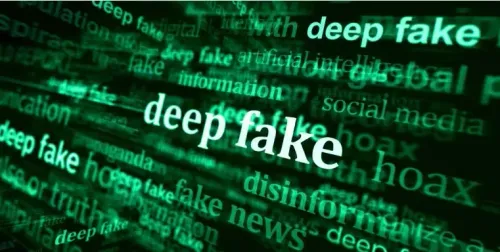
The Centre has formally asked Meta to take corrective action against deepfakes and other harmful AI-generated content on its platforms, according to sources familiar with the matter. The directive, issued following several rounds of talks, also raises a more fundamental legal question: whether Meta's algorithmic recommendation systems disqualify it from intermediary protections under the Information Technology (IT) Act.
The Intermediary Question
Under Section 79 of the IT Act, intermediaries — including social media platforms — enjoy a shield from liability for third-party content, provided they exercise due diligence as mandated by the IT Rules, 2021. The government is now examining whether Meta still qualifies for this protection, given how its recommendation engines operate.
According to sources, if Meta's systems actively determine 'what is shown to whom' and 'promote content for payment,' that level of editorial control could be inconsistent with the legal definition of an intermediary. Platforms that effectively choose what content users see could be treated as publishers — and held directly accountable for that content.
What the Government Has Asked Meta to Do
After multiple rounds of discussions over recent days, the Centre has specifically asked Meta to act against the spread of deepfakes and other AI-generated material deemed harmful. The government's concern spans both the existence of such content and the role Meta's algorithms play in amplifying it to wider audiences.
This comes amid growing global scrutiny of AI-generated misinformation, and India's push is among the more pointed regulatory interventions a major democracy has made directly at Meta's content moderation and recommendation practices.
Legal Consequences of Losing Intermediary Status
Losing the Section 79 exemption would expose Meta to consequential action under multiple statutes, including the IT Act itself and the Bharatiya Nyaya Sanhita (BNS). The stakes are significant: without intermediary protection, every piece of harmful content hosted or amplified on Meta's platforms could potentially attract direct legal liability for the company.
Notably, this is not a hypothetical scenario — Indian courts and regulators have previously revisited intermediary protections when platforms were found to have exercised active editorial roles rather than passive hosting functions.
Broader Regulatory Sweep
The government has indicated it will not limit its review to Meta alone. Officials plan to consult with other major platforms to determine whether they too meet the current definition of an intermediary under Indian law — a signal that a wider regulatory reckoning for algorithm-driven content platforms may be underway.
How Meta responds to the Centre's demands, and whether it adjusts its recommendation and moderation practices, is likely to shape the next phase of India's evolving digital regulation framework.
Point of View
But applying it to algorithmic curation and paid promotion is a sharper framing than regulators have previously attempted. If the Centre follows through, it could set a precedent that forces every major platform operating in India to choose between algorithmic personalisation and legal immunity. That is a trade-off Silicon Valley has never been asked to make this explicitly in a market of this size.
NationPress
8 Aug 2026
Frequently Asked Questions
What has the Indian government asked Meta to do?
The Centre has asked Meta to take corrective action against deepfakes and other harmful AI-generated content on its platforms, following multiple rounds of talks. The government wants Meta to improve its content moderation practices to address the spread of such material.
Why is Meta's intermediary status under scrutiny in India?
Under Section 79 of the IT Act, platforms qualify as intermediaries — and enjoy liability protection — only if they exercise due diligence and do not actively curate content. The government argues that Meta's recommendation algorithms, which determine what users see and promote content for payment, may amount to editorial control, potentially disqualifying it from intermediary status.
What happens if Meta loses its intermediary status in India?
Losing the Section 79 exemption would expose Meta to direct legal liability for harmful content hosted or amplified on its platforms. It could face consequential action under the IT Act and the Bharatiya Nyaya Sanhita (BNS), India's updated criminal code.
Is this review limited to Meta?
No. The government has indicated it will consult with other major platforms to assess whether they also meet the legal definition of an intermediary under Indian law, suggesting a broader regulatory review of algorithm-driven social media platforms is in the works.
What is the legal basis for the government's action?
The action is grounded in Section 79 of the IT Act read with the IT Rules, 2021, which require intermediaries to exercise due diligence to retain liability exemptions. Platforms that fail to meet these requirements — or that actively curate and promote content — can be stripped of those protections.