Legal Metrology Act gets 'Improvement Notice' reform to ease business compliance
Synopsis
India has quietly redrawn the line between regulatory enforcement and business support. The new Improvement Notice mechanism under the Legal Metrology Act gives first-time offenders a structured path to compliance — without a penalty — while keeping full enforcement intact for fraud and repeat violations. For MSMEs, it could meaningfully reduce the cost of minor procedural missteps.
Key Takeaways
The Department of Consumer Affairs introduced an 'Improvement Notice' mechanism under the Legal Metrology Act, 2009 , effective 29 June .
The reform is enacted through the Jan Vishwas (Amendment of Provisions) Act, 2026 to promote ease of doing business.
A Legal Metrology Officer can issue the notice for specified first-time procedural or regulatory non-compliances, granting time to rectify before penal action begins.
Applies to manufacturers, importers, packers, dealers, repairers, traders, MSMEs and other regulated entities.
Fraud, tampering, repeated violations and failure to comply with the notice continue to attract full enforcement action.
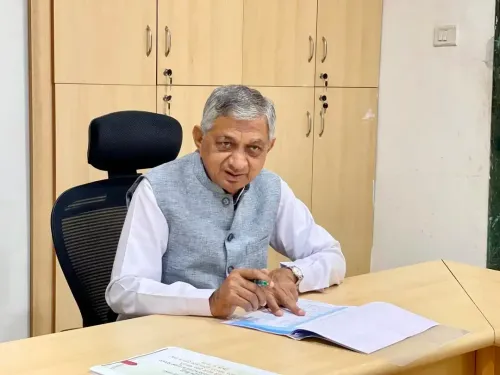
Union Minister Pralhad Joshi confirmed the reform on social media platform X, citing 'trust-based governance.'
The Department of Consumer Affairs has introduced an 'Improvement Notice' mechanism under the Legal Metrology Act, 2009, enabling businesses to correct specified first-time procedural or regulatory lapses before penal proceedings are initiated. The reform, notified on 29 June, takes effect through the Jan Vishwas (Amendment of Provisions) Act, 2026 and is aimed at promoting ease of doing business while reducing unnecessary litigation.
How the Mechanism Works
Under the new framework, a Legal Metrology Officer may issue an Improvement Notice to any regulated entity found committing a specified first-time procedural or regulatory non-compliance. The notice identifies the deficiency and grants a reasonable period for rectification.
If the entity complies within the prescribed timeframe, penal action can be avoided entirely. However, the government has made clear that the concession is limited — repeated violations, failure to comply with the Improvement Notice, fraud, tampering, and other acts that adversely affect consumer interests will continue to attract full enforcement action under the Legal Metrology Act.
Who Is Covered
The mechanism applies to manufacturers, importers, packers, dealers, repairers, traders, MSMEs, and all other regulated entities under the Act. It covers specified first-time non-compliances relating to registration requirements, documentation and record maintenance, model approval, manufacture, sale and repair of weights and measures, import of weights and measures, packaged commodities, and the furnishing of statutory information and returns.
What the Government Said
Union Minister for Consumer Affairs, Food and Public Distribution Pralhad Joshi described the move as 'another step towards trust-based governance and ease of doing business.' In a post on social media platform X, he said: 'The Government has introduced the Improvement Notice mechanism under the Legal Metrology Act, 2009, providing businesses with an opportunity to rectify specified first-time procedural and regulatory non-compliances before penal proceedings are initiated.'
The Ministry of Consumer Affairs, Food and Public Distribution added that the reform would 'encourage voluntary compliance, reduce unnecessary litigation and lower the compliance burden, while ensuring strict action against fraud, tampering and repeated violations to safeguard consumer interests.'
The ministry also invoked the government's stated 'Minimum Government, Maximum Governance' vision, framing the Improvement Notice as a tool for trust-based regulation rather than a dilution of enforcement standards.
Consumer Protection Safeguards Retained
Officials were emphatic that the new framework does not weaken consumer protection. The department clarified that the Improvement Notice applies only to specified first-time procedural and regulatory non-compliances — it does not extend to substantive violations, fraud, or tampering. Enforcement machinery under the Legal Metrology Act remains fully intact for all other categories of violations.
Broader Context and What's Next
The reform is part of a wider legislative push under the Jan Vishwas Act, 2026 to decriminalise minor procedural infractions across multiple regulatory domains. This comes amid sustained pressure from industry bodies to reduce compliance costs for MSMEs, which often face disproportionate penal exposure for technical lapses. The government has indicated that the new mechanism is designed to create a 'more transparent, predictable and business-friendly regulatory environment' — a signal that further ease-of-doing-business amendments may follow in related statutes.
Point of View
Overdue correction — but its impact will depend entirely on how 'specified first-time non-compliances' are defined in practice. If the list is narrow, MSMEs will see little relief; if it is broad, it risks becoming a loophole that sophisticated violators cycle through repeatedly. The government's insistence that consumer protection is unaffected is credible on paper, but regulators will need clear internal guidelines to prevent the notice from becoming a default first response to all violations. The Jan Vishwas Act's broader decriminalisation agenda is directionally right; the Legal Metrology reform is a test case for whether intent translates into measurable compliance-cost reduction.
NationPress
29 Jun 2026
Frequently Asked Questions
What is the Improvement Notice mechanism under the Legal Metrology Act?
It is a reform introduced on 29 June under the Jan Vishwas (Amendment of Provisions) Act, 2026, allowing a Legal Metrology Officer to issue a notice to businesses for specified first-time procedural or regulatory non-compliances, giving them time to rectify the lapse before penal proceedings begin. If the business complies within the prescribed period, penalty action is avoided.
Who is eligible for an Improvement Notice under the Legal Metrology Act?
The mechanism covers manufacturers, importers, packers, dealers, repairers, traders, MSMEs, and all other regulated entities under the Legal Metrology Act, 2009. It applies only to specified first-time procedural and regulatory non-compliances — not to fraud, tampering, or repeat violations.
Does the Improvement Notice weaken consumer protection?
The government has clarified it does not. The notice applies exclusively to specified first-time procedural lapses. Fraud, tampering, repeated violations, and failure to comply with the notice itself continue to attract full enforcement action under the Legal Metrology Act.
What types of non-compliances does the Improvement Notice cover?
It covers first-time lapses related to registration requirements, documentation and record maintenance, model approval, manufacture, sale and repair of weights and measures, import of weights and measures, packaged commodities, and furnishing of statutory information and returns.
What is the Jan Vishwas (Amendment of Provisions) Act, 2026?
It is a legislative reform aimed at decriminalising minor procedural infractions across multiple regulatory domains to promote ease of doing business in India. The Legal Metrology Improvement Notice mechanism is one of the reforms enacted under this Act.