GST shifts to 'Trust First, Verify Later' regime: CBIC Chairman Vivek Chaturvedi
Synopsis
India's GST administration is undergoing a quiet but significant philosophical shift — from policing to partnership. CBIC Chairman Vivek Chaturvedi's announcements on 18 November signal that compliant taxpayers will face fewer checkpoints, faster refunds, and a doubled prosecution threshold, while MSMEs get a tailored compliance package. The real test is whether the draft framework survives stakeholder consultation intact.
Key Takeaways
CBIC Chairman Vivek Chaturvedi announced a 'Trust First, Verify Later' governance model for GST on 18 November 2026 .
GST prosecution threshold raised from ₹2 crore to ₹5 crore , with offences under Section 130 rationalised.
Nearly 90% of low-risk GST refund claims are now processed automatically.
Routine interception of goods in transit to be discontinued; checks restricted to intelligence-based cases at Joint Commissioner level.
MSMEs with turnover up to ₹5 crore to get quarterly payments, optional annual return, and simplified registration.
A draft framework will be released for stakeholder consultation before final implementation of several reforms.
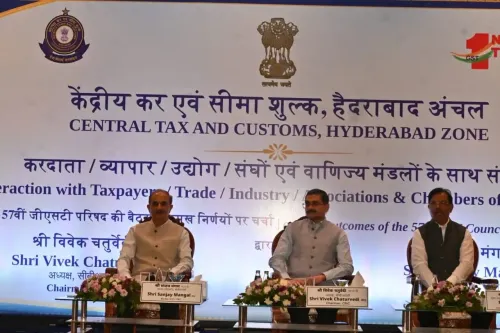
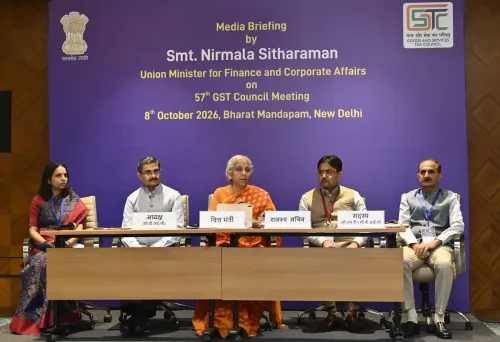
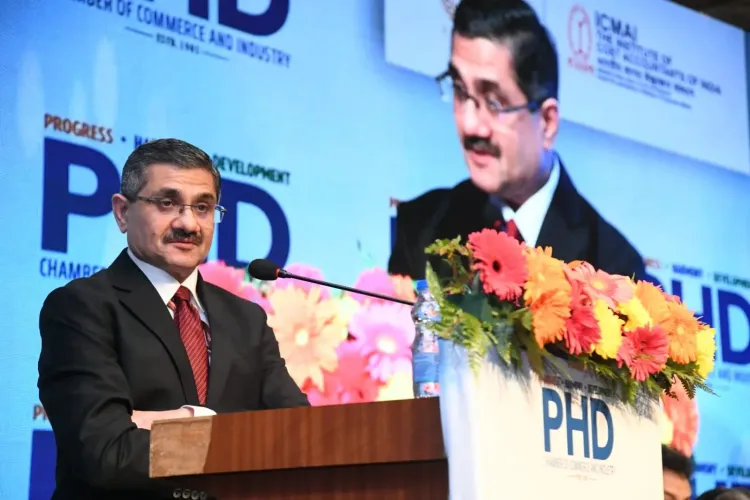
Central Board of Indirect Taxes and Customs (CBIC) Chairman Vivek Chaturvedi on Wednesday, 18 November 2026, announced that the Goods and Services Tax (GST) regime is transitioning to a 'Trust First, Verify Later' framework — a governance model that places compliant taxpayers at the heart of tax administration and significantly reduces enforcement-driven friction. Speaking at a conference hosted by the PHD Chamber of Commerce and Industry (PHDCCI) on GST process reforms, Chaturvedi outlined a comprehensive package of measures emerging from the 57th GST Council meeting held on 8 October.
The Trust-Based Governance Shift
Chaturvedi framed the Council's October recommendations as a structural departure from the traditional 'detect-and-penalise' approach. 'GST, founded on the vision of One Nation, One Tax, One Market, has emerged as a landmark reform contributing to Viksit Bharat 2047,' he said, describing honest taxpayers as 'partners in nation-building' rather than subjects of surveillance.
He identified three key priorities driving the next phase of GST reforms: rate rationalisation; ease of compliance through automation and faster refunds; and a governance framework built on trust with reduced regulatory intervention. This comes amid persistent industry complaints that aggressive enforcement and frequent audits have added compliance costs, particularly for smaller businesses.
Prosecution Threshold Doubled, Refunds Automated
Among the most consequential announcements, Chaturvedi noted that the threshold for prosecution under GST has been raised from ₹2 crore to ₹5 crore, shielding a larger segment of businesses from criminal proceedings for tax disputes. Offences under Section 130 of the GST Act have also been rationalised.
On the refunds front, he said nearly 90 per cent of low-risk refund claims are now being processed automatically — a significant operational shift. The Council has also proposed expanding input tax credit (ITC) refund provisions to cover input services under the inverted duty structure and capital goods used in zero-rated supplies, while phased automation of export-related refunds is being rolled out.
Curbing Transit Checks and Easing MSME Compliance
In a move welcomed by the trade and logistics sector, Chaturvedi announced that routine interception of goods in transit will be discontinued. Going forward, checks will be restricted to intelligence-based cases approved at the Joint Commissioner level — a safeguard against arbitrary stoppages that have long burdened transporters.
For micro, small and medium enterprises (MSMEs), the proposed reforms are especially targeted. These include simplified registration procedures, permission for eligible suppliers to use e-commerce warehouses as their principal place of business, quarterly tax payments with an optional annual return for firms with turnover up to ₹5 crore, and conditional late fee relief. Notably, Chaturvedi confirmed that a draft framework will be released for stakeholder consultation before final implementation.
Industry's Expectations from GST
PHDCCI Chief Executive Officer and Secretary General Ranjeet Mehta said GST's success should be measured not just by revenue collections but also by its capacity to simplify procedures, lower business costs, and facilitate wider economic activity. His remarks underscored a growing industry consensus that compliance ease is as critical a metric as fiscal yield.
With the draft framework for several reforms still pending stakeholder input, the full impact of this trust-based shift will become clearer once final guidelines are notified.
Point of View
Verify Later' framing is politically smart and administratively overdue, but slogans need architecture. Doubling the prosecution threshold to ₹5 crore and automating 90% of low-risk refunds are genuinely meaningful steps — but the harder reforms, including ITC expansion and MSME simplification, are still pending a stakeholder draft. India's GST compliance burden has consistently ranked as a drag in Ease of Doing Business metrics, partly because earlier reform announcements have not always survived the journey from conference podium to gazette notification. The credibility of this shift will depend on whether the draft framework is released quickly, absorbs industry feedback in good faith, and is implemented without the carve-outs that have diluted past rounds.
NationPress
18 Nov 2026
Frequently Asked Questions
What is the 'Trust First, Verify Later' GST framework announced by CBIC?
It is a reformed governance approach under which compliant taxpayers face fewer audits and enforcement actions, with scrutiny reserved for data-flagged or intelligence-based cases. CBIC Chairman Vivek Chaturvedi announced the shift on 18 November 2026, based on recommendations from the 57th GST Council meeting.
How has the GST prosecution threshold changed?
The threshold for initiating prosecution under GST has been doubled from ₹2 crore to ₹5 crore. This means businesses involved in tax disputes below ₹5 crore will no longer face criminal proceedings, reducing legal risk for a larger segment of taxpayers.
What GST refund changes have been announced?
Nearly 90% of low-risk GST refund claims are now processed automatically. The GST Council has also proposed expanding ITC refund provisions to input services under the inverted duty structure and capital goods used in zero-rated supplies, alongside phased automation of export-related refunds.
What relief is proposed for MSMEs under the new GST reforms?
MSMEs with turnover up to ₹5 crore are proposed to get quarterly tax payments, an optional annual return, simplified registration, permission to use e-commerce warehouses as principal business addresses, and conditional late fee relief. A draft framework is expected before final implementation.
Will goods in transit still be routinely checked under the new GST regime?
No. CBIC Chairman Chaturvedi announced that routine interception of goods in transit will be discontinued. Physical checks will be restricted to intelligence-based cases that must be approved at the Joint Commissioner level, reducing arbitrary stoppages for transporters.