Gujarat Data Centre Policy 2026-29: Hyperscale AI hub push with 8 GW target
Synopsis
Gujarat has unveiled a dedicated data centre policy targeting 8 gigawatts of capacity, backed by a sweeping fiscal incentive package and two planned cable landing stations. With India holding just 3% of global data centre capacity despite generating 20% of the world's data, the policy is the state's most direct bid yet to close that gap — and position itself as the AI infrastructure capital of Asia.
Key Takeaways
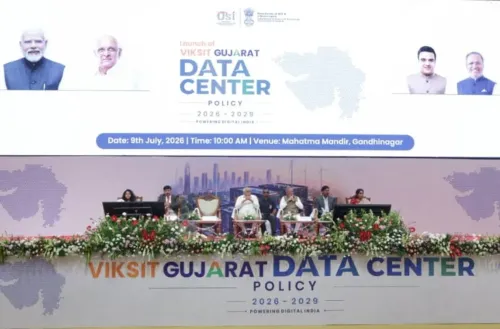
Gujarat launched the Viksit Gujarat – Data Centre Policy 2026-29 on 9 July 2026 in Gandhinagar .
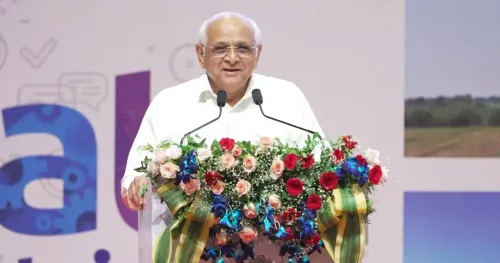
Chief Minister Bhupendra Patel unveiled the policy; the state targets up to 8 gigawatts of data centre capacity.
Fiscal incentives include capital and interest subsidies , power tariff support , SGST reimbursement , and stamp duty exemptions .
Gujarat has already received proposals for around 10 gigawatts of data centre capacity from investors.
The state has 69 GW of installed power capacity, with 47 GW from renewable sources, and plans two cable landing stations .
India generates 20% of global data but holds only 3% of worldwide data centre capacity, against a combined 70% for the US and China.
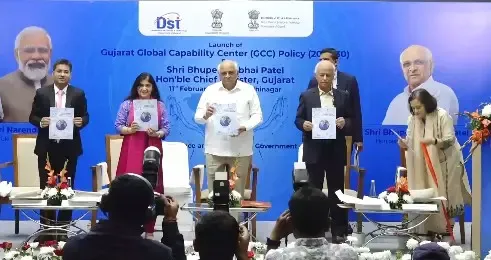
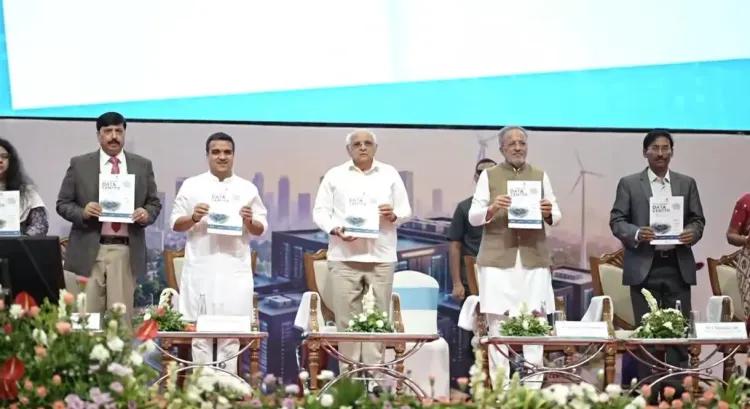
The Gujarat government on Thursday, 9 July 2026, launched the 'Viksit Gujarat – Data Centre Policy 2026-29', a dedicated framework to attract investments in hyperscale data centres, artificial intelligence infrastructure, and digital services. Chief Minister Bhupendra Patel unveiled the policy booklet at a state function in Gandhinagar, signalling the state's ambition to become a global node in the AI-driven digital economy.
Key Policy Incentives
Under the new policy, Gujarat has formally recognised data centres as strategic infrastructure. The fiscal incentive package includes capital and interest subsidies, power tariff support, SGST reimbursement, electricity duty reimbursement, support for desalination plants, and stamp duty exemptions. Non-fiscal incentives aimed at creating a competitive environment for hyperscale and AI infrastructure investments are also built into the framework, according to officials present at the launch.
Gujarat's Digital Infrastructure Advantage
The policy document highlights that Gujarat already possesses 69 gigawatts of installed power capacity, of which 47 gigawatts is sourced from renewable energy — a significant draw for power-hungry data centre operations. The state's established industrial corridors, including Dholera and GIFT City, are positioned as anchor zones for incoming investment.
Additionally, Science and Technology Department Secretary P. Bharathi announced that two cable landing stations are planned in Gujarat, with a third project set to be announced shortly. The enhanced international connectivity is expected to strengthen the state's case as a preferred data centre destination for global operators.
India's Data Gap — and Gujarat's Pitch
Addressing the gathering, P. Bharathi underscored a stark structural imbalance: India generates nearly 20 per cent of the world's data but accounts for only around 3 per cent of global data centre capacity. By contrast, the United States and China together hold approximately 70 per cent of worldwide capacity. 'The question is, where will India's future digital infrastructure be built? Gujarat is ready to answer that question,' she said.
The policy projects that global data centre capacity could approach 200 gigawatts by the end of the decade, and positions Gujarat as a significant contributor to that expansion while supporting the state's target of becoming a USD 3.5 trillion economy by 2047.
Minister's Vision: From Data Centres to AI Leadership
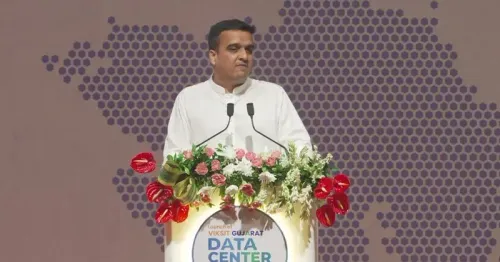
Science and Technology Minister Arjun Modhwadia drew a pointed comparison at the event: the United States has nearly 5,500 data centres and the United Kingdom more than 500, while India has approximately 200. On installed capacity, the US operates around 30 gigawatts against India's current 2–3 gigawatts, with pipeline projects expected to push the national figure to roughly 8 gigawatts.
Modhwadia said Gujarat had already received proposals for around 10 gigawatts of data centre capacity and that the state government intends to develop up to 8 gigawatts within its borders. 'This is not just about data centres; it is part of the entire AI ecosystem. If we become leaders in data centres, Gujarat will become not only the country's but also the world's leader in the AI ecosystem,' he said, extending an open invitation to domestic and international investors.
He also noted that while India had historically missed earlier industrial transformations, it had emerged as a leader in vaccine manufacturing and was becoming a significant player in semiconductors — with AI and quantum computing identified as the next growth frontier.
What Comes Next
Deputy Chief Minister Harsh Sanghavi, along with Chief Secretary Manoj Kumar Das and senior officials from the technology industry, attended the launch, reflecting the cross-departmental weight the state is placing on the initiative. With proposals already totalling 10 gigawatts and international connectivity infrastructure in the pipeline, Gujarat's data centre ambitions are moving from policy to active investor engagement.
Point of View
Latency, and regulatory certainty, not incentive brochures alone. The 10 GW in proposals sounds impressive, but proposals have a long history of not converting in Indian infrastructure bids. The cable landing station announcements are the more structurally significant detail: international fibre connectivity is the bottleneck most Indian states ignore. If Gujarat can actually deliver those stations alongside uninterrupted renewable power, it has a credible differentiator. If not, the 8 GW target risks becoming another ambitious number on a policy document.
NationPress
9 Jul 2026
Frequently Asked Questions
What is the Viksit Gujarat Data Centre Policy 2026-29?
It is a dedicated state policy launched on 9 July 2026 in Gandhinagar to attract investments in hyperscale data centres, AI infrastructure, and digital services. The policy offers fiscal incentives such as capital subsidies, power tariff support, SGST reimbursement, and stamp duty exemptions, and targets up to 8 gigawatts of data centre capacity in Gujarat.
What fiscal incentives does the Gujarat data centre policy offer?
The policy provides capital and interest subsidies, power tariff support, SGST reimbursement, electricity duty reimbursement, support for desalination plants, and stamp duty exemptions. Non-fiscal incentives designed to create a competitive environment for hyperscale and AI infrastructure investments are also included.
Why is Gujarat positioning itself as a data centre hub?
India generates nearly 20% of the world's data but holds only around 3% of global data centre capacity, while the US and China together account for about 70%. Gujarat cites its 69 GW installed power capacity — 47 GW from renewables — and industrial zones like Dholera and GIFT City as structural advantages, alongside planned cable landing stations for international connectivity.
How much data centre investment has Gujarat already attracted?
According to Science and Technology Minister Arjun Modhwadia, Gujarat has already received proposals for around 10 gigawatts of data centre capacity. The state government intends to develop up to 8 gigawatts within its borders and has invited both domestic and international investors to participate.
What is India's current data centre capacity compared to the US?
India currently has approximately 200 data centres with an installed capacity of around 2–3 gigawatts, compared to nearly 5,500 data centres and roughly 30 gigawatts in the United States. Pipeline projects are expected to raise India's capacity to around 8 gigawatts, according to figures cited at the policy launch.