Gujarat Hastkala Setu Yojana clocks ₹102 crore sales, 50,000 jobs since 2020
Synopsis
Gujarat's Hastkala Setu Yojana has quietly become one of India's most data-rich artisan schemes — ₹102 crore in sales, 50,000 jobs, and an income jump where artisans earning over ₹15,000 a month rose from 9% to 50%. Women form 82% of beneficiaries, and e-commerce onboarding via Amazon, Flipkart and Meesho is reshaping how Gujarati crafts reach buyers.
Key Takeaways
Hastkala Setu Yojana has recorded cumulative sales of ₹102.08 crore since its 2020 launch.
The scheme has generated over 50,000 jobs and registered 21,690 artisans across all 34 districts of Gujarat.
Women account for 82 per cent of beneficiaries; OBCs 34 per cent and SCs 21 per cent .
Artisans earning over ₹15,000 a month rose from 9 per cent to 50 per cent .
State outlay so far: roughly ₹58 crore ; scheme extended till 2025-26 after Covid disruption.
Over 2,000 artisans onboarded to Amazon, Flipkart Samarth, Meesho, and Etsy .
Gujarat's Hastkala Setu Yojana (HSY), the state's flagship scheme to revive traditional crafts and connect artisans with markets, has clocked cumulative sales of ₹102.08 crore and generated more than 50,000 employment opportunities since its rollout in 2020, according to figures released by the state government. The programme, run across all 34 districts of Gujarat, has registered 21,690 artisans, with women forming 82 per cent of the beneficiary base.
Scheme design and reach
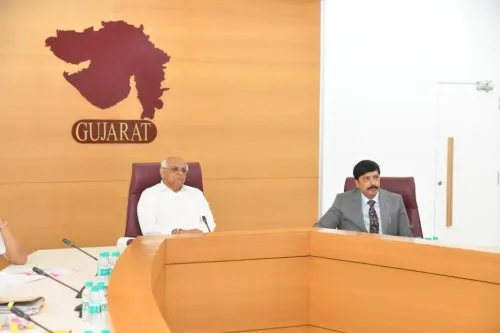
Launched under Chief Minister Bhupendra Patel, the scheme was structured around three pillars — skill training, market linkages, and entrepreneurship development — while attempting to preserve Gujarat's craft heritage. Officials said it 'aligns with Prime Minister Narendra Modi's initiatives promoting self-reliance, local manufacturing, and the preservation of cultural heritage.'
Implementation is led by the Office of the Commissioner of Cottage and Rural Industries, with the Entrepreneurship Development Institute of India (EDII) as the knowledge partner. The state has spent roughly ₹58 crore on the programme to date.
Training and social inclusion
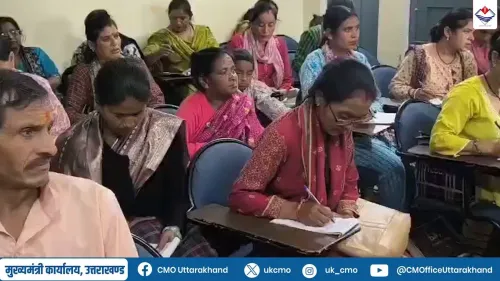
According to government data, 15,586 artisans have completed entrepreneurship development training and 9,292 have received craft-specific skill training. A backbone of more than 70 master trainers and over 150 mentors has been built to sustain handholding.
Social inclusion numbers are notable: Scheduled Castes account for 21 per cent of beneficiaries and Other Backward Classes 34 per cent, with Scheduled Tribes also represented.
Market access and digital push
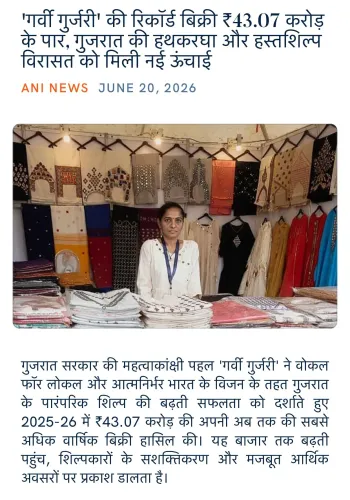
Around 9,300 artisans have been linked directly to buyers through business-to-business orders. The department has hosted seven B2B meets and four fashion shows to bridge artisans, designers, and industry. More than 2,000 artisans have been trained in digital marketing and onboarded onto e-commerce platforms including Amazon, Flipkart Samarth, Meesho, and Etsy.
Impact on earnings
The income shift is the most striking data point. The share of beneficiaries earning more than ₹15,000 per month from craft work has jumped from 9 per cent to 50 per cent. Those relying on handicrafts as their primary income source have risen from 20 per cent to 45 per cent, while 73 per cent now reach buyers directly through fairs and exhibitions.
Challenges and the road ahead
The government acknowledged hurdles including inadequate documentation, delays in financial convergence, limited adoption of modern technology, and weak marketing mechanisms. Course corrections, it said, have focused on technology upgrades, design innovation, market diversification, and public-private partnerships.
Originally a three-year intervention from 2019-20, the scheme was extended through 2025-26 after the Covid-19 pandemic disrupted on-ground rollout. The next phase is expected to deepen digital onboarding and tighten linkages with national e-commerce buyers.
Point of View
But the more telling indicator is the income shift — a five-fold jump in artisans crossing ₹15,000 a month suggests the market-linkage piece is finally working where most craft schemes stall. The 82% women beneficiary share is a quiet outlier in a sector where formal participation has historically lagged. The risk is sustainability post-2025-26: e-commerce onboarding without continued mentorship tends to plateau, as past handloom schemes in other states have shown. Whether Gujarat institutionalises the master-trainer network beyond the scheme's sunset will decide if this is a durable model or a well-documented pilot.
NationPress
28 Sept 2026
Frequently Asked Questions
What is the Hastkala Setu Yojana?
Hastkala Setu Yojana (HSY) is a Gujarat government scheme launched in 2020 to support traditional artisans through skill training, entrepreneurship development, and direct market access. It is implemented across all 34 districts via the Office of the Commissioner of Cottage and Rural Industries, with EDII as the knowledge partner.
How much in sales has the scheme generated?
The scheme has recorded cumulative sales of ₹102.08 crore since its 2020 inception, according to figures released by the state government. The state has spent approximately ₹58 crore on implementation.
Who are the main beneficiaries of the scheme?
Over 21,690 artisans have been registered, with women making up 82 per cent of beneficiaries. Scheduled Castes account for 21 per cent and Other Backward Classes for 34 per cent, alongside Scheduled Tribe participation.
How has the scheme changed artisans' incomes?
The share of beneficiaries earning more than ₹15,000 a month from their craft has risen from 9 per cent to 50 per cent. Artisans relying on handicrafts as their primary income source have grown from 20 per cent to 45 per cent.
Which e-commerce platforms are artisans connected to?
More than 2,000 artisans have been trained in digital marketing and onboarded to Amazon, Flipkart Samarth, Meesho, and Etsy. Around 9,300 artisans have also been linked directly with buyers through B2B orders.