Kishan Reddy: Cabinet clears Rs 7,395 cr rural governance scheme
Synopsis
The Union Cabinet has approved the PM Viksit Gram Swaraj Yojana with a Rs 7,395.55 crore outlay to empower over 2.55 lakh rural local bodies and 32 lakh elected representatives through targeted funding and the eGramSwaraj digital platform over five years.
Key Takeaways
The Union Cabinet, led by PM Narendra Modi , approved the Pradhan Mantri Viksit Gram Swaraj Yojana on 29 October 2026 .
Total scheme outlay is Rs 7,395.55 crore ; the Central share is Rs 4,869.48 crore .
Over 2.55 lakh rural local bodies will benefit from the five-year scheme.
32 lakh elected representatives — sarpanches, ward members and panchayat councillors — are targeted for capacity building.
Gram panchayat development plans will be prepared through the eGramSwaraj digital platform for transparency and monitoring.
The scheme extends a policy lineage that includes the Rashtriya Gram Swaraj Abhiyan (RGSA) approved in 2018 and aligns with the Viksit Bharat development framework.
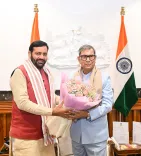
A Rs 7,395.55 crore bet on India's 2.55 lakh-plus gram panchayats just cleared the Cabinet. Union Coal and Mines Minister G. Kishan Reddy announced on Thursday, 29 October 2026 that the Union Cabinet, led by Prime Minister Narendra Modi, has approved the 'Pradhan Mantri Viksit Gram Swaraj Yojana' — a dedicated scheme to strengthen rural local governance and drive holistic village development.
What the Rs 7,395 crore scheme promises
The total outlay of Rs 7,395.55 crore will be deployed over the next five years, with the Central government's share pegged at Rs 4,869.48 crore. The scheme is designed to benefit more than 2.55 lakh rural local bodies and reach 32 lakh elected representatives — the councillors, sarpanches, and ward members who are the first interface between government and citizen in rural India.
A significant technology thread runs through the scheme. Gram panchayats will use the eGramSwaraj platform to prepare their development plans — bringing digital accountability to a tier of governance that has historically struggled with planning and audit transparency.
Building on the 73rd Amendment's unfinished promise
India's push to empower gram panchayats has a long legislative ancestry. The 73rd Constitutional Amendment of 1992 created the legal architecture for Panchayati Raj institutions, mandating devolution of functions, funds, and functionaries. But the gap between constitutional intent and on-ground capacity has persisted for decades. The Rashtriya Gram Swaraj Abhiyan (RGSA), approved in 2018, was an earlier attempt to plug that gap through capacity building and infrastructure support to panchayati raj bodies.
The PM Viksit Gram Swaraj Yojana arrives as the next chapter in that continuum — positioned within the broader Viksit Bharat framework, which treats stronger local governance as a non-negotiable foundation for national development goals by 2047.
Why 32 lakh representatives are the real multiplier
The scheme's reach to 32 lakh elected representatives is the detail that deserves the most attention. India's gram panchayat ecosystem is one of the world's largest exercises in participatory democracy — but only if those representatives have the tools, training, and resources to govern effectively. Directed capacity building at this scale, coupled with the eGramSwaraj digital backbone, is intended to close that capability gap village by village.
Watch points in the months ahead: how quickly state governments release matching funds, whether integration with Fifteenth Finance Commission grants and existing RGSA frameworks is formalised, and what physical milestones the Centre sets for annual progress reviews.
Thirty-two lakh representatives, 2.55 lakh bodies, five years — the blueprint is set. Whether execution matches ambition will be written not in cabinet rooms, but in village squares across India.
Point of View
The government is explicitly linking grassroots governance reform to its 2047 national-development narrative. The integration of eGramSwaraj as a mandatory planning tool reflects a calculated push to bring audit-trail accountability to local bodies that have historically been opaque. The real test, as with RGSA before it, will be whether state governments co-invest at matching pace and whether the 32 lakh representatives receive substantive training or merely paper certification.
NationPress
29 Oct 2026
Frequently Asked Questions
What is PM Viksit Gram Swaraj Yojana?
PM Viksit Gram Swaraj Yojana is a Central government scheme approved by the Union Cabinet on 29 October 2026 with a total outlay of Rs 7,395.55 crore to strengthen gram panchayats, support 2.55 lakh-plus rural local bodies, and build the capacity of 32 lakh elected rural representatives over five years.
How much is the Centre's share in PM Viksit Gram Swaraj Yojana?
The Central government's share in the scheme is Rs 4,869.48 crore out of the total outlay of Rs 7,395.55 crore, with the remainder expected from state contributions.
What is eGramSwaraj and how does it fit into the scheme?
eGramSwaraj is the government's digital platform for gram panchayat planning, monitoring, and financial transparency. Under this scheme, panchayats will use eGramSwaraj to prepare their development plans, creating an auditable digital record of local governance decisions.
How many gram panchayats will benefit from this scheme?
More than 2.55 lakh rural local bodies and approximately 32 lakh elected representatives are set to benefit from the PM Viksit Gram Swaraj Yojana over its five-year implementation period.
How does this scheme relate to the earlier Rashtriya Gram Swaraj Abhiyan?
The Rashtriya Gram Swaraj Abhiyan (RGSA) was approved in 2018 to provide capacity building and infrastructure to Panchayati Raj institutions; the PM Viksit Gram Swaraj Yojana continues and potentially expands upon that policy lineage, though whether it fully replaces or restructures RGSA has not been officially confirmed.