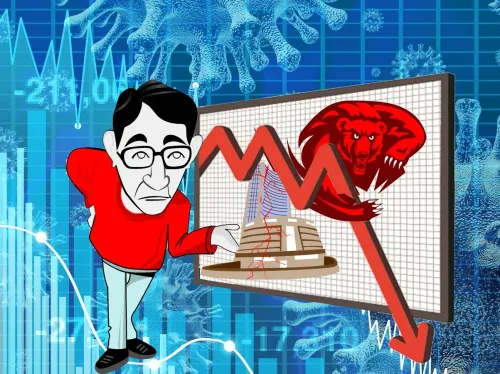
IBM shares plunge 23% in pre-market, wiping $55 billion in market value
Synopsis
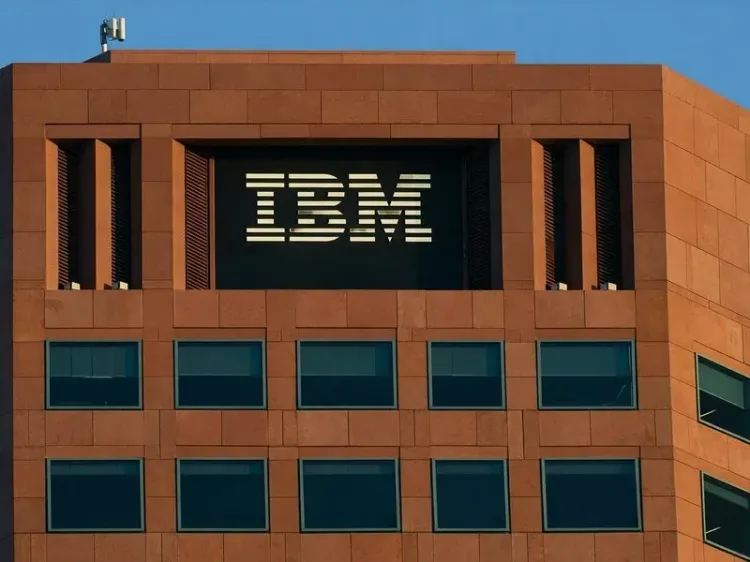
IBM's preliminary Q2 miss has triggered what could be the company's worst single-day fall since the 1980s — a $55 billion wipeout that is rippling through global software and IT services stocks, from Accenture to Infosys ADRs. The culprit is not a one-off shock but a structural shift: enterprise clients are defunding legacy software to fund AI infrastructure, and IBM is the most visible casualty so far.
Key Takeaways
IBM shares fell 23 per cent in pre-market trading on 14 July , erasing nearly $55 billion in market capitalisation.
Preliminary Q2 results missed analyst expectations, with the infrastructure division down 7 per cent .
IBM cited enterprise customers shifting budgets from traditional software to AI infrastructure (chips and servers).
If sustained, the drop would be IBM's steepest intra-day fall since the 1980s .
Accenture (-8.5%), ServiceNow (-6.8%), Cognizant (-7%), and Infosys ADRs (-9%) also fell sharply in pre-market.
IBM noted final Q2 figures may differ slightly from preliminary numbers still under review.
IBM shares crashed 23 per cent in pre-market trading on the New York Stock Exchange (NYSE) on Tuesday, 14 July, after the technology giant released preliminary second-quarter results that missed analyst expectations — triggering a sweeping sell-off across global software and IT services stocks. The decline erased nearly $55 billion from IBM's market capitalisation in a matter of hours.
What IBM's Preliminary Results Revealed
International Business Machines Corp. disclosed that its preliminary Q2 sales fell short of Wall Street forecasts, with particular weakness in its software and infrastructure businesses. The company's infrastructure division bore the steepest hit, with revenue declining 7 per cent during the quarter.
IBM acknowledged that it is still reviewing its financial statements and that final figures could differ slightly from the preliminary numbers. The company attributed the shortfall to enterprise customers redirecting technology budgets toward artificial intelligence (AI) infrastructure — chips and servers — at the direct expense of traditional software spending.
The Broader Tech Sell-Off
IBM's weak update dragged down shares of several major software and services companies in pre-market trading. Accenture dropped 8.5 per cent, ServiceNow declined 6.8 per cent, Cognizant fell 7 per cent, Adobe slipped 4.8 per cent, and Oracle shed 2.3 per cent.
The sell-off extended to Indian IT majors listed in the US. Infosys American Depository Receipts (ADRs) were trading nearly 9 per cent lower in pre-market, while Wipro ADRs declined around 3 per cent. This comes amid an already fragile sentiment after the Nasdaq Composite fell 1.6 per cent in the previous session, though Nasdaq futures partially recovered ground.
Historic Scale of the Decline
If the 23 per cent pre-market drop is sustained through the regular trading session, it would mark IBM's steepest intra-day fall since the 1980s — a striking milestone for a company that has spent decades repositioning itself from hardware to hybrid cloud and AI services. Notably, this is not the first time IBM has faced a structural inflection: the company underwent a similar reckoning when it divested its PC and server businesses in the 2000s and 2010s.
The AI Budget Shift Reshaping Enterprise Tech
IBM's results underscore a broader and accelerating trend: enterprises are concentrating capital expenditure on AI infrastructure, squeezing budgets for conventional software licences and legacy IT maintenance contracts. Companies with heavy exposure to traditional technology segments — as IBM, Accenture, and Indian IT firms are — face compounding pressure as this reallocation deepens.
Analysts and investors will closely watch IBM's final Q2 results and management commentary for any revision to full-year guidance, as well as signals on how quickly the company's own AI product portfolio can offset the structural headwinds in its legacy divisions.
Point of View
And IBM, with its outsized exposure to traditional segments, is absorbing the first visible shock. The contagion to Infosys ADRs and Accenture is telling: investors are not differentiating between IBM's specific weakness and the sector's structural challenge. Indian IT, which has spent years pitching AI-readiness, now faces a credibility test — if even AI-pivot narratives cannot insulate stocks from an IBM miss, the repricing of the entire IT services multiple may have further to run.
NationPress
13 Oct 2026
Frequently Asked Questions
Why did IBM shares fall 23 per cent in pre-market trading?
IBM shares fell 23 per cent in pre-market on 14 July after the company released preliminary second-quarter results that missed analyst expectations, citing weakness in its software and infrastructure businesses. IBM said enterprise customers were redirecting technology budgets toward AI infrastructure at the expense of traditional software spending.
How much market value did IBM lose?
IBM's pre-market decline erased nearly $55 billion from its market capitalisation. If the drop is sustained through the regular trading session, it would mark the company's steepest intra-day fall since the 1980s.
Which other stocks fell because of IBM's results?
The sell-off spread across the technology sector. Accenture dropped 8.5 per cent, ServiceNow declined 6.8 per cent, Cognizant fell 7 per cent, Adobe slipped 4.8 per cent, and Oracle shed 2.3 per cent in pre-market trading. Infosys ADRs fell nearly 9 per cent and Wipro ADRs declined around 3 per cent.
What caused IBM's weak second-quarter results?
IBM attributed the disappointing Q2 performance to customers shifting technology budgets toward AI infrastructure — including chips and servers — away from conventional software and legacy IT systems. Its infrastructure division saw a 7 per cent revenue decline during the quarter.
Are IBM's Q2 results final?
No. IBM noted it is still reviewing its financial statements and that the final results could differ slightly from the preliminary figures released ahead of the official earnings report.