IMEI tampering punishable by 3 years jail under Indian telecom law; Sanchar Saathi secures handsets

Synopsis
India's telecom law makes IMEI tampering a non-bailable offence carrying up to three years in prison and a ₹50 lakh fine. The official advisory also spells out how citizens can use the Sanchar Saathi platform to verify handset authenticity, block stolen devices, and navigate the 24-hour SIM reactivation window — steps that could significantly curb the circulation of tampered phones and phone-linked fraud.
Key Takeaways
IMEI tampering is a cognisable and non-bailable offence under Section 42(7) of Indian telecom law.
Penalties include imprisonment of up to three years , a fine of up to ₹50 lakh , or both.
Offences also cover SIM card fraud , CLI modification, and knowingly using tampered hardware or software.
The Sanchar Saathi (CEIR) portal and app allow citizens to verify IMEI details and block stolen or lost handsets.
Under TRAI regulations , SMS services on a reissued SIM are restricted for the first 24 hours — users must wait before submitting a Sanchar Saathi blocking request.
Citizens should buy devices only from authorised sellers and get repairs done at authorised service centres .
Intentionally removing, altering, or obliterating a mobile device's International Mobile Equipment Identity (IMEI) number is a criminal offence under Indian law, an official factsheet released on Wednesday, 23 September 2026 clarified. Violators face imprisonment of up to three years, a fine of up to ₹50 lakh, or both — and the offence is cognisable and non-bailable under Section 42(7) of the applicable Act.
What Constitutes an IMEI Offence
The factsheet specifies that it is unlawful not only to tamper with an IMEI but also to use, produce, traffic in, possess, or control hardware or software that has been configured to do so. In effect, the law targets the entire supply chain — from device manipulators to those knowingly using or distributing tampered handsets.
Additional offences listed include procuring SIM cards through fake documents, fraud, cheating, or impersonation. Transferring or selling SIM cards registered in one's own name to others who may misuse them is also punishable. Using mobile applications, websites, or any other means to modify Calling Line Identity (CLI) or other telecommunication identifiers similarly attracts legal action.
How Sanchar Saathi Protects Consumers
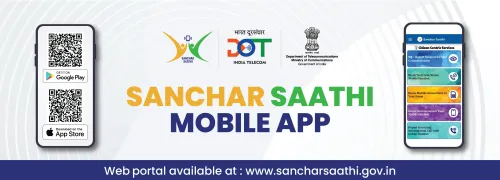
The government's Sanchar Saathi platform — which includes a web portal and mobile app — enables citizens to verify a device's IMEI details, including brand, model, and manufacturer, to confirm authenticity before purchase or use. The platform also houses the Central Equipment Identity Register (CEIR), through which stolen or lost handsets can be blocked.
Citizens are advised to purchase devices only from authorised sellers and get repairs done exclusively at authorised service centres to reduce the risk of IMEI tampering or malicious software installation. The statement also recommends using strong passwords, PINs, or biometric authentication to secure handsets.
Steps to Take If a Device Is Lost or Stolen
In the event of device loss or theft, the advisory directs citizens to file a complaint with local police immediately and retain a copy of the report. A duplicate SIM card for the lost number can be obtained from the telecom operator. Notably, under TRAI regulations, SMS services are restricted for the first 24 hours after a reissued SIM is activated — users must wait out this window before using Sanchar Saathi's OTP-based verification.
Once eligible, the blocking request can be submitted on the Sanchar Saathi (CEIR) portal or app by uploading the police report and a valid ID proof, after which a unique Request ID is issued. If the device is subsequently recovered, users must first report the recovery to police and then use their Request ID on the portal to unblock the handset.
Broader Context and Why It Matters
IMEI tampering is closely linked to mobile device theft, financial fraud, and organised cybercrime, as altered IMEIs make it harder for law enforcement to trace stolen handsets or link devices to criminal activity. This comes amid a period of heightened telecom-sector vigilance, with regulators and the government intensifying action against SIM swap fraud and CLI spoofing used in phone-based scams. The Sanchar Saathi platform, already used to block hundreds of thousands of stolen devices, is central to the Centre's consumer protection strategy in the telecom space.
With smartphone penetration deepening across India, awareness of these legal provisions and the tools available through Sanchar Saathi could significantly reduce the circulation of tampered devices and associated fraud.
Point of View
CLI spoofing, and identity theft — has become one of India's fastest-growing cybercrime categories. Making IMEI tampering non-bailable is a meaningful escalation, but enforcement is the harder half: tracing tampered devices requires inter-agency coordination that has historically lagged. The Sanchar Saathi platform is a genuine consumer tool, yet its OTP-gated access creates a 24-hour vulnerability window for victims of theft — a design friction the government has acknowledged but not yet resolved. The bigger question is whether awareness of these provisions reaches the tier-2 and tier-3 markets where second-hand, potentially tampered devices are most widely traded.
NationPress
23 Sept 2026
Frequently Asked Questions
What is the punishment for IMEI tampering in India?
IMEI tampering is punishable by up to three years in prison, a fine of up to ₹50 lakh, or both, under Section 42(7) of Indian telecom law. The offence is cognisable and non-bailable, meaning police can arrest without a warrant and bail is not automatic.
What is the Sanchar Saathi platform and how does it help?
Sanchar Saathi is a government portal and mobile app that lets citizens verify a device's IMEI details — including brand, model, and manufacturer — to confirm authenticity. It also hosts the Central Equipment Identity Register (CEIR), through which lost or stolen handsets can be blocked nationwide.
How do I block a stolen phone using Sanchar Saathi?
File a complaint with local police first and keep a copy of the report. Then visit the Sanchar Saathi (CEIR) portal or app, upload the police report and valid ID proof, and submit a blocking request to receive a unique Request ID. Note that if you have obtained a duplicate SIM, you must wait 24 hours after activation before the OTP-based system will work.
What other telecom offences are covered under this law?
Beyond IMEI tampering, the law also penalises obtaining SIM cards through fake documents or impersonation, transferring SIM cards registered in your name to others for potential misuse, and using apps or websites to modify Calling Line Identity (CLI) or other telecom identifiers.
How can I protect my phone from IMEI tampering?
Purchase devices only from authorised sellers and verify the IMEI before buying. Use strong passwords, PINs, or biometric authentication, and get repairs done exclusively at authorised service centres to minimise the risk of tampering or malicious software installation.