India auto sector Q1 resilience: HSBC flags margin pressure, upgrades H2 growth view
Synopsis
Despite commodity headwinds and successive price hikes, India's auto sector held its ground in Q1 FY27 — and HSBC has now upgraded its H2 growth forecast to mid-single-digit from low-single-digit. The catch: stretched valuations in two-wheelers and a high base could make FY28 a tougher ride.
Key Takeaways
HSBC Global Investment Research released its India auto sector analysis on 19 August , covering Q1 FY27 performance.
Most two-wheeler OEMs reported only minimal margin contraction, limiting erosion through pricing actions and cost controls.
Commercial vehicle makers delivered a reasonable quarter, with performance between two-wheelers and passenger vehicle makers.
Commodity costs remain the key pressure point; automakers implemented price increases in July and August to partially offset the impact.
HSBC upgraded its H2 FY27 growth forecast to mid-single-digit , up from an earlier low-single-digit estimate, as monsoon concerns eased.
Two-wheeler stocks are trading at significant premiums to historical averages ; HSBC prefers companies with reasonable valuations and diversified revenue profiles over the next one to two years .
India's automobile sector posted a broadly resilient performance in the first quarter of FY27 despite a demanding cost environment, according to an analysis by HSBC Global Investment Research released on Wednesday, 19 August. Most two-wheeler original equipment manufacturers (OEMs) managed to contain margin erosion through a combination of pricing actions and cost controls, the report found.
Two-Wheeler Makers Lead Margin Defence
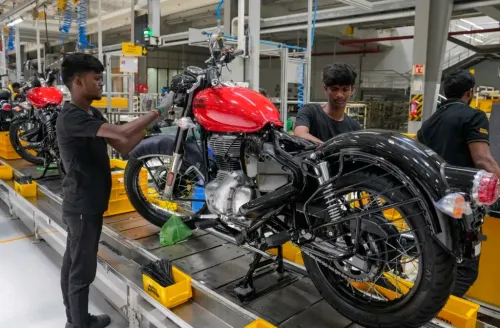
Two-wheeler manufacturers emerged as the standout performers, reporting only minimal margin contraction during the quarter. Analysts at the global brokerage attributed this to effective management of rising input costs — a signal that the segment's operational discipline is holding even as commodity pressures persist. Commercial vehicle (CV) makers delivered a reasonable quarter, with performance trends positioned between those of two-wheeler and passenger vehicle manufacturers.
Commodity Costs Remain the Key Pressure Point
The report identified commodity costs as the primary headwind for the sector. While input prices have softened modestly in the current quarter, they continue to weigh on profitability across OEMs. To partially offset this, most automakers implemented price increases in July and August. According to the report, these hikes should provide partial margin support, though the actual benefit will depend on demand elasticity and the pace at which commodity costs ease further.
HSBC Upgrades H2 Growth Outlook
Demand has remained healthy across vehicle segments despite successive price increases, the brokerage noted. HSBC now expects mid-single-digit growth in the second half of FY27 — an upgrade from its earlier forecast of low-single-digit growth for most OEMs. Concerns related to the monsoon have also eased somewhat, providing an additional tailwind to near-term demand.
Risks to Watch in H2 FY27 and FY28
The report cautioned that additional price hikes and a high comparative base could pose challenges to growth in the second half of FY27 and into FY28, particularly if consumer affordability weakens. This is a recurring tension in India's auto cycle — pricing-led margin recovery can erode volume momentum if it outpaces income growth, especially in price-sensitive segments like entry-level two-wheelers.
Valuations and Stock Preferences
On valuations, HSBC noted that stocks across its coverage universe are trading at premiums to historical averages, with two-wheeler manufacturers appearing significantly more expensive than passenger vehicle makers. Over the next one to two years, the brokerage said it prefers companies offering reasonable valuations, diversified and defensive revenue profiles, and long-term structural growth drivers.
Point of View
But the fine print matters more than the headline. India's auto sector has a well-established pattern of pricing-led margin recovery that eventually hits a volume wall — and with two-wheeler valuations already at steep premiums to historical averages, the market is pricing in a recovery that still has execution risk attached. The monsoon tailwind is real but seasonal; the structural question of consumer affordability in a high-base year remains unanswered. If commodity costs do not ease as expected, the July-August price hikes could be the beginning of a demand-softening cycle, not a margin saviour.
NationPress
5 Oct 2026
Frequently Asked Questions
How did India's auto sector perform in Q1 FY27?
India's automobile sector delivered a broadly resilient Q1 FY27 performance despite a challenging cost environment. Most two-wheeler OEMs reported only minimal margin contraction, while commercial vehicle makers posted a reasonable quarter, according to HSBC Global Investment Research.
What is HSBC's growth forecast for India's auto sector in H2 FY27?
HSBC has upgraded its H2 FY27 growth forecast for most Indian auto OEMs to mid-single-digit, up from an earlier projection of low-single-digit growth. The brokerage cited easing monsoon concerns and healthy demand across vehicle segments as key reasons for the revision.
Why are Indian automakers raising prices?
Most Indian automakers implemented price increases in July and August to partially offset rising commodity and input costs, which have been the sector's primary pressure point. The report notes that the benefit of these hikes will depend on demand elasticity and how quickly commodity costs moderate.
What are the risks to India's auto sector in FY28?
HSBC cautioned that additional price hikes and a high comparative base could pose challenges to growth in H2 FY27 and into FY28, especially if consumer affordability weakens. A sustained commodity cost environment could further squeeze margins if demand elasticity limits the scope for further price increases.
How are auto sector stocks valued currently?
According to HSBC, stocks across its India auto coverage universe are trading at premiums to historical averages. Two-wheeler manufacturers are considered significantly more expensive than passenger vehicle makers, leading the brokerage to prefer companies with reasonable valuations and diversified revenue profiles over the next one to two years.