India tops global ship recycling in 2025 with 35.4% market share
Synopsis
India has overtaken all rivals to become the world's top ship recycling nation in 2025, with a 35.4% global market share and volumes up nearly 60% year-on-year, according to UNCTAD. The milestone arrives years ahead of the Maritime India Vision 2030 target — and with BIMCO projecting 16,000 vessels for recycling over the next decade, India's position at the top could define a generation of maritime dominance.
Key Takeaways
India captured a 35.4 per cent share of global ship recycling in 2025 , up from 30.1 per cent in 2024, according to UNCTAD .
Recycling volumes surged nearly 60 per cent to 2.99 million GT from 1.86 million GT the previous year.
The milestone fulfils the Maritime India Vision (MIV) 2030 target of becoming the world's leading ship recycling nation ahead of schedule.
Government provided ₹53.5 crore to modernise yards; 115 facilities are now HKC-compliant.
The Ship-breaking Credit Note Scheme offers ship owners a credit note equal to 40 per cent of a recycled vessel's scrap value.
BIMCO projects over 16,000 vessels for global recycling in the next decade, positioning India to handle 500–600 vessels annually .
India has claimed the top position in global ship recycling in 2025, capturing a 35.4 per cent share of the worldwide market — up from 30.1 per cent the previous year — according to the latest report by the United Nations Conference on Trade and Development (UNCTAD). The milestone, announced by the Ministry of Ports, Shipping and Waterways (MoPSW), places India ahead of all other nations in one of the maritime industry's most strategically significant segments.
Scale of the Surge
Ship recycling volumes in India climbed to 2.99 million gross tons (GT) in 2025, a jump of nearly 60 per cent from 1.86 million GT recorded in 2024. According to the ministry's official statement, this growth rate is among the fastest logged by any country in the sector over a comparable period.
Crucially, the achievement means India has fulfilled a core target under the Maritime India Vision (MIV) 2030 — to become the world's leading ship recycling nation — well ahead of the original deadline.
What the Government Said
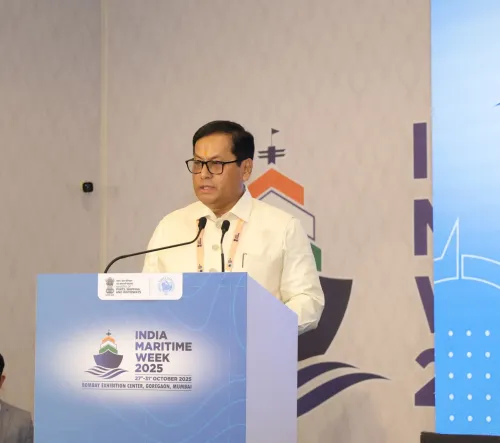
Union Minister of Ports, Shipping and Waterways Sarbananda Sonowal attributed the milestone to a combination of sustained policy reform, industry effort, and adherence to international environmental and safety standards. 'India's emergence as the world's top ship recycling nation reflects the success of sustained policy reforms, industry efforts and adherence to international environmental and safety standards,' Sonowal said.
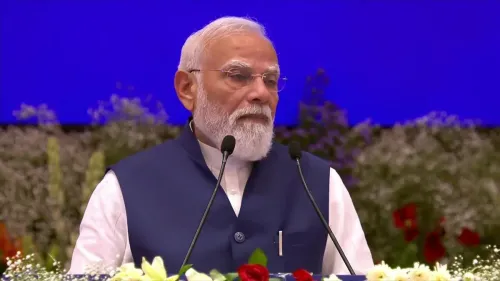
The ministry credited Prime Minister Narendra Modi's leadership for driving the maritime policy reforms and ease-of-doing-business initiatives that underpinned the growth.
Key Policy Levers Behind the Rise
Several targeted interventions helped propel India to the top. The government enacted the Recycling of Ships Act, 2019, aligning India's ship recycling ecosystem with the Hong Kong International Convention for the Safe and Environmentally Sound Recycling of Ships (HKC). Financial assistance of ₹53.5 crore was extended to support yard modernisation, enabling 115 facilities to achieve HKC compliance.
MoPSW also launched the Ship-breaking Credit Note Scheme, under which ship owners receive a credit note equivalent to 40 per cent of the scrap value of a recycled vessel — a direct incentive to route ships to Indian yards. The government is additionally pursuing the inclusion of Indian ship recycling facilities in the European Union's approved list of recycling yards, a move that would unlock a significant new pipeline of European-flagged vessels.
Global Outlook and India's Opportunity
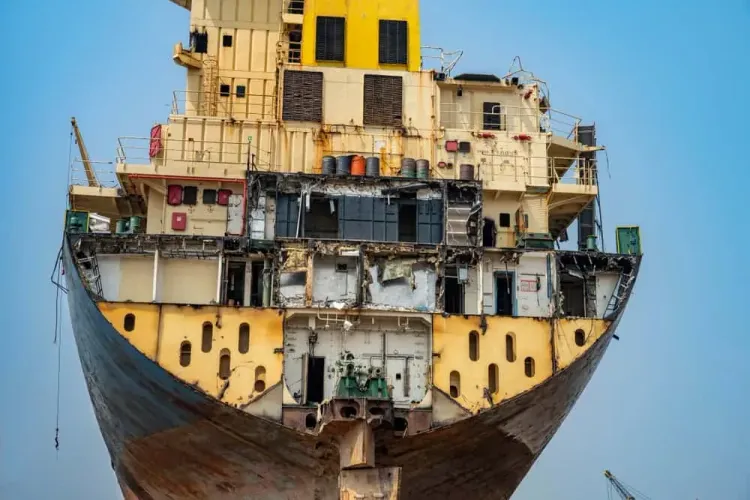
The Baltic and International Maritime Council (BIMCO) projects that more than 16,000 vessels will be recycled globally over the next decade as the global fleet ages. At its current market share of 35.4 per cent, India is positioned to recycle approximately 500 to 600 vessels annually, according to the ministry. This trajectory offers significant downstream benefits — steel scrap from recycled ships feeds domestic manufacturing, and the sector supports tens of thousands of jobs concentrated around Alang in Gujarat, the world's largest ship recycling yard complex.
Notably, this is the first time India has formally claimed the global number-one position under a UNCTAD-tracked metric, marking a structural shift from a sector long associated with safety and environmental concerns to one increasingly recognised for compliance and scale. How India manages the next phase of capacity expansion — particularly on worker safety and green recycling standards — will determine whether the lead can be sustained.
Point of View
But the harder task begins now. Alang's dominance has historically come with serious questions about worker safety and environmental compliance — and the Hong Kong Convention, while a step forward, is not yet in force internationally. Winning 35.4% of a market is meaningless if EU approval remains elusive; the push to get Indian yards onto Europe's approved list is the real test of whether this is a sustainable industrial transformation or a volume story that stalls at the next regulatory checkpoint. The 60% volume surge also warrants scrutiny: rapid scale-up in ship recycling without proportional investment in green infrastructure risks trading one reputational problem for another.
NationPress
22 Jun 2026
Frequently Asked Questions
How did India become the world's top ship recycling nation in 2025?
India reached the top position by capturing a 35.4 per cent share of global ship recycling in 2025, with volumes rising nearly 60 per cent to 2.99 million GT, according to UNCTAD. Policy reforms including the Recycling of Ships Act 2019, ₹53.5 crore in yard modernisation support, and the Ship-breaking Credit Note Scheme drove the growth.
What is the Maritime India Vision 2030 ship recycling target?
The Maritime India Vision (MIV) 2030 set a goal for India to become the world's leading ship recycling nation. That target has now been achieved ahead of schedule, as confirmed by the Ministry of Ports, Shipping and Waterways following the UNCTAD 2025 report.
What is the Ship-breaking Credit Note Scheme?
It is a government scheme under which ship owners who recycle vessels at Indian yards receive a credit note equivalent to 40 per cent of the ship's scrap value. The scheme is designed to incentivise routing of end-of-life vessels to Indian recycling facilities.
How many ship recycling yards in India are now HKC-compliant?
As of the latest ministry statement, 115 ship recycling facilities in India have achieved compliance with the Hong Kong International Convention (HKC) for the Safe and Environmentally Sound Recycling of Ships, supported by ₹53.5 crore in government financial assistance.
What is India's projected ship recycling capacity going forward?
With a 35.4 per cent global market share and BIMCO projecting over 16,000 vessels for recycling worldwide over the next decade, India is positioned to handle approximately 500 to 600 vessels annually, according to the Ministry of Ports, Shipping and Waterways.