India-Canada critical minerals partnership deepens with CSIR-IMMT visit
Synopsis
Canada's High Commissioner to India toured CSIR-IMMT's cutting-edge mineral processing facilities on 7 May 2025, signalling that the India-Canada critical minerals partnership is moving from diplomatic intent to hands-on scientific collaboration — at a moment when the global race to secure clean energy supply chains has never been more intense.
Key Takeaways
Canadian High Commissioner Chris Cooter visited CSIR-IMMT on 7 May 2025 to explore bilateral collaboration in critical minerals.
The delegation toured advanced facilities including the PGE pilot plant , recycling pilot plant , seabed minerals pilot plant , and molten salt electrolysis facility .
Kali Sanjay presented the work of the Centre of Excellence on Critical Minerals , established at CSIR-IMMT by the Ministry of Mines .
Canada brings significant mineral reserves and mining expertise; India contributes processing capabilities and downstream manufacturing strengths.
A Joint Declaration of Intent (JDI) with the University of Saskatchewan already underpins academic and research exchange between the two countries.
Enhanced collaboration is expected to strengthen resilient critical mineral supply chains and support the global energy transition.
India and Canada are increasingly emerging as strategic partners in the critical minerals sector, driven by surging global demand for materials essential to clean energy technologies, electric mobility, and advanced manufacturing, according to an official statement released on Thursday, 7 May 2025.
High-Level Canadian Delegation Visits CSIR-IMMT
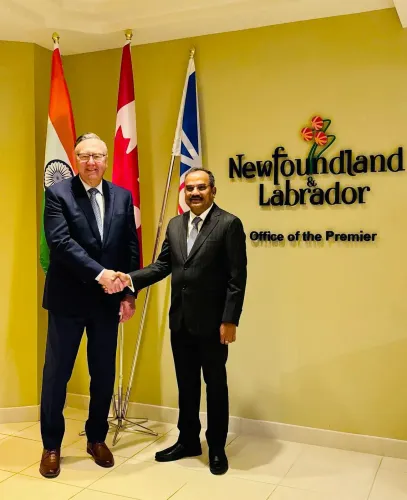
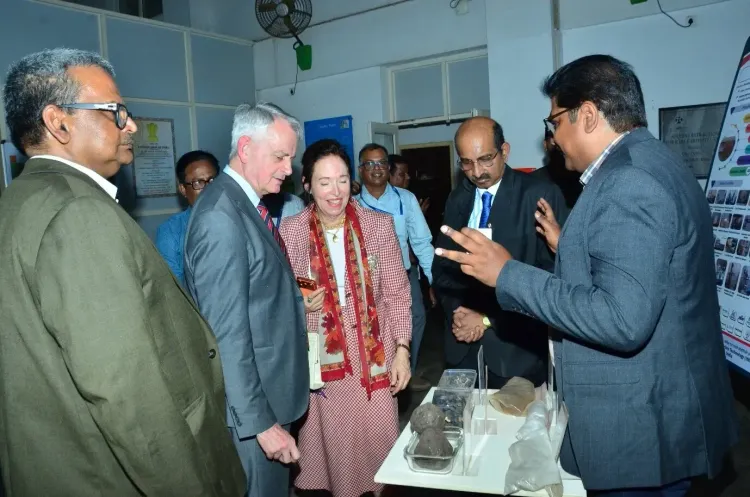
Chris Cooter, High Commissioner of Canada to India, visited the CSIR–Institute of Minerals and Materials Technology (CSIR-IMMT) in Bhubaneswar to explore avenues for scientific and technological collaboration in critical minerals, sustainable resource processing, and advanced metallurgical technologies. The Canadian delegation interacted with Dr. Ramanuj Narayan, Director of CSIR-IMMT, alongside senior scientists and researchers.
Dr. Narayan highlighted the institute's growing international engagement, including a Joint Declaration of Intent (JDI) signed with the University of Saskatchewan for collaborative research and academic exchange — an existing bilateral thread that this visit sought to strengthen further.
Centre of Excellence on Critical Minerals Takes Centre Stage
Dr. Kali Sanjay, Head of the Centre of Excellence on Critical Minerals established at CSIR-IMMT by the Ministry of Mines, presented the centre's ongoing research, technology development, and human resource capacity-building activities. The centre represents India's institutional push to build domestic expertise in a sector that global powers are racing to secure.
As part of the visit, the Canadian delegation toured several advanced research facilities, including the Platinum Group Elements (PGE) pilot plant, recycling pilot plant, seabed minerals pilot plant, and the molten salt electrolysis pilot facility — infrastructure that signals India's ambitions beyond raw extraction toward high-value processing and downstream technologies.
Complementary Strengths Drive the Partnership
According to the Ministry of Science and Technology, the bilateral relationship is built on complementary capabilities: Canada possesses significant reserves of critical minerals and advanced mining expertise, while India offers expanding capabilities in mineral processing, downstream technologies, and manufacturing. This asymmetry, rather than competition, is what makes the partnership strategically attractive for both nations.
Opportunities related to joint research programmes, capacity building, technical training, and technology transfer were deliberated during the meeting. Notably, this engagement comes amid a broader global scramble to build resilient supply chains for minerals such as lithium, cobalt, nickel, and rare earth elements — materials that underpin the clean energy transition.
Strategic Significance for Global Supply Chains
Enhanced Indo-Canadian collaboration is expected to support resilient and diversified critical mineral supply chains, promote technological innovation, and strengthen research partnerships, according to the ministry. This is particularly significant as both nations seek to reduce dependence on single-source supply chains — a vulnerability that the COVID-19 pandemic and geopolitical tensions have made starkly apparent.
With the global energy transition accelerating, the depth and pace of this bilateral scientific partnership will be closely watched by industry and policymakers alike.
Point of View
India is signalling ambitions in processing and downstream technology, and Canada's mining expertise makes it a logical partner. However, the real test will be whether these interactions translate into funded joint programmes and verifiable technology transfers, rather than staying at the level of declarations of intent. With India-China tensions persisting and Western nations actively courting New Delhi for supply chain diversification, India holds unusual negotiating leverage — leverage it must convert into concrete industrial capacity, not just strategic optics.
NationPress
23 Sept 2026
Frequently Asked Questions
Why are India and Canada partnering on critical minerals?
India and Canada are partnering because their strengths are complementary — Canada holds significant critical mineral reserves and advanced mining expertise, while India offers growing capabilities in mineral processing, downstream technologies, and manufacturing. Together, they aim to build resilient supply chains essential for clean energy and electric mobility.
What is the CSIR-IMMT and what role does it play in this partnership?
The CSIR–Institute of Minerals and Materials Technology (CSIR-IMMT) is a premier Indian research institute focused on minerals and materials science. It hosts the Centre of Excellence on Critical Minerals, established by the Ministry of Mines, and is a key institutional anchor for India's bilateral scientific engagements in this sector.
What facilities did the Canadian delegation visit at CSIR-IMMT?
The delegation toured the Platinum Group Elements (PGE) pilot plant, recycling pilot plant, seabed minerals pilot plant, and molten salt electrolysis pilot facility — all advanced research infrastructure reflecting India's push into high-value mineral processing.
What areas of collaboration were discussed between India and Canada?
The two sides deliberated on joint research programmes, capacity building, technical training, and technology transfer. The existing Joint Declaration of Intent with the University of Saskatchewan also formed part of the discussion on deepening academic and scientific exchange.
How does this partnership fit into the global energy transition?
Critical minerals such as lithium, cobalt, nickel, and rare earth elements are indispensable for clean energy technologies and electric vehicles. An India-Canada partnership helps both nations diversify supply chains away from single-source dependencies, contributing to global energy security and the broader net-zero transition.