India-EU FTA to unlock business avenues, says Finland Trade Counsellor
Synopsis
Finland's Trade Counsellor says the signed India-EU FTA has sparked genuine excitement among European businesses — and points to circular economy collaboration as an underappreciated dividend of the deal. The real test now is how fast implementation follows the signature.
Key Takeaways
Antti Herlevi , Trade Counsellor at the Embassy of Finland , on 21 August said the India-EU FTA will open new avenues for businesses on both sides.
European businesses are 'very much looking forward' to working with Indian companies once the agreement becomes operational.
Finland has offered its circular economy expertise as a key area for India-EU collaboration, covering product design, material reduction, and recycling.
Herlevi said cutting material use could reduce energy and water consumption while lowering dependence on carbon-intensive virgin materials.
Implementation details of the India-EU FTA are still being finalised, with businesses on both sides awaiting operational clarity.
The India-European Union Free Trade Agreement (FTA) is set to open significant new avenues for businesses and deepen commercial cooperation between India and European nations, according to Antti Herlevi, Trade Counsellor at the Embassy of Finland in New Delhi. Speaking on Friday, 21 August, Herlevi said European businesses are keenly anticipating closer collaboration with Indian companies once the agreement becomes operational.
European Optimism Around the FTA
'This year is very important. As you know, the FTA has been signed, and Europeans are very much looking forward to working with India and Indian companies. There is a lot of excitement, and we hope that all the practicalities will be worked out soon,' Herlevi said.
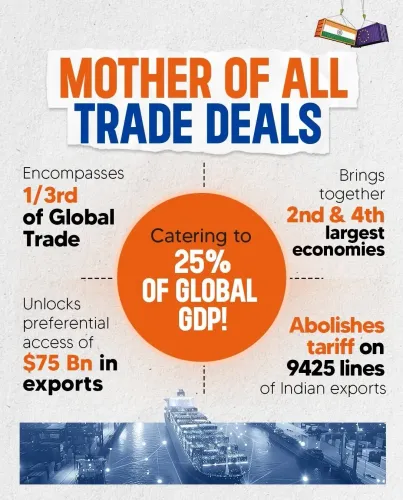
He noted that businesses on both sides are eager for the agreement to move from signing to implementation, which would unlock greater opportunities for expanding trade ties and forging new commercial partnerships. The India-EU FTA, long in negotiation, represents one of the most consequential trade deals India has pursued with a major economic bloc.
Finland's Circular Economy Edge
Beyond trade liberalisation, Herlevi highlighted a specific area where India stands to gain considerably — Finland's deep expertise in circular economy models. He said European countries, and Finland in particular, have a long tradition of replacing linear production systems with sustainable circular alternatives, and that Indian businesses have significant scope to collaborate in this space.
The areas of potential cooperation span reducing material consumption, improving product design for longevity and recyclability, and strengthening recycling infrastructure. Herlevi argued that cutting material use could have a cascading positive impact across the entire value chain — reducing not just waste, but also energy and water consumption, while lowering dependence on virgin materials that are often highly carbon-intensive.
Design-First Approach to Sustainability
'Simply put, we should use fewer materials and recycle as much as possible. That can be a major game changer,' Herlevi said, underscoring the economic as well as environmental logic of the circular model.
He stressed that the transition must begin at the product design stage itself. Companies, he said, need to develop products that use minimal material, have longer lifespans, and are built in a manner that allows constituent materials to be recovered and reused. 'It starts with upstream solutions,' Herlevi said, adding that better planning at the outset is critical to building a circular-economy-compatible product ecosystem.
What the FTA Could Mean for India
The India-EU FTA is expected to cover goods, services, and investment, potentially benefiting Indian exporters in sectors ranging from textiles and pharmaceuticals to IT services. For European businesses, India's large and growing consumer market represents a major opportunity. Analysts have noted that the deal, if implemented efficiently, could reshape bilateral trade flows that currently stand well below their potential.
With implementation details still being worked out, the coming months will be critical in determining how quickly businesses on both sides can begin capitalising on the agreement's provisions.
Point of View
Even as implementation remains unresolved. The circular economy angle is worth watching — India's recycling infrastructure and product-design ecosystem lag far behind European standards, meaning the collaboration potential is real but the gap is wide. If the FTA's services chapters are as ambitious as the goods chapters, Indian IT and professional services firms could see meaningful market access gains in Europe. The bigger risk is that implementation drags, as has historically been the case with India's trade agreements, leaving business optimism to curdle into frustration.
NationPress
21 Aug 2026
Frequently Asked Questions
What is the India-EU Free Trade Agreement?
The India-EU Free Trade Agreement is a comprehensive trade deal signed between India and the European Union, covering goods, services, and investment. It is expected to significantly expand bilateral trade and open new market access opportunities for businesses on both sides.
Why is the India-EU FTA significant for Indian businesses?
The FTA is expected to give Indian exporters — particularly in sectors like textiles, pharmaceuticals, and IT services — improved access to the large European market. For European firms, India's growing consumer base becomes more accessible, deepening commercial partnerships.
What role can Finland play in India's circular economy transition?
Finland has a long tradition of circular economy models that replace linear production with sustainable alternatives. Trade Counsellor Antti Herlevi said Indian businesses can collaborate with Finnish counterparts on reducing material consumption, improving product design, and strengthening recycling systems.
When will the India-EU FTA become operational?
As of 21 August, the agreement had been signed but implementation details were still being finalised. Herlevi expressed hope that 'all the practicalities will be worked out soon,' though no specific timeline was provided.
What does the circular economy approach involve?
The circular economy model focuses on using fewer raw materials, designing products for longer lifespans and recyclability, and building robust recycling systems. According to Herlevi, this approach reduces not just waste but also energy and water consumption across the value chain.