India targets debris-free space by 2030, Cosmoserve Space leads the charge
Synopsis
India is staking a claim as one of the world's first movers on space debris removal — not through a government programme, but via a year-old startup that already tested soft robotic petals in orbit. With a 14,800-sq-ft robotics facility now operational and a 2030 debris-free target on the books, Cosmoserve Space is turning ISRO expertise into private-sector ambition at a pace few anticipated.
Key Takeaways
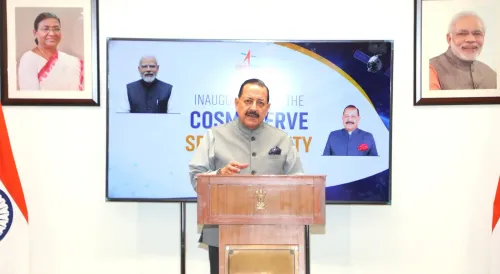
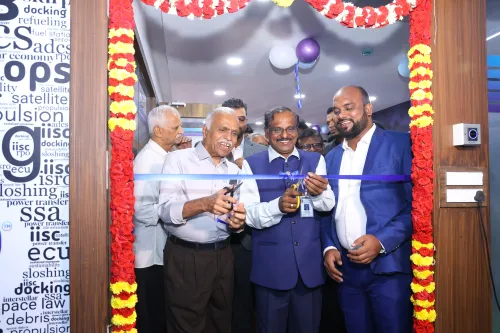
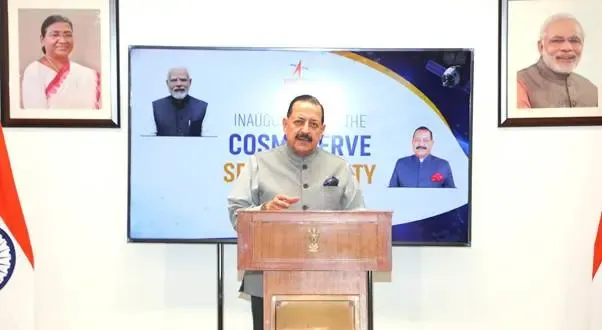
Jitendra Singh inaugurated Cosmoserve Space's Base 1 facility on 5 November 2026 in New Delhi .
The 14,800-square-foot facility houses orbital rendezvous labs, space robotics labs, microgravity simulation platforms, and satellite integration clean rooms.
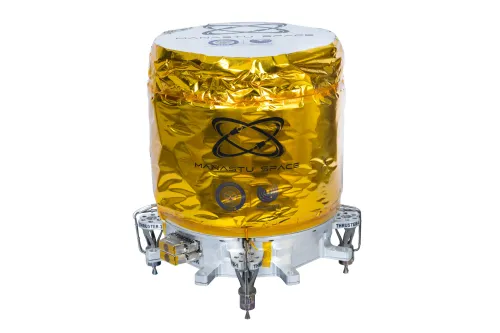
Mission EMBRACE successfully conducted an in-space test of soft robotic petals in July 2026 , within one year of the company's founding.
India's space startup ecosystem has grown to nearly 450 enterprises , with the space economy valued at nearly $9 billion and projected to reach $40–45 billion .
Cosmoserve Space has partnered with Pixel , Dhruv Aerospace Netherlands , and Skyroot Aerospace for an end-to-end mission capability.
India is targeting a debris-free space environment by 2030 , placing it among the earliest global movers on active debris removal.
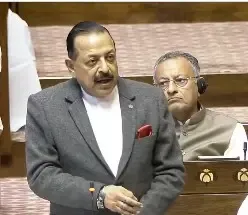
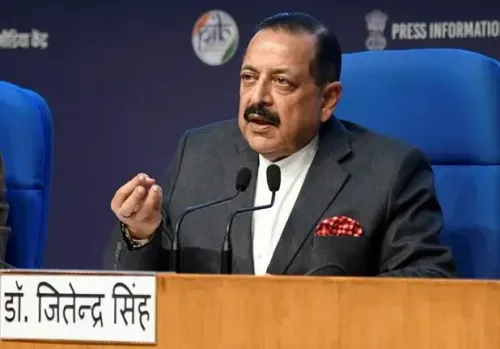
India is emerging as one of the earliest global pioneers in active space debris removal, with Union Minister of State for Science and Technology Dr. Jitendra Singh on 5 November 2026 reaffirming the country's commitment to achieving a debris-free space environment by 2030. The minister was speaking at the inauguration of Cosmoserve Space's Base 1 facility in New Delhi, a milestone that underscores the rapid maturation of India's private space sector.
What the Base 1 Facility Offers
The newly inaugurated 14,800-square-foot Base 1 facility is designed to serve as an end-to-end hub for space robotics innovation. It houses specialised infrastructure including orbital rendezvous and capture labs, space robotics innovation labs, microgravity simulation platforms, and satellite integration clean rooms. These capabilities position Cosmoserve Space to design, build, test, and operate advanced space robotics technologies entirely within India.
Mission EMBRACE and Active Debris Removal
Dr. Singh congratulated Dr. Chiranjeevi Phanindra, Founder and Chief Executive Officer of Cosmoserve Space, and his team for the success of Mission EMBRACE, which conducted an in-space test of soft robotic petals in July 2026 — within just one year of the company's formation. The test, focused on active debris removal (ADR) and in-orbit servicing, is considered a significant technical milestone for a startup operating outside the traditional government space framework. Dr. Singh noted that the team's experience from ISRO and the Gaganyaan programme has been effectively translated into a collaborative private-sector model.
A Web of Strategic Partnerships
Cosmoserve Space's approach reflects an emerging culture of end-to-end collaboration in India's space ecosystem. The company has forged partnerships with Pixel for satellite systems, Dhruv Aerospace Netherlands for propulsion systems, and Skyroot Aerospace for launch services. According to the minister, this integration of indigenous payloads, battery technologies, satellite systems, and private launch capabilities is helping establish global benchmarks in space mission architecture. Notably, the involvement of an international partner — Dhruv Aerospace Netherlands — signals that Indian space startups are increasingly attracting cross-border collaboration.
India's Space Economy: Scale and Ambition
India's space economy has grown to nearly $9 billion and is projected to reach $40–45 billion over the coming decade. The country's space startup ecosystem has expanded from a single-digit count to nearly 450 enterprises — a transformation that has accelerated since the liberalisation of the space sector. Dr. Singh urged domestic and international investors to participate more actively in the sector, and also called for greater philanthropy towards science and research to accelerate innovation and support emerging technologies.
Why This Matters Globally
Space debris is a growing international concern, with thousands of defunct satellites and fragments threatening operational missions in low Earth orbit. India's proactive push — anchored by both policy intent and private-sector capability — places it among a small group of nations, including the United States, Japan, and members of the European Space Agency, that are actively developing ADR solutions. This comes amid rising global urgency around orbital sustainability, and positions India as a potential rule-setter rather than a rule-taker in the emerging governance of space debris.
Point of View
However, is that the technological vanguard here is a one-year-old startup, not a government agency — a structural shift that the liberalisation of India's space sector was designed to produce but that few expected to yield operational results this quickly. The risk is that policy ambition runs ahead of regulatory scaffolding: India still lacks a comprehensive domestic framework for orbital liability, end-of-life disposal mandates, or debris-removal licensing. Without that legal architecture, the 2030 target remains a headline rather than a verifiable commitment. The global race to own the ADR market — commercially and diplomatically — is intensifying; India's window to shape the norms, rather than inherit them, is narrow.
NationPress
5 Nov 2026
Frequently Asked Questions
What is India's debris-free space target by 2030?
India aims to achieve a debris-free space environment by 2030, as reaffirmed by Union Minister of State Dr. Jitendra Singh at the inauguration of Cosmoserve Space's Base 1 facility on 5 November 2026. The goal involves developing active debris removal (ADR) technologies through private-sector startups and collaborations.
What is Cosmoserve Space's Base 1 facility?
Base 1 is a 14,800-square-foot facility inaugurated in New Delhi that houses orbital rendezvous and capture labs, space robotics innovation labs, microgravity simulation platforms, and satellite integration clean rooms. It is designed for end-to-end design, building, testing, and operation of space robotics technologies.
What was Mission EMBRACE?
Mission EMBRACE was an in-space test of soft robotic petals conducted by Cosmoserve Space in July 2026, aimed at demonstrating active debris removal technology. It was completed within one year of the company's founding, and is considered a significant milestone for India's private space sector.
How large is India's space economy today?
India's space economy has grown to nearly $9 billion and is projected to reach $40–45 billion over the coming decade. The country's space startup ecosystem has expanded from a single-digit number of firms to nearly 450 enterprises.
Who are Cosmoserve Space's key partners?
Cosmoserve Space has partnered with Pixel for satellite systems, Dhruv Aerospace Netherlands for propulsion systems, and Skyroot Aerospace for launch services. These partnerships enable an end-to-end, integrated space mission capability combining indigenous and international expertise.