India targets $1 trillion exports in 2026-27: Piyush Goyal sets 17% merchandise growth goal
Synopsis
India has set its most ambitious export target yet — $1 trillion in a single financial year. Commerce Minister Piyush Goyal says early figures are on track, the India-UK FTA kicks in by 15 July, and the government is pushing exporters to go beyond domestic comfort zones. The real question is whether execution can match the headline number.
Key Takeaways
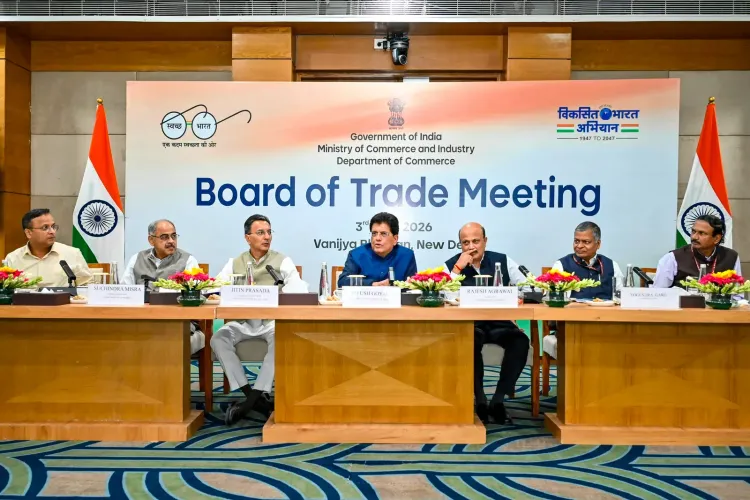
Commerce Minister Piyush Goyal announced India's $1 trillion export target for 2026-27 at the Board of Trade Meeting on 3 July .
Merchandise exports are targeted at $530 billion , a 17% rise; services exports are projected at $470 billion , up 11% from $421 billion .
Total exports in 2025-26 stood at $863 billion , making the trillion-dollar goal a significant step-up.
The India-Oman FTA became operational on 1 June ; the India-UK FTA is expected to take effect by 15 July .
Goyal stressed the need for exporters to invest in quality, skills, and international branding rather than relying on the domestic market.
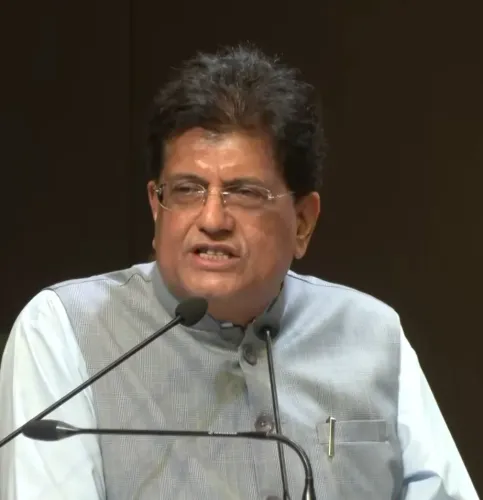
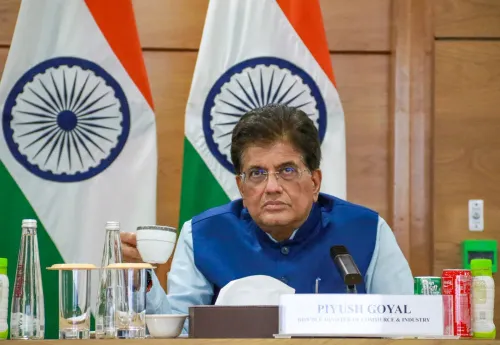
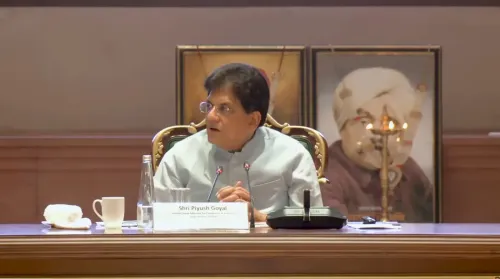
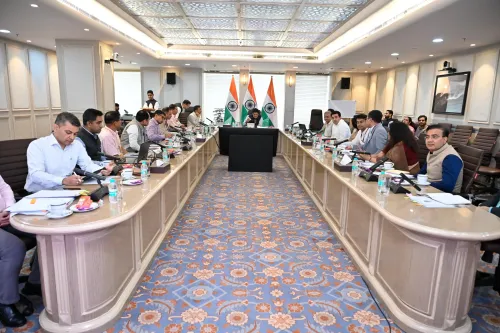
Commerce and Industry Minister Piyush Goyal on Friday, 3 July declared that India is targeting a landmark $1 trillion in total exports during the 2026-27 financial year, representing robust double-digit growth over the $863 billion recorded in 2025-26. The announcement came at the Board of Trade Meeting in New Delhi, where Goyal urged exporters and industry leaders to collectively seize the moment.
The Export Targets: Merchandise and Services
Goyal outlined a two-pronged growth plan. Merchandise exports are targeted to rise by 17 per cent to approximately $530 billion, while services exports are projected to grow by around 11 per cent — from $421 billion to nearly $470 billion. Together, these two streams form the basis of the trillion-dollar ambition.
'If we look at the figures up to June, we are well on track,' Goyal said, offering early-year data as evidence that the trajectory is achievable. He added that the Prime Minister Narendra Modi-led government is seeking an ambitious push and called on industry to match that intent.
Why India Believes the Moment Is Now
Goyal emphasised that India's rising strategic and economic profile has unlocked new access in international markets. He argued that domestic companies must now pivot outward rather than remain reliant on the home market. 'Currently, India is becoming more and more secure. The world wants to work with us. We have to go out and capture those world markets,' he said.
Notably, this call to action comes as Indian exporters face both opportunity and competition — global supply chain realignments post-pandemic and shifting geopolitical alignments have positioned India as an alternative sourcing hub for several major economies.
Quality, Branding, and Skills: The Government's Conditions
The minister was direct about what success will require. Competitive pricing alone, he said, is insufficient. Exporters must invest in product quality, develop specialised skills, build international brands, and proactively pursue overseas customers. 'We sell our goods in cosy comfort in the domestic market. But to get into the export market, we need skill, we need quality, we need outreach. You will have to work hard; this will not happen sitting at home,' Goyal said.
To back this up, the government is strengthening its export promotion mission, which will assist Indian companies in establishing brand presence in foreign markets — a recognition that Indian goods have historically struggled with premium positioning abroad.
New FTAs Open Additional Doors
Two trade agreements are set to accelerate the push. The India-Oman Free Trade Agreement became operational on 1 June, while the India-UK Free Trade Agreement is expected to come into force by 15 July, opening a significant high-value market for Indian exporters. Goyal highlighted these agreements as structural enablers that will reduce tariff barriers and improve market access.
This is part of a broader FTA expansion strategy by the Centre, which has been negotiating deals with multiple partners including the European Union and Canada. The pace of operationalisation will be closely watched as a signal of execution capability.
What Comes Next
With the first quarter figures reportedly on track, the focus now shifts to sustaining momentum through the remaining three quarters. Industry bodies and export councils will be expected to align with the government's promotion framework, while the performance of the India-UK FTA in its early weeks will serve as a litmus test for the broader export strategy.
Point of View
With services (led by IT) outperforming merchandise, which remains vulnerable to global demand cycles and logistics bottlenecks. Goyal's emphasis on branding and quality is the right diagnosis, but the prescription — an export promotion mission — is not new. The real test lies in whether the India-UK FTA delivers measurable volume gains quickly enough to validate the trajectory, and whether the merchandise sector can sustain 17% growth beyond a strong opening quarter. Without sector-specific accountability, the trillion-dollar mark risks becoming another aspirational headline.
NationPress
2 Oct 2026
Frequently Asked Questions
What is India's export target for 2026-27?
India is targeting $1 trillion in total exports for the 2026-27 financial year , comprising approximately $530 billion in merchandise exports and nearly $470 billion in services exports. This represents double-digit growth over the $863 billion recorded in 2025-26.
What did Piyush Goyal say at the Board of Trade Meeting?
Commerce and Industry Minister Piyush Goyal said India is 'well on track' based on figures through June, and called on exporters to invest in quality, skills, and international branding. He urged industry leaders to pursue overseas markets actively rather than relying on domestic demand.
Which free trade agreements are boosting India's export push?
The India-Oman FTA became operational on 1 June 2026 , while the India-UK FTA is expected to come into force by 15 July 2026 . Both agreements are expected to reduce tariff barriers and improve market access for Indian exporters.
How much did India export in 2025-26?
India's total exports in 2025-26 stood at $863 billion , with services exports at $421 billion . The 2026-27 target of $1 trillion requires merchandise exports to grow by 17% and services exports by around 11% .
What support is the government offering to exporters?
The government is strengthening its export promotion mission to help Indian companies build brand presence and market reach overseas. Goyal emphasised that the initiative will focus on quality improvement, skills development, and active international customer outreach.