India poised to lead global Bio-Economy, says DCPC Secretary Tejveer Singh
Synopsis
India's bio-economy ambition just got a fresh government stamp. At BIOPSF 2026, DCPC Secretary Tejveer Singh pitched India as a future global leader in bio-based agri-inputs, anchored in biodiversity, science, and startups — and tied it directly to the Viksit Bharat 2047 vision.
Key Takeaways
DCPC Secretary Tejveer Singh said India can emerge as a global leader in Bio-Economy and bio-based agri-inputs.
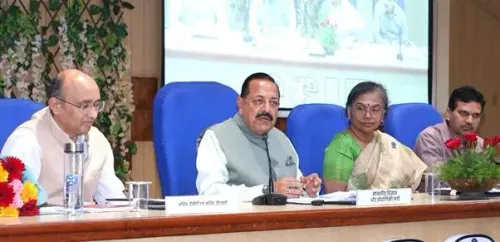
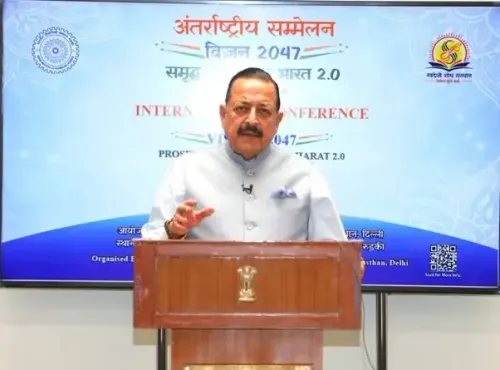
The remarks came at the valedictory session of BIOPSF 2026 in New Delhi on 3 June .
Singh flagged that bio-pesticide success depends on robust formulation technologies for stability, efficacy, and farmer adoption.
The push is aligned with the ‘Viksit Bharat 2047’ vision, emphasising indigenous tech, translational research, and startup-led innovation.
The event was organised by IPFT, Gurugram , under the Ministry of Chemicals and Fertilisers , as part of its 36th Foundation Day .
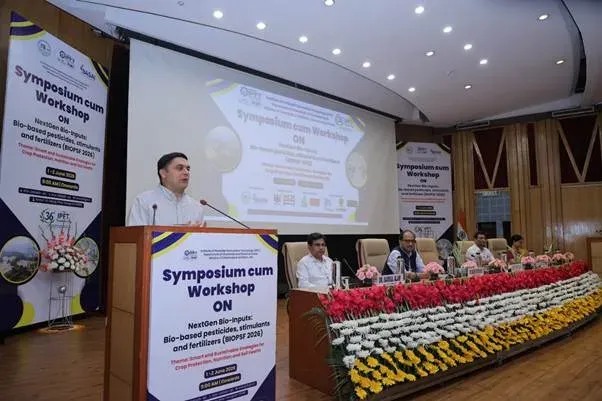
India is on course to emerge as a global leader in the Bio-Economy and bio-based agri-input sector, driven by stronger policy backing for sustainable agriculture and targeted bio-economy initiatives, the government said on 3 June. The assessment was delivered at the valedictory session of the two-day symposium-cum-workshop ‘BIOPSF 2026’ in New Delhi.
What the government said
Tejveer Singh, Secretary, Department of Chemicals and Petrochemicals (DCPC), said India has ‘immense potential’ to lead globally on bio-based agri-inputs, citing the country's strong scientific base, rich biodiversity, and a rapidly expanding startup ecosystem. He expressed confidence that scientific excellence, effective industry-academia partnerships, and contributions from young innovators will define tomorrow's sustainable agricultural solutions.
Why formulation technology is the linchpin
Singh underlined that the eventual success of bio-pesticides hinges on robust formulation technologies that can enhance product stability, field efficacy, ease of application, and farmer acceptance. Without these, even scientifically validated bio-inputs struggle to translate into on-farm adoption — a gap that has historically limited India's organic and bio-pesticide penetration.
Link to Viksit Bharat 2047
The Secretary connected the bio-economy push to India's broader ‘Viksit Bharat 2047’ vision, calling for stronger indigenous technological capabilities, translational research, and startup-led innovation in bio-based chemicals, crop protection technologies, and sustainable agricultural inputs. This positions bio-inputs not just as an agriculture story, but as a pillar of India's long-term industrial and sustainability roadmap.
About BIOPSF 2026
The event was organised by the Institute of Pesticide Formulation Technology (IPFT), Gurugram — an autonomous body under the DCPC, Ministry of Chemicals and Fertilisers — as part of IPFT's 36th Foundation Day celebrations. It brought together policymakers, scientists, industry representatives, regulators, academicians, entrepreneurs, startups, students and researchers to discuss recent developments in bio-based agricultural inputs and their role in sustainable agriculture, the ministry said in a statement.
What's next
With bio-pesticides and bio-stimulants gaining regulatory and market traction, the focus is expected to shift toward scalable formulations, field trials, and farmer-level distribution networks. Industry watchers will look for follow-up policy moves that translate the BIOPSF 2026 deliberations into measurable adoption targets.
Point of View
Biodiversity, and agri-innovation, with uneven follow-through. The real gap is not vision but the formulation-to-farm pipeline: bio-pesticides have struggled to scale precisely because field-grade products and distribution lag the lab. Tying the agenda to Viksit Bharat 2047 is smart framing, but credibility will rest on measurable adoption metrics, not symposium rhetoric. Without a clear regulatory glide path for bio-inputs alongside chemical pesticides, the leadership claim risks staying aspirational.
NationPress
23 Sept 2026
Frequently Asked Questions
What is the Bio-Economy push announced at BIOPSF 2026?
It is a government-backed vision to position India as a global leader in the Bio-Economy and bio-based agricultural inputs sector. DCPC Secretary Tejveer Singh outlined the agenda at the BIOPSF 2026 symposium in New Delhi on 3 June, citing India's scientific base, biodiversity, and startup ecosystem.
Why are bio-pesticide formulations so important?
Formulation technology determines whether a bio-pesticide actually works on the field. Singh said product stability, field efficacy, ease of application, and farmer acceptance all depend on robust formulations — without which scientific advances cannot translate into adoption.
Who organised the BIOPSF 2026 event?
The symposium was organised by the Institute of Pesticide Formulation Technology (IPFT), Gurugram, an autonomous institution under the Department of Chemicals and Petrochemicals, Ministry of Chemicals and Fertilisers. It was held as part of IPFT's 36th Foundation Day celebrations.
How does this link to Viksit Bharat 2047?
The Bio-Economy roadmap is being framed as a building block of the Viksit Bharat 2047 vision. The government wants to strengthen indigenous technological capabilities, translational research, and startup-led innovation in bio-based chemicals and sustainable agri-inputs.
Who attended BIOPSF 2026?
The event brought together policymakers, scientists, industry representatives, regulators, academicians, entrepreneurs, startups, students and researchers. They discussed recent developments in bio-based agricultural inputs and their role in sustainable agriculture.