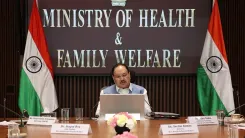
Piyush Goyal meets biopharma startups, govt eyes ₹1 lakh crore RDI fund push

Synopsis
India's bioeconomy has surged from $10 billion in 2014 to $195 billion in 2025 — and the government is now betting a ₹1 lakh crore RDI fund and a sweeping BioE3 policy can push it to $300 billion by 2030. Commerce Minister Piyush Goyal's meeting with biopharma startups on 2 November signals that regulatory and funding bottlenecks are finally getting high-level attention.
Key Takeaways
Commerce Minister Piyush Goyal met biopharma and biotech startups on 2 November 2026 in New Delhi to discuss growth challenges.
India's bioeconomy grew from $10 billion (2014) to over $195 billion (2025) , contributing 4.8% to GDP, per IBER 2026 .
The sector is targeting a $300 billion bioeconomy by 2030 , supported by over 11,800 biotech startups .
The government's BioE3 Policy targets precision biotherapeutics, smart proteins, climate-resilient agriculture, and carbon capture technologies.
A ₹1 lakh crore RDI Fund has been set up, with BIRAC assigned a lead role in supporting biotech scale-ups and technology translation.
The government is considering coordinated action to simplify regulations, speed up patent approvals, and improve startup funding access.
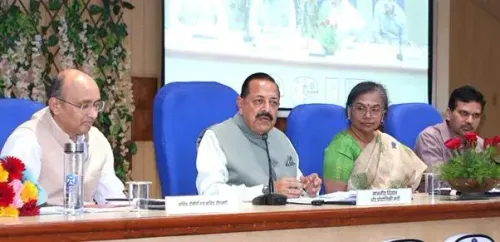
Commerce and Industry Minister Piyush Goyal on Monday, 2 November 2026, convened a meeting with India's biopharma and biotechnology startups in New Delhi to identify key growth bottlenecks and chart a path for accelerating the sector. The discussions focused on simplifying regulatory processes, improving access to capital, expediting patent approvals, and strengthening indigenous procurement and research infrastructure.
What the Government Said
Minister Goyal signalled that coordinated inter-ministerial action is under consideration to address structural constraints facing biopharma startups. 'Stronger collaboration between government, industry and research institutions will help innovative startups scale and contribute to India's growing bioeconomy,' he said during the session.
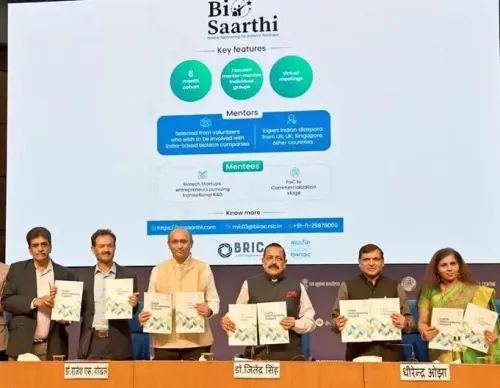
He also highlighted the role of the Biotechnology Industry Research Assistance Council (BIRAC) in building shared infrastructure — including bio foundries, Bio-AI hubs, and advanced biomanufacturing platforms — as part of the government's broader transformation agenda.
India's Bioeconomy by the Numbers
According to the India BioEconomy Report (IBER) 2026, India's bioeconomy has grown from approximately $10 billion in 2014 to over $195 billion in 2025, recording a compound annual growth rate (CAGR) of nearly 18%. The sector contributes around 4.8% to national GDP and is supported by over 11,800 biotech startups across the country.
The sector has more than doubled in size since 2020, and annual growth in the last year alone stood at 17–18%, rising from approximately $165 billion to $195 billion. India is now targeting a $300 billion bioeconomy by 2030.
Key Policy Levers: BioE3 and the RDI Fund
The Centre's BioE3 Policy — Biotechnology for Economy, Environment, and Employment — is designed to promote innovation in precision biotherapeutics, smart proteins, climate-resilient agriculture, bio-based chemicals, and carbon capture technologies. This policy provides a regulatory and incentive architecture aimed at scaling sustainable biomanufacturing.
Separately, the government has established a Research, Development, and Innovation (RDI) Fund with an outlay of ₹1 lakh crore, under which BIRAC has been assigned a lead role in channelling long-term investment into projects ready for scale-up and technology translation. The fund is intended to deepen India's deep-tech ecosystem.
What It Means for Startups and the Sector
With over 11,800 biotech startups already operational, the immediate priority, according to reports from the meeting, is reducing time-to-market through faster patent approvals and smoother regulatory clearances. Analysts have noted that India's biopharma startup ecosystem remains underfunded relative to its scientific talent base, making the RDI Fund's scale significant.
This comes amid a broader global reorientation toward bio-based economies, with the United States, the European Union, and China each ramping up biomanufacturing investment. India's push, if executed effectively, could position it as a preferred destination for contract biomanufacturing and drug discovery partnerships.
What Comes Next
No specific timelines were announced for regulatory reforms following Monday's discussions, but the government has indicated that actionable proposals will emerge from ongoing consultations between industry, research institutions, and the ministry. Industry observers will be watching for formal policy notifications under the BioE3 framework and the first disbursement tranches from the RDI Fund in the coming months.
Point of View
But disbursement architecture and BIRAC's capacity to absorb and deploy that capital at scale remain untested. The real differentiator will be whether patent approval timelines and regulatory clearances are quantifiably compressed — not just signalled as priorities in ministerial readouts.
NationPress
2 Nov 2026
Frequently Asked Questions
What did Commerce Minister Piyush Goyal discuss with biopharma startups on 2 November?
Minister Goyal met India's biopharma and biotechnology startups to identify key challenges including regulatory complexity, limited funding access, slow patent approvals, and weak procurement infrastructure. The government indicated it is considering coordinated inter-ministerial action to address these bottlenecks.
How large is India's bioeconomy in 2025?
According to the India BioEconomy Report (IBER) 2026, India's bioeconomy crossed $195 billion in 2025, up from approximately $165 billion the previous year, reflecting annual growth of 17–18%. The sector contributes around 4.8% to national GDP and is backed by over 11,800 biotech startups.
What is the BioE3 Policy and how does it affect biotech startups?
The BioE3 Policy — Biotechnology for Economy, Environment, and Employment — is the Centre's framework to promote innovation in areas such as precision biotherapeutics, smart proteins, climate-resilient agriculture, bio-based chemicals, and carbon capture. It provides the regulatory and incentive structure for scaling sustainable biomanufacturing in India.
What is the ₹1 lakh crore RDI Fund and who manages it?
The Research, Development, and Innovation (RDI) Fund, with an outlay of ₹1 lakh crore, is a government initiative to channel long-term investment into deep-tech projects ready for scale-up and technology translation. BIRAC has been assigned a key role in deploying the fund toward biotechnology ventures.
What is India's bioeconomy target and when does it need to be achieved?
India is targeting a $300 billion bioeconomy by 2030, building on a CAGR of nearly 18% recorded over the past decade. The sector has more than doubled in size since 2020 and is considered a strategic priority for the government's deep-tech and export ambitions.