India water demand may exceed supply by 54 bcm by 2050: CareEdge report

Synopsis
India is on course for a 54 bcm water deficit by 2050, with per-capita availability already below the global stress threshold and nearly half of Bengaluru's borewells dry as of 2024. A new CareEdge Ratings report puts a $531 billion financial risk figure on corporate water exposure — and argues that water is no longer an environmental footnote but a core business risk.
Key Takeaways
India's water demand could reach 1,180 bcm by 2050 , exceeding utilisable supply of 1,126 bcm by 54 bcm , per CareEdge Ratings .
Per-capita water availability was 1,486 cubic metres in 2021 — below the 1,700 cubic metre stress threshold — and is projected to fall to 1,367 cubic metres by 2031 .
India has 18% of the world's population but only 4% of global renewable water resources.
Groundwater extraction stands at 60.6% of annual extractable resources; 13.8% of assessment units are critical or over-exploited.
Nearly 7,000 of 16,000 borewells in Bengaluru were dry by March 2024 ; urban India treats only 28% of the 72,368 MLD of sewage it generates.
CDP estimates the financial impact of water risks at nearly $531 billion based on its 2023 Water Security survey of 922 companies .
India's water constraints are rapidly evolving into a site-specific operating, regulatory and financial risk for businesses, with a new report warning that the country's demand could outstrip its utilisable supply within three decades. The findings, released on Friday, 20 November 2026, underscore the urgency of embedding water risk into corporate strategy.
The Supply-Demand Gap
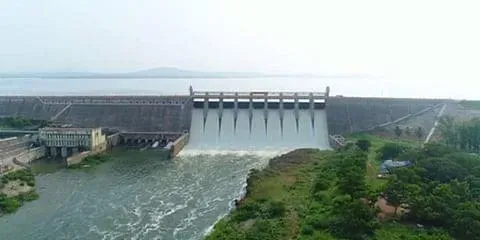
According to a report by CareEdge Ratings, India's water demand could reach 1,180 billion cubic metres (bcm) by 2050 under a high-demand scenario — exceeding the country's utilisable water resources of 1,126 bcm and creating a projected shortfall of 54 bcm. This comes amid a structural imbalance: India holds roughly 18 per cent of the world's population but commands only 4 per cent of global renewable water resources.
Per-capita water availability had already dipped to 1,486 cubic metres in 2021, below the internationally recognised water-stress threshold of 1,700 cubic metres. That figure is projected to fall further to 1,367 cubic metres by 2031, deepening stress across urban and rural geographies alike.
Groundwater and Urban Stress
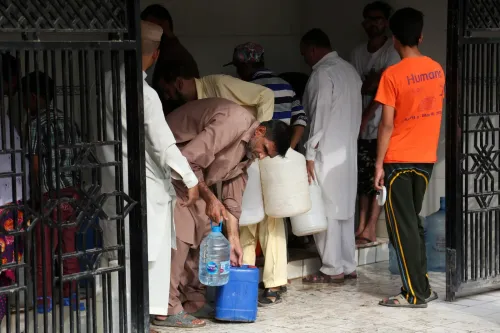
Groundwater extraction currently stands at 60.6 per cent of annual extractable resources, with 13.8 per cent of assessment units classified as critical or over-exploited. The human cost is already visible: nearly 7,000 of 16,000 borewells in Bengaluru were reportedly dry as of March 2024, forcing housing societies, offices and technology parks to depend on water tankers.
Delhi depends heavily on neighbouring states for its supply, while Mumbai faces selective stress tied to unequal distribution and monsoon dependence. Notably, the report extends the risk profile well beyond water-intensive industries to include offices, hospitals, hotels, airports and technology parks — sectors not traditionally flagged as water-dependent.
Economic Exposure and Financial Risk
Water-dependent sectors contribute roughly half of India's economic value added and employ close to 70 per cent of its workforce, the report noted. According to CDP estimates, the potential financial impact of reported water risks stands at nearly $531 billion, based on responses from 922 companies to its 2023 Water Security questionnaire — a figure that illustrates the systemic corporate exposure embedded in current operating models.
The Sewage Treatment Gap
Urban India generates 72,368 million litres per day (MLD) of sewage, yet treats only 20,235 MLD — approximately 28 per cent of the total. The report identified treated wastewater as a viable alternative for suitable industrial and non-potable uses, flagging the gap as a recoverable resource rather than merely a pollution challenge.
What Companies Must Do
Nikunj Dube, Chief Ratings Officer at CareEdge-ESG, said: 'Companies need to understand the catchment's competing demands and how a supply constraint could affect operations. Site-level evidence should guide expansion, procurement and capital allocation, making water risk part of business resilience.'
The report recommended that firms develop site-wise risk registers mapping water sources, uses, discharge points, local stress levels, groundwater classification and flood exposure — informed by active engagement with local communities and other water users. It further urged businesses to measure water balances, improve metering, efficiency and reuse, and integrate water risk into site selection, capital expenditure, production and procurement decisions. With demand projections pointing to a structural deficit by mid-century, the window for proactive corporate adaptation is narrowing.
Point of View
While striking, is self-reported by companies, which historically underestimate their exposure. The more telling number is that water-dependent sectors employ 70 per cent of India's workforce: a supply shock is not an environmental event, it is a labour-market event. India's governance response — sewage treatment at 28 per cent, groundwater over-exploitation in nearly 14 per cent of units — lags the trajectory by a wide margin. Voluntary corporate risk registers will not close that gap without regulatory mandates and basin-level water accounting.
NationPress
20 Nov 2026
Frequently Asked Questions
How much could India's water demand exceed supply by 2050?
According to CareEdge Ratings, India's water demand could reach 1,180 bcm by 2050 under a high-demand scenario, exceeding the country's utilisable supply of 1,126 bcm by 54 bcm. This structural deficit is driven by population growth, industrial expansion and agricultural demand.
What is India's current per-capita water availability?
India's per-capita water availability stood at 1,486 cubic metres in 2021, already below the internationally recognised water-stress threshold of 1,700 cubic metres. It is projected to decline further to 1,367 cubic metres by 2031.
Why is water risk considered a financial risk for businesses?
CDP estimates that reported water risks carry a potential financial impact of nearly $531 billion, based on responses from 922 companies in its 2023 Water Security questionnaire. Water-dependent sectors contribute roughly half of India's economic value added and employ close to 70 per cent of its workforce, making supply disruptions a direct threat to earnings and operations.
Which Indian cities face the most acute water stress?
Bengaluru, Delhi and Mumbai are among the most stressed urban centres. Nearly 7,000 of Bengaluru's 16,000 borewells were reportedly dry by March 2024. Delhi relies heavily on neighbouring states for supply, while Mumbai faces unequal distribution and monsoon dependence.
What does the CareEdge report recommend companies do about water risk?
The report recommends that companies develop site-wise risk registers mapping water sources, usage, discharge, local stress levels, groundwater classification and flood exposure. It also urges firms to measure water balances, improve metering and reuse, and integrate water risk into site selection, capital expenditure and procurement decisions.