India's AYUSH exports: Govt-industry roadmap targets global branding, FTA gains

Synopsis
India is making a structured bid to convert its ancient AYUSH heritage into a globally competitive export powerhouse. A high-level government-industry session on 2 July mapped out a roadmap spanning FTA leverage, WHO-GMP compliance, the Ayush Quality Mark, and scientific validation — signalling a shift from volume-led exports to brand-led global positioning.
Key Takeaways
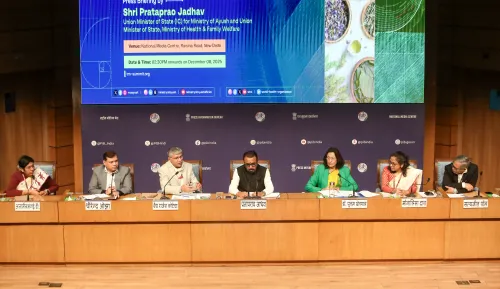
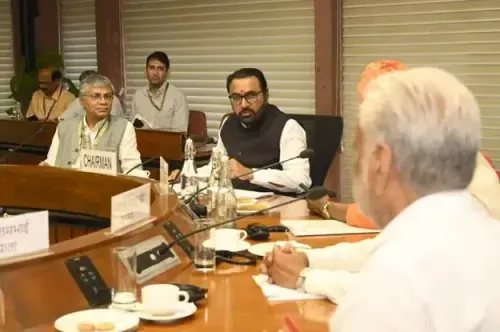
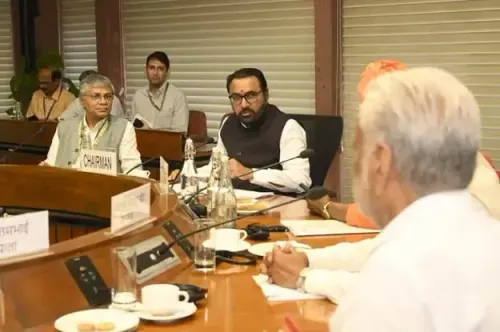
The Ministry of AYUSH and Department of Commerce , with AYUSHEXCIL , held a strategic brainstorming session in New Delhi on 2 July 2025 .
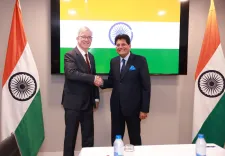
Commerce Secretary Rajesh Agrawal said the goal is to build globally competitive Indian AYUSH brands , not just increase export volumes.
AYUSH Secretary Vaidya Rajesh Kotecha called for faster rollout of Ayush Mark and Ayurveda Aahar to strengthen quality and global competitiveness.
AYUSHEXCIL Chairman Dr.
Anurag Sharma stressed the need for collaboration among government, industry, and research institutions for scientific validation and global branding.
Key focus areas included FTA leverage , WHO-GMP compliance , regulatory facilitation, medical value travel, and ease of doing business for MSMEs and startups.
The Ministry of AYUSH and the Department of Commerce jointly convened an industry brainstorming session in New Delhi on 2 July 2025 to chart a strategic roadmap for elevating India's standing as a global leader in the AYUSH sector. The session, organised in collaboration with the AYUSH Export Promotion Council (AYUSHEXCIL), brought together exporters, manufacturers, MSMEs, and startups to identify actionable pathways across innovation, quality assurance, exports, and international collaboration.
Key Agenda and Focus Areas
Deliberations covered a wide range of priorities: leveraging India's expanding network of Free Trade Agreements (FTAs), global branding of AYUSH products, export facilitation, WHO-GMP compliance, the Ayush Quality Mark, scientific validation, medical value travel, wellness services, and resolving regulatory and market access challenges. The breadth of the agenda signals a shift from ad hoc export promotion to a more structured, ecosystem-wide approach.
What the Government Said
Commerce Secretary Rajesh Agrawal framed the government's ambition in clear terms: the objective, he said, was not merely to grow export volumes but to build globally competitive Indian AYUSH brands. Agrawal described the sector as a 'high-potential sunrise export sector' and urged industry players to prioritise innovation, value addition, and quality while capitalising on FTA-linked market openings. He also underscored the role of trade facilitators and ecosystem intermediaries in connecting Indian AYUSH products with international buyers, and confirmed that the Department of Commerce would sustain stakeholder outreach and capacity-building programmes in partnership with AYUSHEXCIL.
AYUSH Secretary Vaidya Rajesh Kotecha called for faster implementation of flagship initiatives — specifically Ayush Mark and Ayurveda Aahar — to sharpen quality assurance and global competitiveness. He urged industry to improve product quality, packaging, and international market readiness to capitalise on rising global interest in Ayurveda and other traditional medicine systems. Kotecha also highlighted ongoing efforts to align Indian standards with international benchmarks, a prerequisite for wider regulatory acceptance abroad.
Industry and Parliamentary Voice
AYUSHEXCIL Chairman and Member of Parliament Dr. Anurag Sharma said India was well positioned to emerge as a trusted global hub for holistic healthcare, citing growing international acceptance of traditional medicine. He called for deeper collaboration among government, industry, and research institutions to drive scientific validation, quality assurance, and global branding — areas where India's AYUSH sector has historically lagged its commercial potential.
Ground-Level Inputs from Exporters and MSMEs
The session concluded with an interactive segment in which exporters, manufacturers, MSMEs, and startups shared on-the-ground perspectives on improving market access, easing regulatory compliance, and accelerating international collaboration. Participants flagged ease of doing business and regulatory facilitation as critical bottlenecks that must be addressed for India to convert its traditional knowledge base into sustained export earnings.
What Comes Next
The roadmap emerging from the session is expected to inform policy action across FTA negotiations, standards alignment, and export incentive design. This comes amid a broader global shift toward integrative and traditional medicine, which presents India — home to the world's most codified systems of Ayurveda, Yoga, Unani, Siddha, and Homeopathy — a rare first-mover window. Whether the momentum from the brainstorming table translates into measurable export growth will depend on the speed and depth of implementation.
Point of View
But the sector's credibility abroad still hinges on scientific validation and regulatory harmonisation, both of which move slowly. The Ayush Quality Mark and WHO-GMP compliance are necessary conditions, not sufficient ones: without a credible, internationally recognised certification ecosystem, Indian AYUSH products will continue to face market access friction in high-value markets like the EU and the US. The real test is whether the roadmap produces binding commitments or remains another well-attended consultation.
NationPress
1 Oct 2026
Frequently Asked Questions
What was the purpose of the AYUSH industry brainstorming session held on 2 July?
The session, organised by the Ministry of AYUSH and AYUSHEXCIL in New Delhi on 2 July 2025, aimed to chart a strategic roadmap for strengthening India's global AYUSH leadership through innovation, quality standards, export facilitation, FTA leverage, and international collaboration. It brought together exporters, manufacturers, MSMEs, and startups to identify actionable priorities.
What is the Ayush Quality Mark and why does it matter?
The Ayush Quality Mark is a government-backed certification initiative designed to assure the quality and authenticity of Indian AYUSH products in domestic and international markets. AYUSH Secretary Vaidya Rajesh Kotecha has called for its accelerated implementation as a key tool for strengthening global competitiveness and consumer trust abroad.
How do India's Free Trade Agreements help the AYUSH sector?
India's expanding FTA network creates preferential market access for AYUSH products in partner countries by reducing tariff barriers and easing regulatory entry. Commerce Secretary Rajesh Agrawal urged industry to actively leverage these agreements to expand the global footprint of Indian AYUSH brands.
Who are the key stakeholders driving India's AYUSH export strategy?
The primary institutional drivers are the Ministry of AYUSH, the Department of Commerce, and AYUSHEXCIL (the AYUSH Export Promotion Council). Industry participants include exporters, manufacturers, MSMEs, and startups, with AYUSHEXCIL Chairman and MP Dr. Anurag Sharma also calling for stronger involvement of research institutions.
What are the main challenges facing AYUSH exports from India?
Participants at the session flagged regulatory compliance, WHO-GMP certification, ease of doing business, market access barriers, and the need for scientific validation as key challenges. Aligning Indian standards with international benchmarks remains a critical prerequisite for wider acceptance in high-value markets.