CM Yogi Orders Rollout of Ayush Wellness Policy 2026 in UP
Synopsis
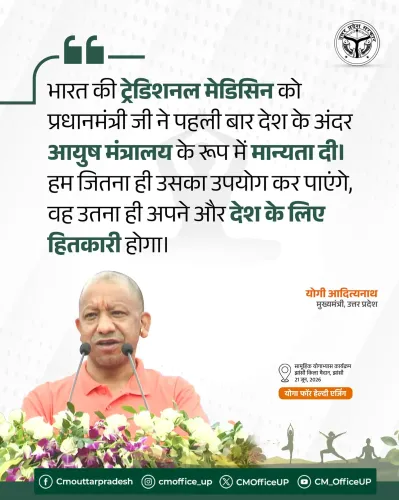
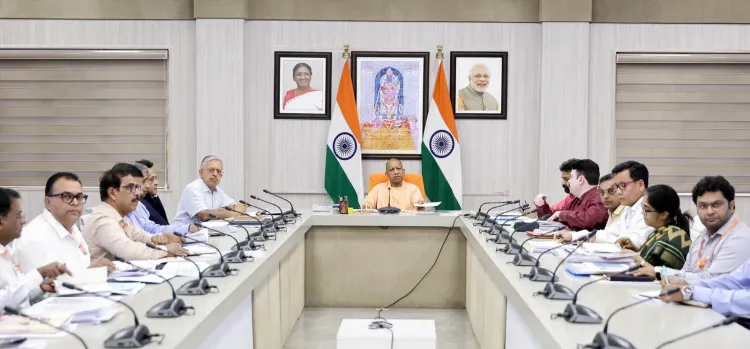
Chief Minister Yogi Adityanath chaired an Ayush Department review in Lucknow on Sunday evening, directing officials to implement the Ayush Health and Wellness Policy-2026 and position Uttar Pradesh as a leading national and international wellness destination by integrating Yoga, Panchakarma and Naturopathy with modern management, quality standards and tourism.
Key Takeaways
CM Yogi Adityanath chaired the Ayush Department review meeting in Lucknow on the evening of Sunday, 25 May 2026 .
He directed officials to implement the 'Ayush Health and Wellness Policy-2026' effectively across Uttar Pradesh .
The Chief Minister called for UP to be developed into a prominent wellness destination at national and international levels through Ayush, Yoga, Panchakarma and Naturopathy .
Ayush services are to be integrated with modern management, quality standards and tourism to drive employment and investment.
The initiative builds on the National AYUSH Mission (2015) and mirrors wellness tourism models in states such as Kerala and Maharashtra .
The Chief Minister's Office of Uttar Pradesh announced on Sunday, 25 May 2026, that Chief Minister Yogi Adityanath chaired a review meeting of the Ayush Department in Lucknow on Sunday evening, issuing directives for the effective implementation of the 'Ayush Health and Wellness Niti-2026' (Ayush Health and Wellness Policy-2026).
Context
At the meeting, CM Yogi directed officials to develop Uttar Pradesh into a prominent wellness destination at both national and international levels by integrating Ayush, Yoga, Panchakarma, and Naturopathy services. He underlined that the state's traditional medicine ecosystem must be coordinated into a coherent offering capable of attracting visitors and investors from across the country and abroad.
The Chief Minister stated, as shared by his office, that Ayush services should be linked with 'modern management, quality standards and tourism' to generate fresh momentum for employment and investment — a signal that the policy envisions wellness not merely as a healthcare measure but as an economic driver.
Policy Backdrop
The push builds on a decade-long national framework: the Ministry of AYUSH was established by the Government of India in November 2014 to mainstream traditional medicine systems, followed by the launch of the National AYUSH Mission in 2015 to strengthen infrastructure and service delivery across states. Uttar Pradesh, as India's most populous state, has been a significant beneficiary of mission funding and has steadily expanded its network of Ayush hospitals and wellness centres.
CM Yogi Adityanath, in office since 2017, has consistently positioned traditional medicine as a pillar of the state's health and tourism strategy. The Ayush Health and Wellness Niti-2026 represents the latest articulation of that vision, formalising linkages between healthcare delivery, quality benchmarks, and the tourism economy.
Stakeholders and Impact
The directive has direct implications for AYUSH practitioners — Ayurveda, Yoga, Unani, Siddha, and Homeopathy professionals — who stand to benefit from upgraded infrastructure and a larger patient and tourist base. Wellness entrepreneurs, healthcare investors, and local hospitality businesses are also in focus, as the policy explicitly targets employment generation and private investment in the sector.
Uttar Pradesh's approach mirrors strategies already adopted by states such as Kerala and Maharashtra, which have successfully linked traditional medicine with modern quality certification and tourism circuits to attract both domestic and foreign visitors. A comparable model in UP could leverage the state's existing spiritual and heritage tourism infrastructure — including destinations such as Varanasi, Prayagraj, and Ayodhya — to create integrated wellness corridors.
What's Next
Attention will now turn to specific timelines, budget allocations, and implementation guidelines under the Ayush Health and Wellness Niti-2026. Observers will watch for public-private partnership tenders for wellness infrastructure, accreditation frameworks for Ayush facilities, and measurable targets for tourist arrivals and jobs created in the sector.
If the policy framework translates into on-ground investment and quality-certified wellness centres, Uttar Pradesh could emerge as a credible alternative to established wellness tourism hubs — reshaping how India's largest state is perceived in the global health-tourism market.
Point of View
Quality standards, and jobs. By invoking international wellness destination status, the Chief Minister is staking a competitive claim against established players such as Kerala, which has long dominated Ayurveda tourism. The policy's success will hinge on whether the state can build credible quality-certification infrastructure and attract private capital at scale, rather than remaining a directive on paper. The timing — ahead of potential investor summits and the 2027 assembly cycle — also carries a political dimension, positioning traditional medicine as a visible governance deliverable.
NationPress
12 Oct 2026
Frequently Asked Questions
What is the Ayush Health and Wellness Policy-2026 in Uttar Pradesh?
The Ayush Health and Wellness Policy-2026 is a state policy directed by CM Yogi Adityanath to integrate Ayurveda, Yoga, Panchakarma and Naturopathy services with modern management and tourism infrastructure, aiming to make Uttar Pradesh a leading wellness destination nationally and internationally.
Why did CM Yogi hold an Ayush review meeting in Lucknow?
CM Yogi Adityanath chaired the Ayush Department review meeting on Sunday, 25 May 2026 , in Lucknow to assess progress and issue directives for implementing the Ayush Health and Wellness Policy-2026, with a focus on employment, investment and wellness tourism.
How does UP plan to become a wellness tourism destination?
Uttar Pradesh plans to develop wellness tourism by coordinating Ayush, Yoga, Panchakarma and Naturopathy services, linking them with quality standards, modern management practices and existing tourism circuits around heritage and spiritual destinations.
What is the National AYUSH Mission and how does it relate to UP's policy?
The National AYUSH Mission , launched in 2015 by the Government of India, funds AYUSH infrastructure and services across states. Uttar Pradesh's Ayush Health and Wellness Policy-2026 builds on this national framework to accelerate state-level investment and service quality.
Which states does UP compete with in Ayush and wellness tourism?
Uttar Pradesh is positioning itself alongside states such as Kerala and Maharashtra , which have established wellness tourism industries by linking traditional medicine systems with quality certification and tourism circuits to attract domestic and international visitors.