India's monsoon recovers sharply, Kharif crop risks ease: Macquarie
Synopsis
India's monsoon deficit has shrunk from 35% in June to 12.6% by mid-August, pulling Kharif sowing within 2% of last year's pace and easing food inflation risk — a dramatic turnaround from early-season alarm, though Bihar and southern India still need watching.
Key Takeaways
India's cumulative rainfall deficit narrowed to 12.6 per cent as of 19 August , down from 35 per cent in June, according to Macquarie .
Kharif sowing as of 14 August was only 2 per cent below last year, recovering from a 21 per cent shortfall in late June.
Rice acreage is 3.7 per cent below last year; maize acreage is down 4 per cent ; pulses, oilseeds, sugarcane, and cotton are within 1 per cent of year-ago levels.
Reservoir storage in Maharashtra and Gujarat is at or above the 10-year average ; UP , MP , and Punjab hold 80–100 per cent of long-term averages.
Bihar and parts of southern India remain under watch for rainfall adequacy.
Food-supply and inflation risks have moderated from June levels, the report noted.
India's monsoon has staged a significant recovery, sharply narrowing the cumulative rainfall deficit and reducing risks to Kharif crop output, according to a report by global brokerage Macquarie. The report, referenced in data as of 19 August, notes that while the situation is improving, rainfall distribution across states remains a critical variable to monitor.
Rainfall Deficit Narrows Sharply
The cumulative rainfall deficit contracted to 12.6 per cent as of 19 August, down from a steep 35 per cent in June, according to the Macquarie report. 'The situation is recovering, albeit not fully recovered,' the brokerage noted, signalling cautious optimism rather than an all-clear.
This is a marked turnaround from the early-season alarm, when deficient rains had raised concerns about broad-based disruption to India's summer crop cycle.
Kharif Sowing Recovers from June Lows
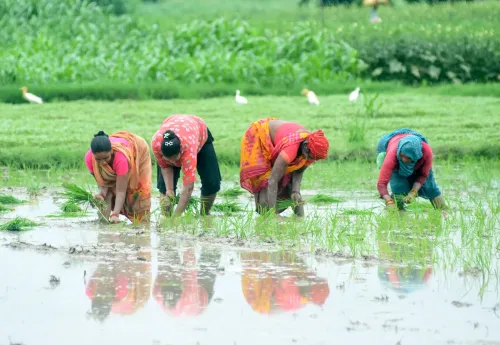
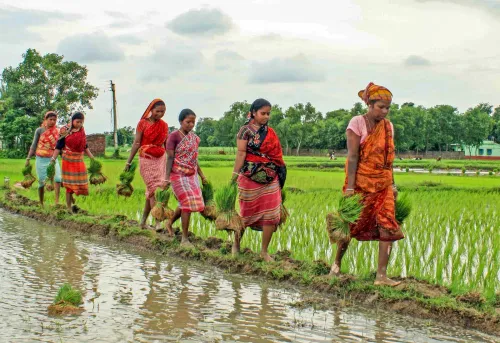
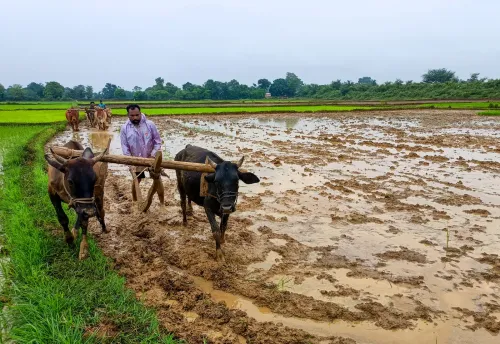
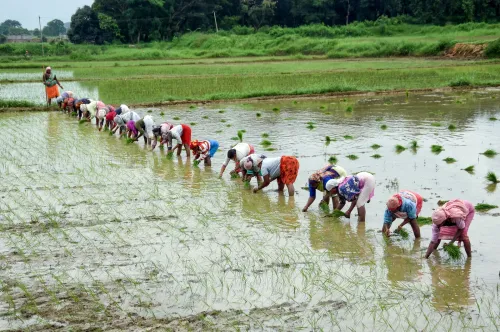
The improvement in rainfall has translated directly into sowing activity. Total Kharif sowing as of 14 August was 2 per cent below the previous year's level — a dramatic recovery from the 21 per cent shortfall recorded in late June, according to Macquarie.
Crop-wise, rice acreage was 3.7 per cent below last year's levels, while maize acreage was down 4 per cent. In contrast, acreage under pulses, oilseeds, sugarcane, and cotton was within approximately 1 per cent of year-ago levels. Macquarie noted that the remaining sowing weakness is concentrated in a few specific crops rather than being broad-based across the sector.
Reservoir Levels Provide a Buffer
Healthy reservoir storage is adding an additional layer of protection against residual rainfall gaps. Storage levels in Maharashtra and Gujarat remain at or above the 10-year average, while key agricultural states — Uttar Pradesh, Madhya Pradesh, and Punjab — are holding storage at around 80–100 per cent of their respective long-term averages.
However, Bihar and parts of southern India warrant close monitoring, the report cautioned, indicating that the recovery is not uniform across the country.
Inflation Outlook Improves
The combination of a recovering monsoon, limited overall sowing shortfall, and adequate irrigation reserves has collectively reduced downside risks to Kharif output, Macquarie said. The brokerage also flagged a positive read-through for inflation: food-supply risks and inflation pressures have moderated from the elevated levels seen in June.
This comes amid broader concerns about food price volatility, which had kept policymakers watchful through the first half of the season. With reservoir buffers holding and sowing gaps narrowing, the agricultural outlook for the remainder of the Kharif season appears more stable than it did two months ago.
Point of View
But the headline recovery masks uneven distribution — Bihar and southern India are still lagging, and rice and maize acreage gaps have not fully closed. The more consequential signal is on inflation: if food-price pressures ease as the report suggests, it gives the Reserve Bank of India more room to manoeuvre on rates. But a single brokerage snapshot taken on 19 August cannot account for late-season variability; the monsoon's final weeks remain the decisive factor for both output and price stability.
NationPress
8 Oct 2026
Frequently Asked Questions
How much has India's monsoon rainfall deficit improved in 2024?
India's cumulative rainfall deficit narrowed sharply to 12.6 per cent as of 19 August, down from 35 per cent in June, according to a Macquarie report. The brokerage described the situation as 'recovering, albeit not fully recovered.'
How is Kharif sowing performing compared to last year?
Total Kharif sowing as of 14 August was 2 per cent below the previous year's level, a significant recovery from the 21 per cent shortfall recorded in late June. The remaining weakness is concentrated in rice and maize rather than being broad-based.
Which states have adequate reservoir levels for the Kharif season?
Maharashtra and Gujarat have reservoir storage at or above the 10-year average, while Uttar Pradesh, Madhya Pradesh, and Punjab are holding 80–100 per cent of their long-term averages. Bihar and parts of southern India, however, require close monitoring.
What does the monsoon recovery mean for food inflation in India?
The improving monsoon and narrowing sowing gaps have moderated food-supply and inflation risks from the elevated levels seen in June, according to the Macquarie report. This is broadly positive for consumer price stability in the months ahead.
Which crops are still showing acreage shortfalls?
Rice acreage is 3.7 per cent below last year and maize is down 4 per cent as of 14 August. Pulses, oilseeds, sugarcane, and cotton are performing more steadily, within about 1 per cent of year-ago levels.