India's energy storage need to hit 411 GWh by FY32, needs ₹4 lakh crore investment
Synopsis
India needs to scale its energy storage capacity nearly eightfold — from 54 GWh today to 411 GWh by FY32 — at a cost of over ₹4 lakh crore, according to CareEdge Ratings. With 8.1 TWh of solar already being curtailed in just three months of FY27, the grid integration crisis is no longer a future problem. It is already here.
Key Takeaways
India's energy storage requirement is projected to reach 411 GWh by FY32 , nearly 8 times the current operational capacity of 54 GWh as of June 2026 .
Achieving this target will require investments of over ₹4 lakh crore , according to CareEdge Ratings .
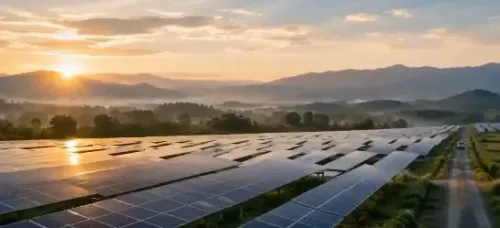
Approximately 8.1 TWh of solar generation was curtailed in the first three months of FY27 due to transmission and grid-stability constraints.
Standalone storage tenders surged to 21 GW in FY26 from 7 GW in FY25 , reflecting accelerating policy momentum.
Both BESS and Pumped Storage Plants (PSPs) are expected to play complementary roles; storage cost estimated at ₹4.5–5 per unit .
Non-fossil sources account for 50% of installed capacity but generate only 29% of electricity, highlighting the integration gap.
India's energy storage requirement is projected to surge nearly 8 times to approximately 411 GWh by FY32, up from an operational storage capacity of around 54 GWh as of June 2026, according to a report released on Tuesday, 8 September by CareEdge Ratings. Meeting this target will require investments exceeding ₹4 lakh crore, marking one of the most significant infrastructure financing opportunities in India's power sector over the next six years.
Why Storage Has Become Critical
The rating agency's report underscores that energy storage is rapidly becoming a foundational enabler of India's renewable energy transition. Storage systems absorb surplus solar generation during daylight hours and discharge power during evening peak demand periods, effectively smoothing the net load curve, reducing renewable energy curtailment, and easing grid ramping requirements.
According to the report, India's power sector has shifted from a capacity addition challenge to an integration challenge. Non-fossil sources now account for 50 per cent of installed capacity but contribute only around 29 per cent of total electricity generation — a gap that reflects the intermittency and lower plant load factors (PLFs) inherent to renewable sources.
The Deepening Duck Curve Problem
Rising solar penetration is intensifying India's so-called 'duck curve' — a phenomenon where midday solar oversupply followed by a sharp evening demand surge strains grid stability. The morning ramp-down increased from approximately 28 GW in May 2025 to nearly 50 GW in May 2026, while the evening ramp-up from the day's lowest net load climbed from roughly 68 GW to 80 GW over the same period.
This growing imbalance is placing mounting pressure on conventional generation assets and contributing directly to renewable energy curtailment. Notably, approximately 8.1 TWh of solar generation was curtailed in the first three months of FY27 alone, owing to transmission constraints and grid-stability concerns.
What Industry Leaders Said
Sachin Gupta, Executive Director and Chief Risk Officer at CareEdge Ratings, said the sector has moved beyond the challenge of adding renewable capacity to ensuring that renewable power can be effectively integrated into the grid. 'As solar and wind capacity increases, the ability to store surplus energy and deploy it during periods of peak demand will become increasingly critical,' Gupta said.
Tendering Activity and Technology Mix
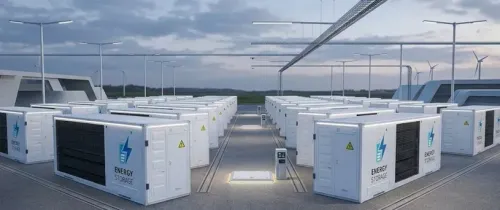
Tendering momentum is accelerating. Standalone storage-based tenders floated in FY26 reached approximately 21 GW, compared with 7 GW in FY25 — a threefold increase in a single year. Both Battery Energy Storage Systems (BESS) and Pumped Storage Plants (PSPs) are expected to play complementary roles in meeting the storage target.
BESS offers modularity, higher round-trip efficiency, and shorter project gestation periods. PSPs, by contrast, provide longer-duration storage, extended asset life, and lower dependence on imported components. CareEdge Ratings estimated the cost of storage from both technologies at around ₹4.5–5 per unit, excluding input power costs but accounting for cycle losses.
What Comes Next
With the FY32 deadline less than six years away and the current storage base at just 54 GWh, the scale-up required is enormous. The pace of tendering and the ability to attract private capital at scale will be decisive. Execution risk — particularly in land acquisition and transmission infrastructure for PSPs — remains a key variable to watch.
Point of View
But the more telling number is the threefold jump in storage tenders from FY25 to FY26, which suggests the Centre is finally treating integration as urgently as capacity addition. The real test will be whether private capital follows, and whether PSP projects — historically plagued by land and environmental clearance delays — can be delivered at the scale and speed the duck curve demands.
NationPress
24 Oct 2026
Frequently Asked Questions
What is India's energy storage target by FY32?
India's energy storage requirement is projected to reach approximately 411 GWh by FY32, nearly eight times the operational storage capacity of around 54 GWh recorded as of June 2026, according to a CareEdge Ratings report released on 8 September 2026.
How much investment is needed to meet India's energy storage target?
Meeting the 411 GWh storage target by FY32 will require investments of over ₹4 lakh crore, according to CareEdge Ratings. This represents one of the largest infrastructure financing opportunities in India's power sector over the next six years.
What is the duck curve and why does it matter for India?
The duck curve describes a grid imbalance caused by high midday solar generation followed by a sharp evening demand surge. In India, the morning ramp-down grew from 28 GW in May 2025 to 50 GW in May 2026, while the evening ramp-up rose from 68 GW to 80 GW — straining conventional generators and contributing to renewable energy curtailment.
What types of energy storage will India use to meet the FY32 target?
Both Battery Energy Storage Systems (BESS) and Pumped Storage Plants (PSPs) are expected to play complementary roles. BESS offers modularity and faster deployment, while PSPs provide longer-duration storage and lower import dependence. CareEdge Ratings estimates the cost of storage from both at around ₹4.5–5 per unit.
How much solar energy is being wasted due to grid constraints in India?
Approximately 8.1 TWh of solar generation was curtailed in the first three months of FY27 alone, due to transmission bottlenecks and grid-stability concerns, according to the CareEdge Ratings report.